Despite remarkable scientific breakthroughs, the fight against cancer is marked by deep cancer inequality, with millions of patients in poorer countries seeing little benefit from the advances transforming care elsewhere. A new report from the World Health Organization warns that these patients continue to face devastating physical, emotional, and financial consequences following a diagnosis.
A Disease That Touches Almost Everyone
The scale of cancer’s reach is staggering. According to WHO estimates, one in five people will develop the disease, and cancer will touch 92% of people in some way, whether through their own diagnosis or that of a close family member.
Dr. Andre Ilbawi, team lead for cancer control at the WHO, captured the tension at the heart of the report. He noted that for years, the story of cancer has centered on scientific progress, new technologies, treatments, and hope. That story is true and deserves to be told, he said, but it is not the whole story.
Widening Gaps in Care
This year’s WHO global status report on cancer identified persistent and widening inequities in access to prevention, diagnosis, treatment, and care. The numbers behind the disease are sobering: there are an estimated 20.6 million cases and 10 million deaths from cancer every year, figures projected to climb to nearly 35 million cases by 2050.
The disparity in outcomes between rich and poor nations is perhaps the most striking finding. In wealthier countries, 85% of those diagnosed with breast or childhood cancers survive at least five years. In poorer countries, that survival figure plummets to less than 30%.
Barriers to Treatment
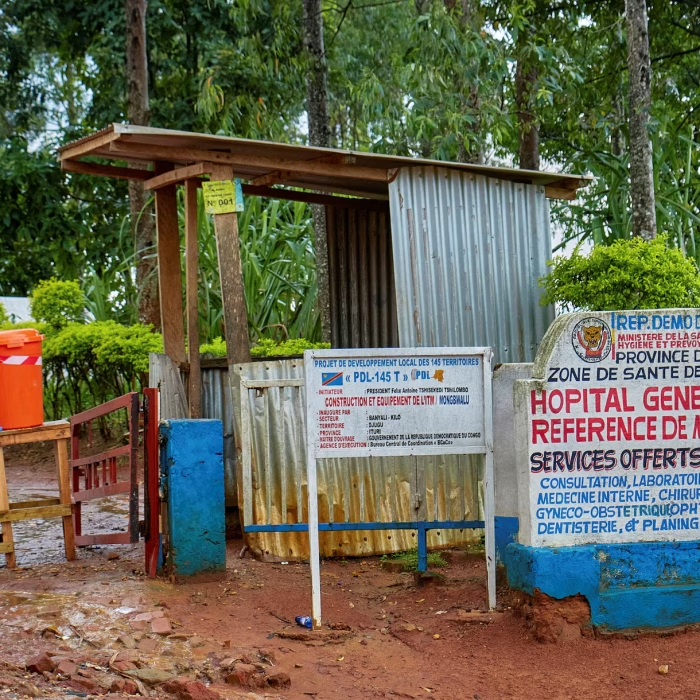
The gap in survival is closely tied to glaring differences in access to essential resources. The report laid out several stark contrasts between low- and high-income settings:
- In low- and lower-middle income countries, between 9% and 54% of the WHO’s top-20 priority cancer drugs are available, compared with 68% to 94% in high-income countries.
- In 23 countries, there are no radiation facilities at all.
- Diagnosis rates in sub-Saharan Africa were lower than in wealthier regions, yet deaths from cancer were disproportionately high.
The financial barriers compound these challenges. Two-thirds of countries do not include cancer in their universal health coverage packages, and the resulting high costs mean that in some settings, up to 90% of patients abandon their treatment entirely.
The Human Toll
Beyond the statistics lies profound human suffering. A global survey of patients and their families revealed widespread financial hardship, mental health struggles, and immense strain on caregivers.
Abigail Simon-Hart, a breast cancer survivor and patient advocate from Nigeria, offered a deeply personal window into these realities. She described witnessing parents forced to choose between paying for treatment and keeping a child in school, and children compelled to abandon their education because every available resource had been spent on cancer care.
Simon-Hart also highlighted the deadly role of stigma. In some places, she explained, the shame surrounding a cancer diagnosis can cost lives. Through her work, she said she had met women who chose to die rather than undergo life-saving mastectomies and lose a breast.
Reasons for Hope
Despite its sobering findings, the report was not without encouraging news. It highlighted several genuine successes in the global fight against cancer, including a credible path toward eliminating cervical cancer and a downward trend in tobacco use. Most countries, the report noted, now have national cancer action plans in place.
Dr. Isabelle Soerjomataram, deputy head of the International Agency for Research on Cancer’s surveillance unit, which collaborated with the WHO on the report, pointed to another hopeful message. She noted that four in ten new cancer cases are linked to risk factors that are already well understood and addressable. These include tobacco use, infections, alcohol consumption, and excess body weight, suggesting that a significant portion of cases could be prevented.
A Call to Action
The WHO experts closed with a clear appeal to the global community. They urged the world to value care as highly as cure, emphasizing that supporting patients through their journey matters just as much as developing new treatments.
They also called on governments to fully fund cancer services across the entire spectrum, from prevention and diagnosis through to treatment, ensuring that no patient is left behind simply because of where they happen to live.
The Bigger Picture
The report paints a portrait of a world divided in its battle against cancer. On one side, scientific innovation continues to deliver hope and extend lives. On the other, millions of people in lower-income countries remain shut out from those very advances, facing not only the disease itself but crushing financial and social burdens.
Bridging this divide will require more than medical breakthroughs; it demands political will, sustained investment, and a genuine commitment to equity. As the global cancer burden continues to grow, the WHO’s message is unmistakable: progress that reaches only the wealthy is not enough. Until the benefits of modern cancer care are shared by all, the story of cancer will remain, as Dr. Ilbawi put it, incomplete.
Author