The ICE shooting in Maine has ignited fresh anger over the federal government’s aggressive immigration enforcement campaign, after a federal officer fatally shot a man during an early-morning operation in the coastal city of Biddeford.
The incident, which occurred Monday, has triggered a formal state investigation and drawn sharp condemnation from lawmakers, advocacy groups, and residents alike.
What Happened in Biddeford
According to the office of Maine Attorney General Aaron Frey, preliminary information suggests an officer with U.S. Immigration and Customs Enforcement opened fire on a man who tried to drive away during an enforcement operation. The officer involved has been placed on administrative leave while the investigation proceeds.
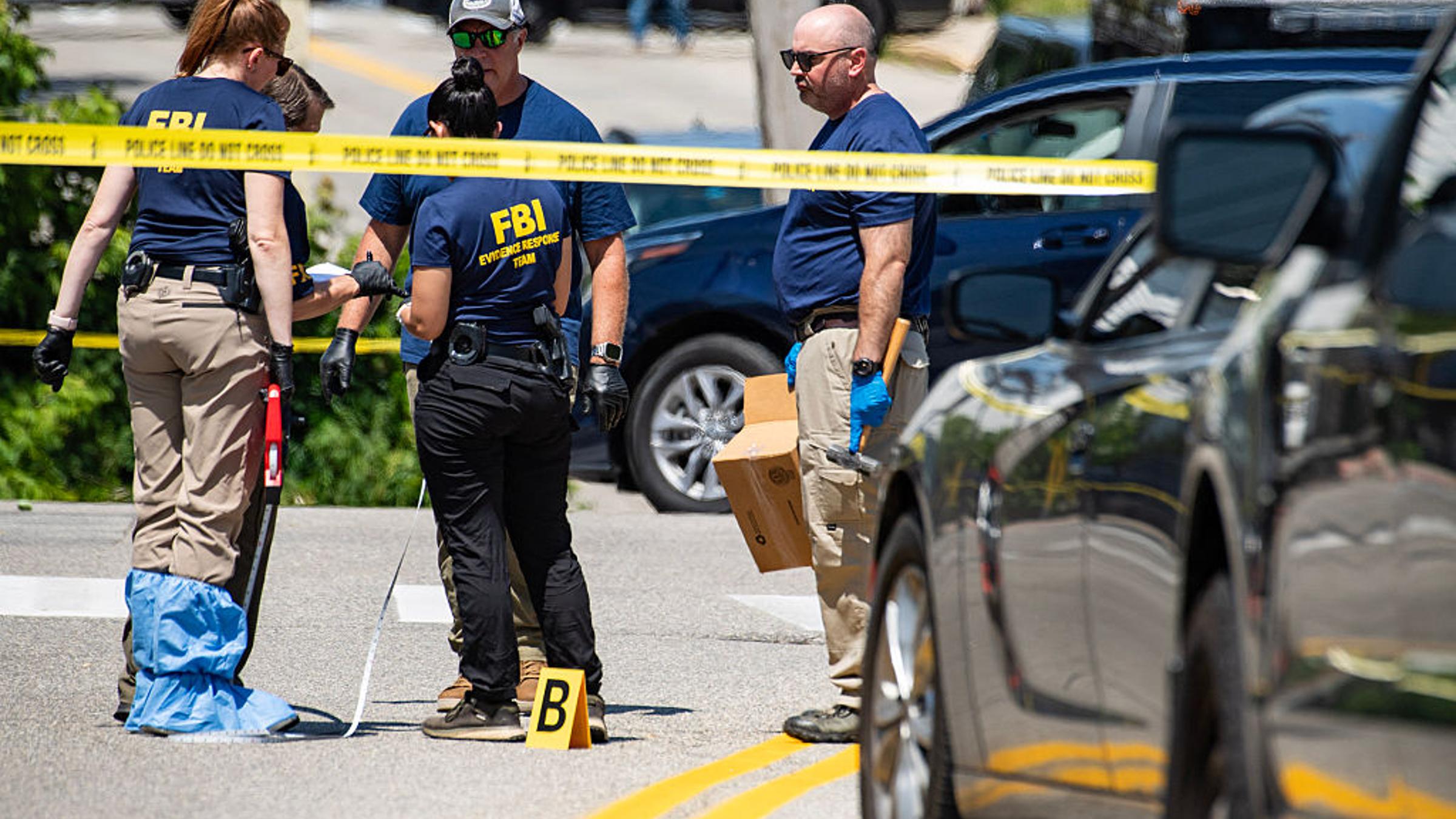
The shooting took place at roughly 7:17 in the morning near the intersection of Pool and Hill streets, in the heart of Biddeford’s downtown. Local police and the FBI both responded to the scene.
An ICE spokesperson said agents had been carrying out targeted surveillance at the last known address of someone with a final removal order. When a vehicle left the residence, officers attempted a traffic stop. The spokesperson claimed the driver tried to flee and that the officer fired his weapon out of concern for public safety. Emergency responders were called immediately afterward.
Who Was the Man Killed?
Officials have not publicly released the victim’s name. However, the Maine Immigrants’ Rights Coalition identified him as a 26-year-old man from Colombia.
Ruben Torres, the group’s director of advocacy and policy, said the man held a Social Security number and had legal authorization to work in the country. He was also the only source of income for his family in Maine and had been showing up for his scheduled immigration court hearings. Torres declined to share his name publicly.
Conflicting Accounts From Washington
The official story shifted within hours. A spokesperson for Sen. Angus King, an independent from Maine, said the senator spoke twice with Homeland Security Secretary Markwayne Mullin on Monday.
In the first conversation, Mullin reportedly told King the man was the intended target of the operation and had been ordered to leave the United States. By the second call, that account had changed — Mullin said the man was not the target after all.
King also revealed a detail that has since become a flashpoint: none of the officers on scene were wearing body cameras.
“Body cameras were not on the agents, and so we have no video evidence of what occurred in this case,” King told reporters.
He added that a thorough investigation is essential to determine whether the man posed any real threat and whether lethal force was warranted at all. Referencing what he called a troubling pattern of misleading statements from DHS over the past year, King said the department’s credibility has taken a serious hit. “Given the experience of the past year, I think we have to trust but verify,” he said.
What Neighbors Saw and Heard
The absence of official footage has made witness testimony and neighborhood recordings central to the story.
A doorbell camera belonging to nearby resident Ashley Peters captured what sounded like at least five gunshots. Other footage from a vehicle down the street showed a white sedan circling slowly at the intersection with two officers close by. A later clip shows an officer pulling a limp figure in a light-colored shirt from the driver’s seat. The person falls face-down onto the pavement as the officer moves to restrain them.
Em Akerley, who lives in an apartment overlooking the intersection, described hearing a single shot followed by a burst of five or six more. Looking out her window, she saw a small car drifting in a slow circle with two officers running beside it before a white SUV forced the vehicle against the curb. Officers then attended to the man on the ground. An ambulance, she said, took ten to fifteen minutes to arrive. The FBI later interviewed her.
Part of a Broader Pattern
This is not an isolated event. Just six days earlier, an ICE officer in Houston fatally shot Lorenzo Salgado Araujo, an undocumented Mexican immigrant, as he drove his white work van.
DHS claimed Salgado Araujo had “weaponized” the vehicle and rammed a federal car. Three migrants arrested at the scene told a different story — they said the officer began shooting almost immediately after stepping out of his vehicle, and that the van never swerved toward him. Those officers, too, had no body cameras.
Both deaths mark the first ICE-involved fatalities since two U.S. citizens were killed in Minneapolis in January: Renée Good, and days later, Alex Pretti, who was shot while protesting immigration enforcement.
The Push for Accountability
Democrats have repeatedly demanded that ICE officers be required to wear body cameras. DHS said last week that half of ICE’s field offices have received cameras, with the remainder expected within 60 days.
Political fallout in Maine was swift:
- Rep. Chellie Pingree said she was “deeply disturbed and angry” by the reports.
- Shenna Bellows, Maine’s secretary of state and a Senate candidate, declared, “It’s time to get ICE off our streets.”
- Protesters gathered outside Sen. Susan Collins’s office with signs calling for ICE’s abolition, chanting “Vote her out.”
A Test for the New DHS Chief
The shootings arrive at a politically delicate moment. Mullin took the job after President Trump removed his predecessor, Kristi Noem, in the wake of the Minneapolis killings and mounting criticism of her leadership.
ICE is now pushing toward a target of 2,000 arrests per day — more than double its average over the first 14 months of Trump’s second term. The administration has set a goal of deporting one million undocumented immigrants annually.
Maine has already felt that pressure. In January, DHS launched a surge operation in the state dubbed “Operation Catch of the Day,” arresting more than 200 people in four days. Officials insisted they were targeting “the worst of the worst.” A later analysis found that only 11 of those detained had criminal convictions.
That gap between rhetoric and reality is exactly what has left many Mainers unwilling to take the government’s account of Monday’s shooting at face value.
Author