Lindsay Clancy trial jury selection has demanded something unusual from the residents of Plymouth County who reported for duty this week: a written accounting of their own experiences with mental illness, and an honest answer about whether those experiences would prevent them from judging fairly.
The screening has been exhaustive, deeply personal, and by all appearances necessary. A case built on an insanity defense cannot function without jurors capable of hearing psychiatric testimony without recoiling from it — or embracing it uncritically.
Finding eighteen such people has taken days.
What Prosecutors Must Prove
The legal framework here is worth understanding before anything else, because it inverts what most people assume about criminal trials.
Clancy has admitted to strangling her three children — five-year-old Cora, three-year-old Dawson, and eight-month-old Callan — in January 2023. She has nonetheless pleaded not guilty, arguing she was in the grip of severe postpartum mental illness and heard a voice instructing her to kill the children and herself.
Under Massachusetts law, the burden falls on prosecutors. They must establish beyond a reasonable doubt either that Clancy was not mentally ill at the time, or that if she was, she understood the wrongfulness of her actions and retained the capacity to conform her conduct to the law.
That is a demanding standard, and it is why jury composition matters enormously.
The Questionnaire
Prospective jurors completed a document designed to surface exactly the kinds of experiences that might quietly shape a verdict.
They were asked whether they — or family members — had received diagnoses including:
- Postpartum depression
- Depression
- Generalized anxiety disorder
- Bipolar disorder
They were also asked whether any encounter with the mental health system had left them unable to be impartial, whether they could fairly evaluate an insanity defense, and whether they could remain composed while reviewing medical treatment evidence and autopsy photographs.
Individual responses remain confidential. The questions themselves are public, and they reveal the scale of the effort to construct a fair panel.
Not Disqualifying, Just Revealing
Defense attorney Kevin Reddington was clear that answering yes to these questions did not automatically remove anyone from consideration.
The purpose was insight rather than elimination — understanding how prospective jurors think about issues sitting at the center of the case. His stated goal was simple enough: assembling fair people.
Longtime defense attorney Janice Bassil explained the reasoning. In a case like this, a juror’s personal history with mental illness may shape how they receive testimony from psychiatric experts or process an account of someone else’s psychological collapse. Knowing that history in advance lets both sides make informed choices.
Bassil also identified who a defense team would want to avoid: prospective jurors visibly overwhelmed by the case details, and those with young children of their own.
Her observation about the latter group cuts to something honest. Many people believe sincerely that they can remain objective. But in a case involving the deaths of small children, she noted, it is difficult to imagine not thinking about your own.
The Emotional Reality
Christina Miller, a former Suffolk County prosecutor now teaching at Suffolk Law, framed the challenge differently.
Horror and sadness are unavoidable in a case with these facts. Nobody screens for their absence. The question is narrower — whether a juror can set those feelings aside and reach a decision on the evidence.
She acknowledged plainly that this is a lot to ask.
The courtroom bore that out. Sidebar conferences stayed out of media earshot, but fragments were audible as prospective jurors explained they could not judge Clancy fairly. Several cried during questioning and were excused immediately. A box of tissues sat within reach.
When Judge William F. Sullivan asked the assembled pool whether anyone could not be impartial, twenty raised their juror cards on Monday. On Wednesday, thirty-one did.
Where Selection Stands
Prosecutors and defense counsel have agreed on seventeen of the eighteen jurors required, a figure that includes six alternates. They return Thursday to seat the final one.
Opening statements and testimony could begin as soon as Friday.
The Defendant in the Room
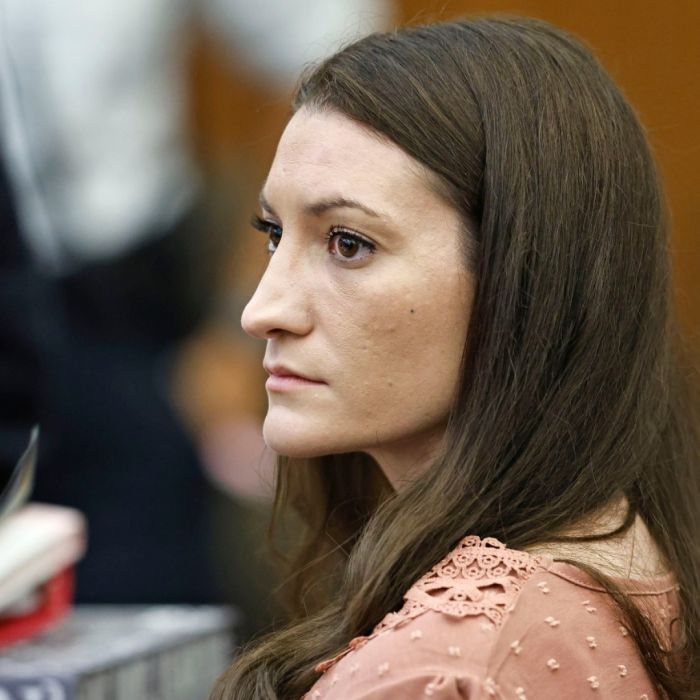
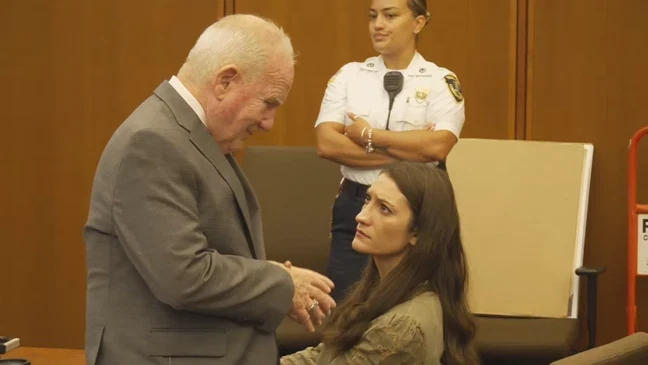
Clancy has been present throughout, positioned unusually.
She slashed her own neck and wrists and jumped from a second-story window in a failed suicide attempt following the killings. Paralyzed from the waist down, she remains in custody at Tewksbury Hospital and enters court each day in a wheelchair.
Reddington said involving clients in jury selection is standard practice for him. Because of the wheelchair, Clancy was seated in the witness box beside the judge, facing prospective jurors so she could hear the questioning directly. Observers described her as engaged — reviewing questionnaires, conferring quietly with her attorney.
Two Competing Accounts
The trial will turn on irreconcilable characterizations of the same woman.
Prosecutors allege premeditation. Court filings claim Clancy sent her husband to a restaurant far enough from home to give her time, and assert she did not feel love or connection toward some of her children.
Reddington describes someone entirely different: a devoted mother who actively sought treatment for postpartum depression and anxiety after her third child was born, and who was prescribed thirteen medications simultaneously — an over-medication he links to the emergence of homicidal and suicidal ideation.
A Father’s Request
The intensity of the coming evidence prompted an unusual filing this week from Patrick Clancy, the children’s father and Clancy’s former husband.
Through attorney David E. Meier, he asked Judge Sullivan to restrict public access to photographs of the victims and to his own 911 call. He requested that such material be limited to attorneys, jurors, and court staff.
The filing argued that public dissemination of graphic evidence involving his three children would inflict immeasurable and lasting emotional harm on him and his family, and that the disrespect to the children’s dignity and memory required no elaboration.
What Happens If She’s Found Not Guilty
Jurors will receive an instruction that addresses a common misunderstanding about insanity verdicts.
A finding of not guilty by reason of mental illness does not result in release. Clancy would be committed to a psychiatric hospital and evaluated periodically to determine whether she continues to pose a danger to the community.
That instruction matters. Jurors who believe an insanity finding means someone walks free tend to resist reaching one — which is precisely why the law requires them to be told otherwise.
The Weight of the Task
Eighteen people are about to spend weeks examining the worst thing that ever happened to one family, then decide what a woman’s mind was doing on a January night in 2023.
The screening process has been intense because it has to be. Whatever verdict emerges will be scrutinized for years, and its legitimacy rests entirely on whether the people who reached it were capable of setting aside what they felt.
That was the question the questionnaire was really asking.
Author
-
Lucienne Albrecht is Luxe Chronicle’s wealth and lifestyle editor, celebrated for her elegant perspective on finance, legacy, and global luxury culture. With a flair for blending sophistication with insight, she brings a distinctly feminine voice to the world of high society and wealth.