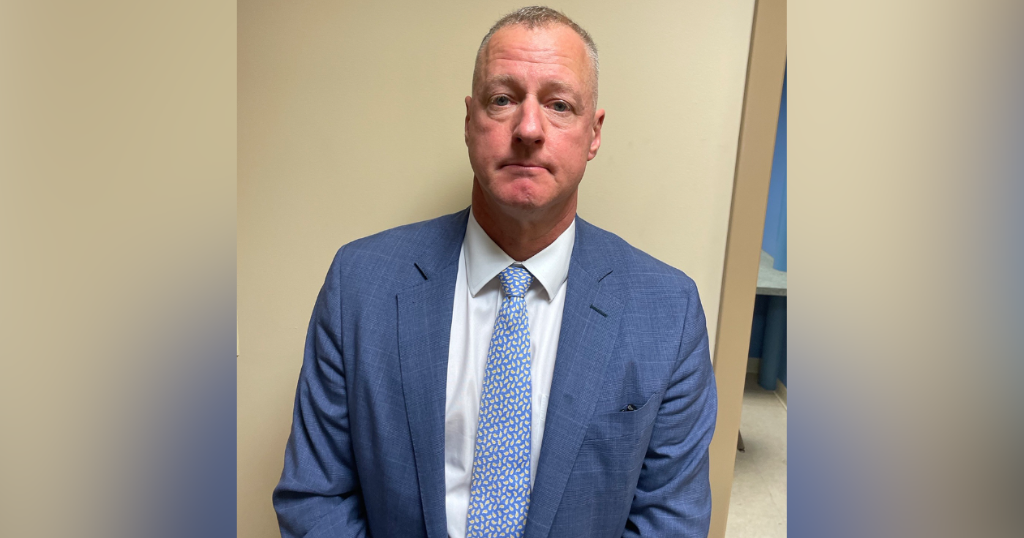
The Penn State cocaine ring case took an unexpected turn when investigators charged someone who was not a student at all. A practicing attorney at a Pittsburgh law firm now stands accused of trying to hide evidence tied to his own son, who authorities describe as one of the operation’s leaders.
The Charges Against a Practicing Lawyer
Paul Robinson, who works as an attorney at the Pittsburgh firm Meyer, Darragh, Buckler, Bebenek and Eck, faces felony counts of tampering with evidence and hindering apprehension. Prosecutors allege he concealed a safe holding both drugs and cash.
He is the only person charged in the case who is not a student. Fourteen people in total were charged on Monday, and the rest are connected to the university.
The accusation carries obvious professional weight. Attorneys are expected to understand evidence law better than almost anyone, which makes an allegation of concealment particularly striking when it lands on someone in the profession.
His son, Thomas Robinson, is identified by investigators as one of two people who directed the alleged trafficking operation. The other alleged leader, Agostino Abbatiello, surrendered to authorities on Tuesday.
What Investigators Say Happened
According to the Pennsylvania Office of Attorney General, the operation ran out of two fraternity houses on campus, Delta Upsilon and Sigma Chi.
The state’s account describes an assembly-line arrangement rather than casual sharing among friends. Cocaine was cut and packaged inside the fraternity houses, then distributed primarily to other students at the university.
One detail from the attorney general’s office has drawn particular attention: pledges were reportedly the ones handling the cutting and packaging work.
That claim, if it holds up, reframes the case considerably. Pledges occupy the lowest rung in fraternity hierarchies and are often expected to complete tasks assigned by older members. Placing them at the point of greatest legal exposure raises uncomfortable questions about how the labor was distributed and who absorbed the risk.
The Firm Responds
Meyer, Darragh issued a statement acknowledging the charges against Robinson while working to separate the matter from its practice.
The firm said the allegations concern Robinson as an individual and do not involve the firm itself, its clients or any legal services it provides. It added that it is reviewing the circumstances and will not comment on the substance of the allegations or speculate about the evidence while the criminal proceeding remains active.
That response follows a familiar pattern for law firms confronting criminal charges against a member. The priorities are usually clear: reassure clients, draw a boundary around the individual, and avoid saying anything that could complicate either the criminal case or the firm’s own position.
An Existing Case in Centre County
Thomas Robinson was not new to the court system when these charges arrived. He has an open case dating to December 2024 out of Centre County, where Penn State’s main campus sits.
That earlier matter involves multiple felony and misdemeanor counts related to possession and distribution of a controlled substance. It remains unresolved.
Prosecutors typically take note when new charges arrive while a defendant already faces pending allegations. The existence of a prior open case can affect bail arguments, plea negotiations and sentencing exposure if convictions follow.
His attorney in the Centre County case did not respond to a request for comment by Tuesday afternoon.
Questions About Enrollment
Penn State offered limited information when asked about Thomas Robinson’s current status with the university. A spokesperson would only confirm that he was last enrolled in the spring of 2025.
Universities generally decline to discuss individual student records in detail, citing federal privacy protections. The narrow response leaves open whether he withdrew, was removed, or simply stopped attending.
Reporters who visited the Robinson family home on Tuesday were told the family had no comment.
Why This Case Stands Out
Drug cases involving college students are not rare. Several elements here push this one beyond the ordinary.
- A parent is charged. Cases where a family member allegedly intervenes to obstruct an investigation are unusual, and rarer still when that family member is an officer of the court.
- The scale is organized. Cutting and packaging in a fixed location with an internal distribution network suggests structure rather than opportunistic dealing.
- Two fraternities are implicated. Institutional exposure extends past individuals to the chapters themselves and potentially to their national organizations.
- Junior members allegedly did the handling. That detail invites scrutiny of fraternity power dynamics and how pressure flows downward in those environments.
Potential Fallout Beyond the Courtroom
Criminal proceedings are only one track. Several parallel processes tend to follow allegations like these.
Fraternity chapters face review from national headquarters and from university conduct offices, with suspension or revocation of recognition a common outcome when drug activity is substantiated. The university itself faces pressure to demonstrate oversight of Greek life, an area that has generated recurring controversy on campuses nationwide.
For Paul Robinson, a separate question looms over his professional license. Attorney disciplinary bodies operate independently from criminal courts and apply their own standards, though they often wait for criminal matters to conclude before acting.
None of that is automatic. Charges are accusations, and everyone involved retains the presumption of innocence until a court determines otherwise.
What Happens Next
The case now moves through preliminary hearings, where prosecutors must show sufficient evidence to proceed. Defense attorneys will scrutinize how investigators gathered evidence, including the circumstances surrounding the safe at the center of the tampering allegation.
With fourteen defendants, the case is unlikely to move as a single unit. Some may reach agreements with prosecutors. Others will litigate. Timelines will diverge.
For now, the Penn State cocaine ring investigation has produced an image that will define its coverage: not a student caught with product, but a father accused of trying to make it disappear.
Author