Louisiana Congressional Primaries Halted Amid Supreme Court Fallout
The Louisiana congressional primaries were abruptly suspended on Thursday, just as early voting was about to begin, after a Supreme Court decision dramatically reshaped the legal landscape surrounding the Voting Rights Act. The pause has thrown the state’s upcoming election schedule into uncertainty and added new fuel to a growing national fight over how congressional district maps are drawn ahead of the November midterms.
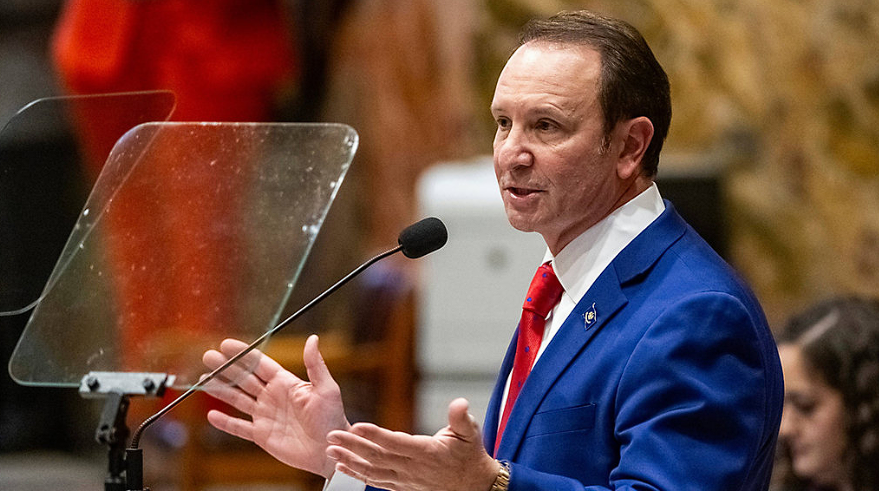
Early voting had been scheduled to start Saturday for the May 16 primaries. But the situation changed quickly after the high court struck down a majority Black congressional district in Louisiana, prompting Republican Governor Jeff Landry to issue an executive order halting the U.S. House primary.
Why the Governor Pressed Pause
Governor Landry argued that moving forward with elections under a map that had just been ruled unconstitutional would damage public trust and create legal chaos. In his statement, he said going ahead with the vote under such conditions would weaken election integrity and infringe on voters’ rights. By postponing the primary, he said, the state would have time to draft a new map that complies with the law.
The Republican-led secretary of state’s office backed the move by declaring an electoral emergency, which gave the governor the legal footing for his order. Officials confirmed that notices would be displayed at early voting locations, informing residents that only the congressional primary had been postponed. Every other contest on the ballot will continue as planned.
Legal Battles Unfold Quickly
The Supreme Court’s decision and the governor’s response set off a wave of legal action almost immediately. A three-judge federal appeals court panel, the same one that had originally ruled on the case before it reached the Supreme Court, issued an order suspending Louisiana’s House election until new maps are completed. Some legal analysts viewed the ruling as premature, given how quickly events were moving.
Marc Elias, a well-known Democratic election attorney, also stepped in by filing a lawsuit challenging Landry’s executive order. The legal back-and-forth signals that the dispute is far from settled and could shape how the state moves forward in the coming weeks.
According to Landry’s order, the postponed primary will be rescheduled either for July 15 or another date determined by the Legislature. Republican leaders in both the Louisiana House and Senate said they are ready to draw new districts and finalize a new election date before their regular session ends in about a month.
Trump Pushes Other States to Follow
President Donald Trump quickly applauded Landry, who also serves as his special envoy to Greenland, for taking swift action. Trump used social media to encourage Republican lawmakers in other states, particularly Tennessee, to take similar steps in response to the Supreme Court’s ruling.
House Speaker Mike Johnson echoed that sentiment, urging states with what he described as unconstitutional maps to revisit them before the midterm elections. The combined message from Republican leaders points to a broader strategy aimed at reshaping the nation’s political map before voters head to the polls in November.
Democrats Warn of Voter Confusion
Democrats and civil rights advocates strongly criticized the suspension, warning that abrupt changes could leave voters disoriented and weaken minority representation in Congress. Louisiana State Senator Royce Duplessis, who represents parts of New Orleans, said the move would create widespread confusion across party lines and racial groups. He accused Republican leaders of altering the rules in the middle of the process.
Although delaying an election is uncommon, it has happened before. During the 2020 COVID-19 pandemic, several states postponed their primaries due to public health concerns. At the time, then-Governor John Bel Edwards delayed Louisiana’s presidential primary twice before it ultimately took place in July.
A Nationwide Redistricting Surge
Louisiana’s congressional delegation currently includes four Republicans and two Democrats. A new map could give the GOP a chance to add at least one more seat in November, expanding gains the party has already secured in other redistricting battles across the country.
Although congressional districts are typically redrawn once every ten years following the census, that tradition has been disrupted. Trump previously pushed Texas Republicans to redraw their lines mid-decade, prompting California Democrats to do the same. The trend has since spread to several other states.
Just hours before the Supreme Court’s ruling, Florida lawmakers approved a new congressional map backed by Governor Ron DeSantis, a move that could help Republicans gain additional seats. The high court’s decision then concluded that Louisiana officials had placed too much emphasis on race when designing the district currently held by Democrat Cleo Fields.
Trump has also indicated he wants Tennessee to redraw its districts. He said he had spoken with Governor Bill Lee about creating a new map that could help Republicans claim another seat. Democrats currently hold only one of Tennessee’s nine House seats, anchored in the majority-Black city of Memphis. Tennessee House Speaker Cameron Sexton confirmed he is in discussions with the White House while reviewing the ruling.
Louisiana’s Long Redistricting History
Louisiana has been at the center of redistricting battles for years. After the 2020 census, the state initially adopted a map with only one majority Black district, despite Black residents making up roughly a third of the population. A federal judge later struck down that map for violating the Voting Rights Act.
In 2024, lawmakers approved a new map that included a second majority Black district, but that plan also faced legal challenges, eventually leading to the recent Supreme Court ruling. After the decision, Landry contacted U.S. House candidates to alert them that the primaries would likely be delayed.
Republican candidate Misti Cordell, who is competing in the race to fill Representative Julia Letlow’s vacated seat, acknowledged the inconvenience but said she preferred a fair process over repeated legal disputes. She added that early notice helped candidates avoid spending heavily during the final stretch before what was expected to be Election Day.
Author