The Devil Wears Prada 2 Returns With Style, Wit, and a Whole Lot of Nostalgia
The Devil Wears Prada 2 has finally arrived, and it lands with the kind of confident swagger only a sequel two decades in the making can pull off. Twenty years after the original turned Runway magazine into one of cinema’s most iconic workplaces, the follow-up brings back its most beloved players, throws in a parade of fashion-world cameos, and serves up a glossy, sharply written comedy that feels like both a victory lap and a love letter to a vanishing era of glamour.
It’s stylish. It’s funny. And yes, it’s unapologetically a millennial nostalgia bath — but it knows exactly what it’s doing.
Meryl Streep’s Miranda Priestly Is Back, Just as You Remember Her
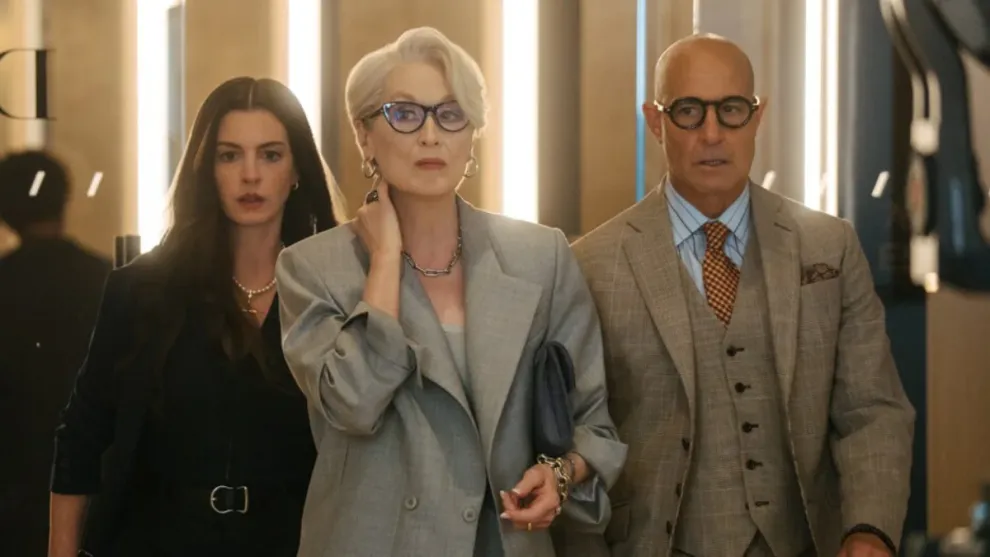
The biggest pleasure of The Devil Wears Prada 2 is also the most obvious one: Meryl Streep slipping back into the silver-haired armor of Miranda Priestly with terrifying ease. Her presence still freezes rooms. Her pursed lips can still flatten an intern at thirty paces. And her brand of icy, surgical passive-aggression remains as effective — and as entertaining — as ever.
Yet this isn’t a static return. Miranda is the same, but the world around her isn’t. The fashion industry, media, and publishing have all changed dramatically since 2006, and one of the film’s smartest moves is letting Miranda feel that shift, even as she refuses to soften.
She’s now navigating:
- Pushy advertisers wielding far more leverage than they used to.
- Consultants determined to “modernize” everything she stands for.
- HR teams nervously policing her every old-school instinct.
- Brash tech billionaires and clueless publishing heirs who now control her shrinking budget.
She’s still the queen — but she’s ruling a kingdom that keeps trying to renovate the throne room.
Anne Hathaway’s Andy Sachs: A New Role, Same Sharp Eye
Anne Hathaway’s Andy Sachs is back too, this time returning to Runway as its features editor after two decades as a serious journalist. It’s a clever move that lets the film reset the dynamic without erasing the original. Andy isn’t a starry-eyed assistant anymore — she’s seasoned, experienced, and now watching her former boss face a different kind of battle.
That shift gives Hathaway a chance to play Andy with a more grown-up confidence, while still keeping that signature spark of wide-eyed earnestness. Her chemistry with Streep, predictably, remains gold.
A Smart, Glossy Comedy About a Changing World
Beneath the glitter, The Devil Wears Prada 2 is asking a surprisingly thoughtful question: in a world where fashion and media have both become fast, fragmented, and disposable, do the slow, sturdy tastemakers of twenty years ago still matter?
The film’s gentle, funny answer is essentially: yes — even with all their flaws, we should hope so.
What makes the film land so well is that it never lectures. Instead, it leans into:
- Sharp, witty dialogue.
- Glossy, luxurious visuals.
- Affection for craftsmanship and sophistication.
- A self-aware sense of humor about its own indulgence.
Returning writer Aline Brosh McKenna and director David Frankel know exactly how to keep things crisp, glamorous, and emotionally light without ever sliding into pure fluff.
A Comedy That Feels Like It Belongs to Another Era
Part of the charm of The Devil Wears Prada 2 is that it feels like a movie released slightly out of time. Major studio films like this — adult, glamorous, comedy-driven, and openly in love with luxury — are increasingly rare these days.
It carries an old-school comedic DNA, blending:
- The polished social comedy of classic Hollywood.
- A touch of vintage sitcom sophistication.
- Modern celebrity sparkle.
- An eye for cultural absurdity.
When was the last time a major studio comedy delivered a punchline rooted in regional variations of Italian cuisine? That’s the kind of confident, niche-but-clever humor this film leans into without apology.
Streep and Hathaway at the Top of Their Comedic Game
Streep and Hathaway are clearly enjoying themselves, and it shows. Both actresses are operating at the height of their comic abilities, finding small, specific moments of humor in everything from posture to phone usage.
Some of the most delightful comedic touches include:
- Andy maintaining a perky energy even while quietly loitering.
- Miranda awkwardly scrolling her smartphone with one slow, suspicious thumb.
- The smallest looks, sighs, and pauses landing harder than full punchlines.
It’s the kind of acting that makes you realize how rare it is to see two performers this comfortable in their roles, riffing off two decades of accumulated character history.
The Returning Supporting Cast Steals Plenty of Scenes
For fans of the original, half the joy is reconnecting with familiar faces — and the sequel knows it. Two returning standouts are Emily Blunt and Stanley Tucci, both essential to the original film’s chemistry.
Emily Blunt as Emily
Blunt’s Emily, the perennially anxious former PA, has fully ascended in the fashion world. She’s now a major figure at Dior, and Blunt clearly enjoys playing a more powerful, slightly chaotic version of the character. She remains the human embodiment of stress dressed in couture.
Stanley Tucci as Nigel
Stanley Tucci’s Nigel, Miranda’s impeccably tailored right-hand man, is mostly unchanged — and that’s part of the joke. While the world has moved on, Nigel is still circling the same orbit, polished and patient as ever, as if certain that fashion karma will eventually come around. Tucci’s quiet sarcasm and elegant comic timing are as enjoyable as ever.
A Strong Bench of New Characters
The film introduces a small but memorable batch of new players, most of them sharply tuned to today’s headlines and cultural archetypes.
Notable additions include:
- Justin Theroux as a wealthy but culturally clueless tech mogul, clearly modeled on the modern billionaire archetype.
- Lucy Liu as his ex-wife, channeling her enormous divorce settlement into a steady stream of pet causes.
- Kenneth Branagh as Miranda’s latest companion — suave, polite, and reassuringly bearded.
These characters help anchor the sequel firmly in the world of 2026, contrasting old-school taste-makers with the newer power brokers reshaping fashion, media, and culture.
A Parade of Fashion Cameos
If there’s one element that signals just how big a cultural event the sequel is positioning itself as, it’s the cameos. The Devil Wears Prada 2 unfolds with an avalanche of fashion-world appearances, ranging from Lady Gaga to Donatella Versace.
These cameos give the film a feeling of being officially endorsed by the industry it once cheerfully skewered. It’s a flex, and it’s fun, but it does shift the tone slightly compared to the original.
Where the first film struck a brilliant balance between satire and admiration, the sequel leans more openly into celebration. It’s more love letter than send-up — which has its trade-offs.
A Glamorous Bath of Millennial Nostalgia
For viewers who came of age with the original, The Devil Wears Prada 2 is an irresistible nostalgia trip. Everything from the production design to the wardrobe to the rhythm of the dialogue feels finely tuned to deliver a hit of millennial comfort.
What makes it work emotionally:
- Familiar characters returning at meaningful new stages of their lives.
- Visual callbacks that feel like winks rather than copies.
- A celebration of an era when print magazines, glossy editors, and slow-burn careers ruled the cultural conversation.
- A clear awareness that this world is fading, even as the film basks in it.
For fans who remember when Runway-style magazines defined cool, this is essentially cinematic comfort food, served on the finest china.
Does It Outshine the Original?
Probably not — and that’s okay. The original Devil Wears Prada had the advantage of arriving fresh, sharp, and a little bit subversive. It worked precisely because it could mock and admire its world at the same time.
The sequel is gentler, glossier, and more openly affectionate. It doubles down on:
- Glamour.
- Wit.
- Familiar emotional beats.
- Big-name cameos.
That choice gives it a slightly safer, more curated feel. But it also gives it a distinct identity — less satire, more celebration. Whether that makes it better or just different will depend on what fans want from a return to this world.
Final Verdict: A Glamorous Victory Lap Worth Taking
The Devil Wears Prada 2 isn’t trying to reinvent itself, and that’s fine. It’s a smart, stylish, deliciously written comedy that knows exactly what its audience wants and delivers it with a knowing smile.
It offers:
- Streep and Hathaway at their comedic best.
- A loving but clear-eyed look at a fading age of fashion and media.
- Beloved returning characters in fresh circumstances.
- A glossy, glamorous aesthetic that few modern movies attempt.
- A welcome reminder of how good a sharp adult comedy can feel on the big screen.
Yes, it’s nostalgic. Yes, it’s indulgent. Yes, it’s a celebration as much as a story. But in a cultural moment where speed and disposability define so much entertainment, there’s something genuinely refreshing about a film that takes its time, dresses up, and dares to enjoy itself.
The party may not last forever — but The Devil Wears Prada 2 makes a strong case for keeping it going just a little longer.
Author