Iran 14-Point Proposal Lays Out Bold Demands to End the War
The Iran 14-point proposal has officially landed on the negotiating table, marking one of the most significant diplomatic moves since the conflict between Iran and the United States began earlier this year. Tehran has submitted its detailed response to Washington’s earlier framework aimed at ending the war that erupted on February 28 with coordinated US and Israeli strikes on Iranian targets. According to reports from the semi-official Tasnim news agency and state-owned Press TV, the new proposal pushes back firmly on several American demands while raising the stakes considerably.
A Demand for a Faster Resolution
One of the most striking aspects of Iran’s response is the timeline. Rather than accepting the two-month ceasefire originally proposed by the United States, Tehran is calling for all outstanding issues to be resolved and the war fully ended within just 30 days. The shorter window suggests Iran wants to apply pressure for quick concessions, possibly to limit further economic damage or to capitalize on its current diplomatic positioning.
The compressed timeline also signals Iran’s confidence — or perhaps its desperation — in pushing for terms that move the conflict toward closure rather than a prolonged negotiation phase.
Key Demands in Iran’s Counter-Proposal
While NPR has reported that it has not independently verified the contents of the proposal, the Iranian outlets that broke the news laid out a sweeping list of demands. The 14-point plan reportedly includes:
- Firm guarantees against any future military aggression toward Iran
- Withdrawal of US forces from regions surrounding Iran
- Lifting of the American naval blockade
- Release of all Iran’s frozen assets currently held abroad
- Payment of reparations for damages caused during the conflict
- A complete lifting of the sanctions imposed on Iran
- An end to ongoing fighting in Lebanon
- A new control mechanism governing the Strait of Hormuz
Together, these demands represent a comprehensive vision for not just ending the war but reshaping the broader strategic and economic landscape of the region in Tehran’s favor.
How the Proposal Reached Washington
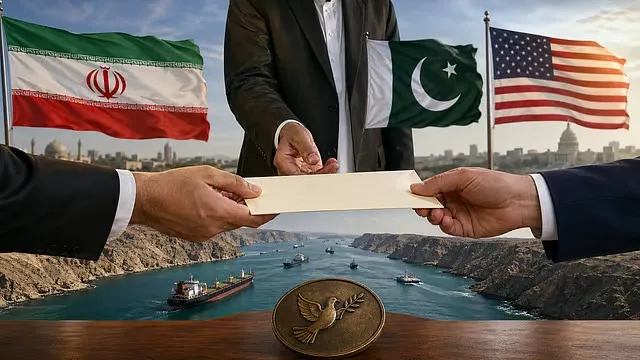
According to an Iranian official, the document was formally handed over to Pakistan on Friday, although the contents were not disclosed publicly at that time. Pakistan has emerged as a key intermediary in this conflict, helping facilitate communication between two governments that no longer have direct diplomatic ties.
President Donald Trump confirmed on Saturday that he was actively reviewing the new proposal. Speaking to the Associated Press, he indicated the document was now in his hands, although he stopped short of expressing optimism about its prospects.
Trump’s Cool Reception
Trump made no secret of his dissatisfaction with the direction of negotiations. Speaking to reporters on Friday, the president acknowledged that Iran wanted to reach an agreement but bluntly stated that he was not satisfied with what had been offered so far.
He left the door open to further developments while signaling that any deal would have to align more closely with American priorities — particularly around Iran’s nuclear program and global oil shipping routes.
The American Framework: A Different Set of Priorities
The Iranian proposal stands in clear contrast to the 15-point framework that the United States had previously presented to Tehran. Among Washington’s central demands were:
- The complete reopening of the Strait of Hormuz, a critical chokepoint for global oil and gas shipments
- A definitive end to Iran’s nuclear program
These two issues remain at the heart of the dispute. The United States has consistently maintained that no agreement is possible unless Iran abandons any path toward developing a nuclear weapon. Tehran, however, insists that its nuclear ambitions are entirely peaceful and aimed at meeting domestic energy needs.
The Strait of Hormuz Standoff
The Strait of Hormuz lies at the center of much of the tension between the two countries. Since the war began, Iran has effectively choked off the waterway, disrupting global flows of oil, gas, and fertilizer. The economic impact has been enormous, with global oil prices currently sitting around 50 percent above pre-war levels.
In response, the United States has imposed a naval blockade on Iranian ports, cutting off the oil revenues Tehran depends on to support its already troubled economy. Iran’s call for a new mechanism to govern the strait suggests it wants international recognition of its strategic role in the region while still allowing some form of controlled commerce.
Sanctions, Reparations, and Frozen Assets
Iran’s demand for the release of frozen assets, full sanctions relief, and reparations underscores how much economic damage Tehran believes it has suffered. For decades, sanctions have been one of the main tools Washington has used to pressure Iran. Tehran’s insistence that they must be lifted entirely is unlikely to be welcomed in Washington, where sanctions have widespread political support across both major parties.
Reparations, in particular, may prove to be a major sticking point. The United States is unlikely to agree to any framing that depicts itself as the aggressor in the conflict.
A Push for Regional Stability
Iran’s call to end the fighting in Lebanon adds another layer of complexity. The country has long maintained close ties with Lebanese armed groups, and any peace framework that includes Lebanon would inevitably require coordination with multiple regional players. This part of the proposal could either become a powerful tool for de-escalation or a source of additional friction, depending on how it’s interpreted by Washington and its allies.
The Diplomatic Path Forward
The Iran 14-point proposal puts the ball squarely in the United States’ court. Trump’s review of the document will likely shape the next phase of negotiations, with the possibility of either renewed talks or further escalation hanging in the balance.
For Iran, the proposal serves multiple purposes. It demonstrates a willingness to negotiate, projects strength on the international stage, and lays out a clear vision of what Tehran considers acceptable terms. For the United States, the challenge will be deciding whether to engage with the proposal seriously or push back with revised demands.
What’s at Stake
A great deal hinges on the outcome of this round of diplomacy. Continued conflict could deepen the global economic disruption already caused by elevated oil prices, prolonged supply chain issues, and rising regional instability. A successful agreement, on the other hand, could open the door to a broader reset between the two longtime adversaries.
Whether the Iran 14-point proposal becomes the foundation for a meaningful deal or simply another moment in a long-running standoff remains to be seen. For now, the world is watching closely as Trump weighs his next move and Tehran waits to see whether its boldest diplomatic offer in years will lead to peace — or to a deeper confrontation.
Author