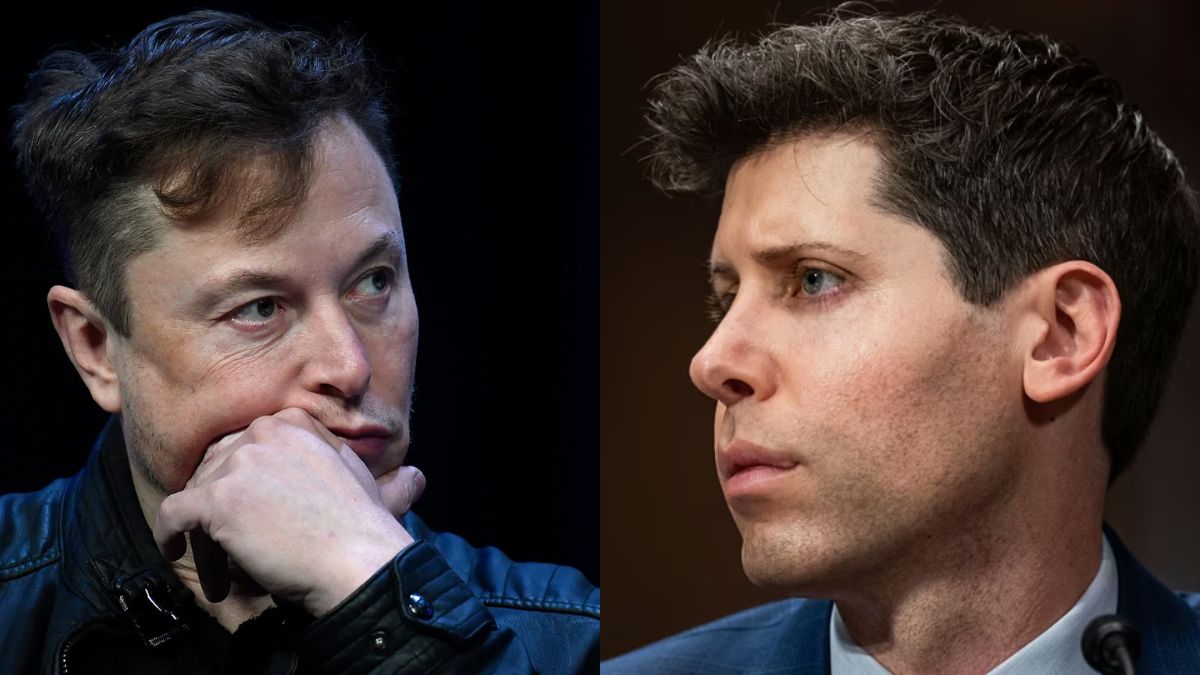
The OpenAI trial Musk Altman saga has captured global attention as one of the most explosive legal battles in tech history continues to unfold in a federal courtroom in Oakland, California. With each passing day of testimony, the world is getting an unprecedented look inside the chaotic and ambition-fueled rise of OpenAI from a small non-profit AI lab into a commercial powerhouse now valued at a staggering 852 billion dollars. As the trial heads into its final week, the reputations of some of the biggest names in tech are hanging in the balance.
A Bitter Lawsuit With Massive Stakes
The lawsuit, brought by Elon Musk, aims to undo OpenAI’s transformation into a for-profit company and remove its top leaders, CEO Sam Altman and President Greg Brockman, from their positions. Musk has long argued that the company strayed from its original non-profit mission of building artificial general intelligence for the benefit of humanity.
The trial began with intense personal stakes. Just before proceedings opened, Musk reportedly threatened to make Altman and Brockman the most hated men in America. Now, two weeks into the case, none of the three central figures have walked away unscathed. Their reputations have been tested, dissected, and damaged in equal measure.
Inside OpenAI’s Messy Origin Story
Court testimony has provided the clearest picture yet of how OpenAI evolved from a humble research lab into a tech giant with nearly a billion users. Behind that incredible growth, however, lies a tangled web of rivalries, secret negotiations, and shifting loyalties.
Musk’s lawsuit hinges on his claim that Altman and Brockman effectively “stole a charity” that he originally helped fund with 38 million dollars. He insists that the company’s mission to create safe, general-purpose AI was hijacked for personal financial gain.
Greg Brockman was forced to defend himself this week against entries from his personal digital diary that appeared to suggest he was eager to convert the non-profit into a for-profit and become wealthy. He even revealed during testimony that he now owns a 30 billion dollar stake in OpenAI.
The “Haunted Mansion” Meeting
One of the most surprising stories shared during the trial involved a 2017 meeting at a mansion Musk had recently bought near San Francisco. Co-founders Musk, Altman, Brockman, and Ilya Sutskever gathered to discuss the company’s future direction.
According to Brockman, Amber Heard — Musk’s partner at the time — served whiskey amid the aftermath of a previous night’s party. During the meeting, the group considered transforming OpenAI into a for-profit company within just weeks. Notes from former board member Shivon Zilis included her surprise reaction to the speed of the proposed change, written in the margin as “Woah, fast!”
Zilis, who has four children with Musk among his estimated 14, also became a major figure in the case. Messages between her and Musk suggested he was open to converting the non-profit into a for-profit, but only if he held controlling power or could merge OpenAI with Tesla.
Musk’s Quest for Control
Brockman testified that Musk repeatedly stressed his desire for control. Musk reportedly explained that he had felt powerless before and refused to relive that experience. He even mentioned needing tens of billions of dollars to fund his vision of building a city on Mars.
In an effort to win over the team, Musk gifted his co-founders special edition Tesla Model 3 vehicles. Brockman later admitted that the gesture felt like an attempt at “buttering us up.”
When Brockman and Sutskever ultimately rejected Musk’s plans, the meeting reportedly ended dramatically. Sutskever even offered a sketch of a Tesla as a peace offering. Musk, however, stormed around the room, snatched the drawing, and walked out.
Musk’s Departure and Counter-Moves
Musk left OpenAI in early 2018 and went on to launch his own AI venture, xAI, which produced the Grok chatbot. OpenAI’s defense argues that this proves Musk’s intentions were never purely charitable. They claim his lawsuit is fueled by frustration that Grok has struggled to keep pace with ChatGPT.
In a move that drew attention during the trial, Musk announced a new agreement with OpenAI’s strongest competitor, Anthropic, granting it access to xAI’s data centers to train and operate its AI models.
The Trial’s Potential Fallout
If the jury sides with Musk, Judge Yvonne Gonzalez Rogers could potentially order OpenAI to return to non-profit status. Such a ruling would directly impact the company’s plans for a public offering, expected to be one of the largest in tech history.
Musk is also demanding 150 billion dollars in damages to be returned to OpenAI’s non-profit arm, along with the removal of both Altman and Brockman from the company’s leadership.
Internal Conflicts at OpenAI Exposed
The trial has also opened the door to internal disputes within OpenAI’s leadership. Co-founder and former chief technology officer Mira Murati accused Altman of undermining her, pitting executives against each other, and fostering a chaotic work environment.
Tasha McCauley, a former board member involved in the brief 2023 ouster of Altman, described what she called a “toxic culture” rooted in dishonesty. Microsoft CEO Satya Nadella has also been called to testify, as Microsoft is accused of “aiding and abetting” OpenAI’s transformation. The tech giant’s 14 billion dollar investment has grown into a 27 percent stake now worth over 200 billion dollars.
Questions About OpenAI’s Mission
The trial has reignited debate over whether OpenAI’s commercial ambitions have overtaken its founding mission. David Schizer, former dean of Columbia Law School, testified as an expert witness, noting that it is highly unusual for a non-profit to be so dependent on a single private investor.
Brockman’s leaked digital diary further fueled the perception of internal greed. One entry during tense 2017 negotiations read, “This is the only chance we have to get out from Elon — Financially, what will take me to one billion dollars?”
Another entry, however, showed a more conflicted side. Brockman acknowledged that taking the non-profit from Musk would be “pretty morally bankrupt,” and admitted that Musk was no fool.
A Battle Over Billions
Musk’s legal team focused heavily on Brockman’s enormous personal stake in OpenAI, arguing that it represents a betrayal of his original duties as a non-profit board member. They even challenged him to donate 29 billion dollars back to the charitable arm — a demand he is unlikely to accept.
Musk himself appeared combative on the witness stand. At one point, he accused OpenAI’s lawyer William Savitt of trying to trick him with leading questions, comparing them to the classic “have you stopped beating your wife” trap.
The Murati Drama
Helen Toner, another former OpenAI board member, added more fuel to the fire by criticizing Mira Murati’s behavior during Altman’s brief 2023 firing. Toner described Murati as unsupportive and passive at a time when her voice could have shaped the outcome.
Frantic text messages between Altman and Murati on the day of his firing also surfaced. In them, Murati admitted the situation looked “directionally very bad” and warned Altman that the situation was extremely dire.
A Trial That Will Reshape AI
As the OpenAI trial Musk Altman saga heads into its final week, the world is watching closely. The verdict could redefine the future of one of the most important technology companies of the modern era. Whether OpenAI returns to its non-profit roots, faces leadership shake-ups, or continues its commercial trajectory will depend on what the jury ultimately decides.
What is already clear, however, is that this trial has lifted the curtain on a company once admired for its idealism. Beneath the surface lies a story of power, money, and ambition — one that will likely shape the next decade of artificial intelligence development, no matter how it ends.
Author