Netanyahu’s Northern Crisis: Why Israel’s Border Voters Are Turning Against Him
Netanyahu support in north Israel is collapsing at a striking pace, and a newly released poll suggests the country’s prime minister may be paying a heavy political price in one of the most electorally significant regions of the nation. Along the northern frontier, where Hezbollah rocket fire has fallen hardest, frustrated residents are demanding a far tougher approach to Lebanon, and many feel their leader has let them down.
A Region on Edge
The mood in northern Israel is tense, exhausted, and increasingly angry. After months of near-daily attacks, residents are not simply weary of the conflict; they want it resolved on their terms. For many, that means dismantling Hezbollah entirely rather than settling for another fragile truce.
The ceasefire reached on Wednesday night between Israel and Lebanon, regardless of whether it ultimately holds, may not satisfy the people living closest to the danger. For them, a pause in fighting offers little reassurance when the threat next door remains intact.
The Poll That Spells Trouble
A May survey conducted by Agam Labs at Israel’s Hebrew University, shared exclusively with Reuters, lays out the scale of Netanyahu’s problem. According to the data, voters in the north are abandoning his Likud party more rapidly than those elsewhere in the country, and they are judging his handling of the Lebanon war far more harshly.
The numbers are stark. Support for Likud in the north has fallen to just 23 percent, a sharp drop from the 35 percent the party secured in the 2022 election. Backing for the broader right-wing bloc that anchors Netanyahu’s coalition has slipped even further in the region.
What makes this especially alarming for the prime minister is the contrast. The decline in Likud support is roughly three times steeper in the north than in the rest of Israel. Around 70 percent of those surveyed there said they disapproved of how the Lebanon war has been managed, a higher level of dissatisfaction than anywhere else.
Nimrod Nir of Agam Labs described the change as dramatic, noting that the region has nearly flipped from its past voting patterns. He observed that about two-thirds of northern voters now intend to support the anti-Netanyahu camp, a near mirror image of previous elections.
Life Under the Sirens
To understand the anger, one need only look at daily life in Kiryat Shmona, a northern city where roughly half of voters once backed Likud. When the sirens sound, residents have only seconds to find shelter.
Moshe Yifrah, a 45-year-old resident, described nights filled with loud explosions and made clear he places no faith in a ceasefire. He questioned who such a deal could even be made with, dismissing Hezbollah as murderers intent on killing his family.
His frustration extends to Netanyahu himself. Though Yifrah openly admits he voted for the current government, he now believes it is effectively being steered from Washington. In his words, the person truly running things appears to be President Trump.
Caught Between Washington and the Voters
That sense of foreign influence sits at the heart of Netanyahu’s dilemma. With Iran demanding an end to Israel’s military campaign as a condition of any peace agreement with the United States, the prime minister finds himself squeezed between domestic political survival and the diplomatic priorities of his American allies.
The conflict’s roots stretch back to the Hamas attack of October 7, 2023, after which Hezbollah began firing into Israel. Israel responded with an intense campaign in Lebanon, killing most of the group’s leadership and forcing it into a ceasefire. Fighting reignited after Israel and the United States launched a war on Iran on February 28, prompting renewed Israeli strikes and the seizure of large parts of southern Lebanon.
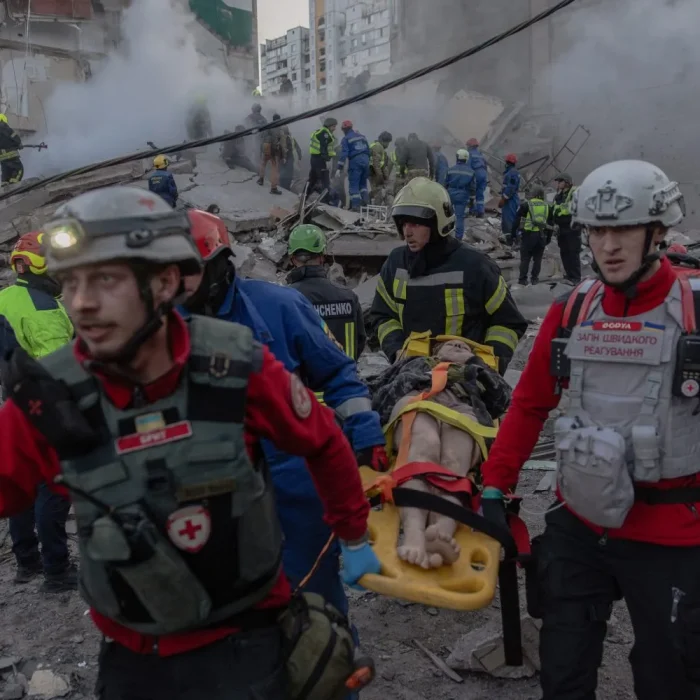
The human toll has been severe on both sides. More than 50 civilians have been killed by Hezbollah fire in northern Israel since October 2023, according to Tel Aviv University’s Institute for National Security Studies. In Lebanon, Lebanese officials report more than 7,500 deaths from Israeli military action over the same period, figures that do not separate civilians from combatants.
Rivals Smell Opportunity
Netanyahu’s political opponents have been quick to exploit his vulnerability. After Trump announced on Monday that Israel and Hezbollah had agreed to de-escalate, just hours after Netanyahu ordered fresh strikes on Beirut’s southern suburbs, rivals accused him of compromising national security.
Former military chief of staff Gadi Eizenkot, now a contender for the premiership, argued that Hezbollah must be struck wherever it operates and that the hands of the Israeli military should not be tied. He has visited the north more than 15 times in recent weeks, while Netanyahu has notably stayed away.
That absence has not gone unnoticed. Yisrael Cohen, a 40-year-old former Likud supporter who says he will not vote for the party again, insisted the prime minister should come and see the situation for himself, arguing that the government needs to witness what residents are enduring.
A City Hollowed Out
Once a thriving hub of tourism and agriculture nestled among green mountains, Kiryat Shmona now resembles a ghost town. Many residents have fled, shops sit shuttered, and during a recent visit a playground stood empty.
With a general election due by October, the stakes could hardly be higher. The vote could push Netanyahu’s coalition from power and end the long career of a leader often called Israel’s ultimate political survivor. On Wednesday, even as a new truce required Hezbollah to withdraw from southern Lebanon, Netanyahu insisted that military operations would continue for now, a sign of just how delicate his balancing act has become.
Author