





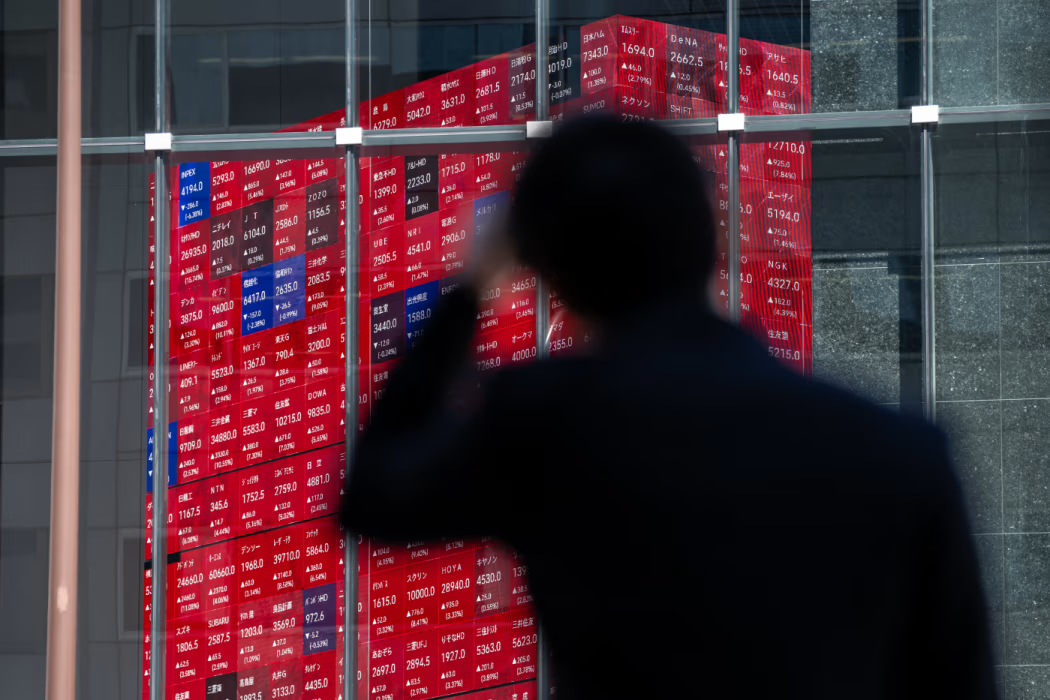
Markets are cautiously optimistic ahead of weekend talks in Islamabad. Oil is on track for its worst week in nine months. But the Strait of Hormuz remains closed — and some investors think the rally is getting ahead of itself.
Markets wake up hopeful — for the first time in weeks
Asian stocks climbed on Friday, extending what is shaping up to be the region’s first weekly gain since the Middle East war broke out. The mood was cautiously upbeat, driven by President Trump saying he was “optimistic” about reaching a deal with Iran — even as he kept up the pressure by threatening Tehran over its fees in the Strait of Hormuz. Technology shares, seen as relatively insulated from the war’s direct economic fallout, led the gains. US equity futures steadied after earlier losses, and European contracts pointed to a positive open.
All eyes on Islamabad this weekend
The real test comes Saturday, when US-Iran talks are scheduled to begin in Islamabad. Traders are treating the talks as the market’s next major catalyst, and the shaky ceasefire — punctuated by fresh reports of Iranian drone strikes on Kuwaiti facilities on Thursday evening — is keeping nerves on edge. Israel’s Prime Minister Netanyahu separately agreed to hold talks with Lebanon, adding another thread of potential de-escalation to an otherwise volatile picture. Trump reportedly asked Netanyahu to scale back strikes to protect the broader Iran negotiation process.
“The market is starting to price in some sort of agreement can be reached over the weekend. My quant model shows the technical rebound should continue for a few more days at least. The market is starting to look beyond the war.”
— Hao Hong, Chief Investment Officer, Lotus Asset Management
Oil slides as geopolitical tension eases — slightly
Brent crude pared its earlier gains to trade up just 0.9% at $96.80 a barrel on Friday, capping what is set to be oil’s worst weekly performance in nine months. The dollar — which had been the safe-haven asset of choice throughout the six-week conflict — is also on track for its biggest weekly decline since January. The combination of a softer dollar and easing oil prices is helping lift risk appetite across global markets, though the Strait of Hormuz remains closed and continues to choke off crude supply flows.
“The decline in market volatility, equities, bonds and currencies is positive for Asian stocks and tech given their underperformance since the war began. I’m not trimming into the weekend, as the direction of travel seems to be to talk rather than to fight.”
— Rajeev De Mello, Global Macro Portfolio Manager, Gama Asset Management SA
Not everyone is buying the optimism
Seasoned market watchers are urging caution. Even if a deal is struck this weekend, the supply damage caused by weeks of conflict won’t disappear overnight. Nick Ferres of Vantage Point Asset Management in Singapore was blunt: “Even if it gets agreed on the weekend, odds are that oil remains supply constrained. That’s no longer reflected in equity risk premium.” In other words, stocks may be getting ahead of what the fundamentals actually justify.
Analyst note — Garfield Reynolds, Markets Live Team Leader
Investors appear eager to look past concerns about the ceasefire’s fragility — as long as Trump doesn’t signal re-escalation. But that also means the equity rebound may be overdone: focusing on a potential end to the fighting risks overlooking the lasting supply shocks the war has already created.
Author