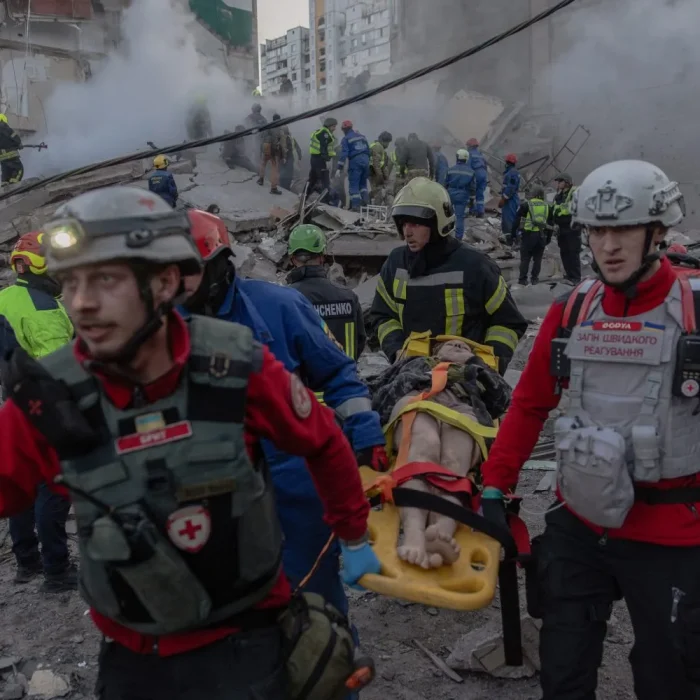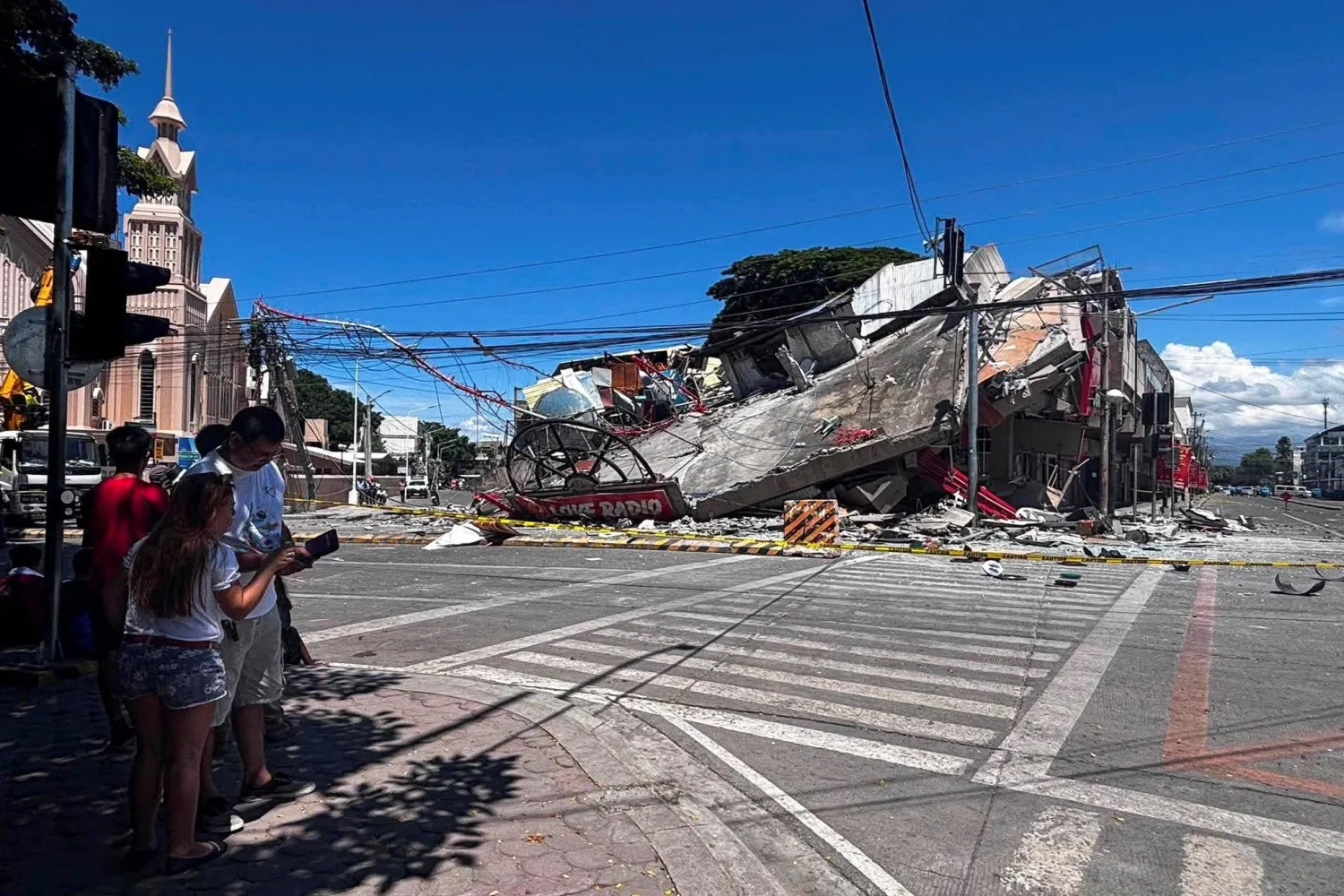
The Philippine earthquake that struck Mindanao on Monday has left at least 37 people dead and forced more than 20,000 from their homes, making it one of the most powerful quakes to hit the country in fifty years. A day later, rescuers were still combing through wrecked buildings in the southern provinces, determined to confirm that no survivors remained trapped beneath the rubble.
A Frantic Search Through the Wreckage
Official records listed only four people as missing across the affected provinces near the epicenter. Even so, the Office of Civil Defense cautioned that numerous collapsed and badly damaged structures still needed careful inspection, leaving open the possibility of more survivors, or more casualties, yet to be found.
The 7.8 magnitude quake was centered off the coast of Mindanao, the second most populous island in the Philippines. Beyond the lives lost, it injured close to 500 people and drove more than 20,000 into emergency shelters.
Fear of a tsunami sent many fleeing their homes. Waves reaching up to 1.4 meters above tide level were recorded in the Philippines, but the only tsunami-related damage reported was to six stilt houses in a coastal village. Smaller waves also reached Indonesia, Palau, and even southern Japan.
Where the Deaths Occurred
The destruction was widespread, but several areas bore the heaviest toll:
- General Santos, a bustling coastal city of more than 700,000 known as the country’s tuna capital, lost at least 13 people to collapsing buildings and falling debris.
- Sarangani province saw at least 18 deaths, most of them in a landslide that buried homes in the mountainside town of Glan, according to Rafaelito Alejandro of the Office of Civil Defense.
- Additional deaths were reported in South Cotabato, Davao Occidental, and on Balut Island.
An initial government assessment counted roughly 2,000 damaged houses along with 117 government buildings and facilities. The international airport in General Santos stayed closed, grounding 63 domestic flights apart from those running humanitarian missions.
Schools Caught in the Disaster
The timing could hardly have been worse. The quake struck on the first day of classes nationwide, just as students returned from a two-month summer break. Many of the injured were young students who had gathered for morning flag-raising ceremonies, full of first-day excitement.
Now, about 6,000 public school buildings across the affected provinces must be inspected before classes can resume. Authorities have warned that structures left with cracks could give way under aftershocks, some of which have been dangerously strong.
As Alejandro put it, reopening schools cannot be rushed when the soundness of the buildings is still in question.
The Strongest Quake Since 1976
Monday’s earthquake originated at sea at a depth of 33 kilometers, roughly 32 kilometers southwest of Maasim town in Sarangani province. It was triggered by movement along the Cotabato Trench, the same undersea fault responsible for a devastating 8.1 magnitude quake on August 17, 1976.
According to Teresito Bacolcol, director of the Philippine Institute of Volcanology and Seismology, that earlier disaster killed around 8,000 people, with tsunami waves of 8 to 10 meters swallowing entire towns and provinces. In a grim coincidence, the seismological institute had planned to mark the anniversary of the 1976 catastrophe this August by installing markers reminding vulnerable communities to stay vigilant.
The country has faced similar tragedies before. A 1990 earthquake of the same 7.8 magnitude killed more than 1,000 people and caused extensive damage across northern provinces.
A National and International Response
President Ferdinand Marcos Jr. dispatched senior defense and disaster-mitigation officials from Manila to oversee search-and-rescue efforts, coordinate the distribution of tens of thousands of food packs and construction materials, and assess damage to bridges, roads, and other infrastructure.
Support also arrived from abroad. The United States, a treaty ally, said it was coordinating with Manila and stood ready to assist. France, Japan, and New Zealand likewise offered their backing.
Living on the Ring of Fire
Disasters like this are a recurring reality for the Philippines. Sitting along the Pacific “Ring of Fire,” an arc of seismic faults encircling the ocean, the archipelago regularly experiences earthquakes and volcanic eruptions. On top of that, it endures roughly 20 typhoons and tropical storms each year, a combination that ranks it among the most disaster-prone nations in the world.
For now, the focus remains on the immediate aftermath: clearing rubble, sheltering the displaced, and ensuring that the buildings left standing are safe enough to return to.
Author