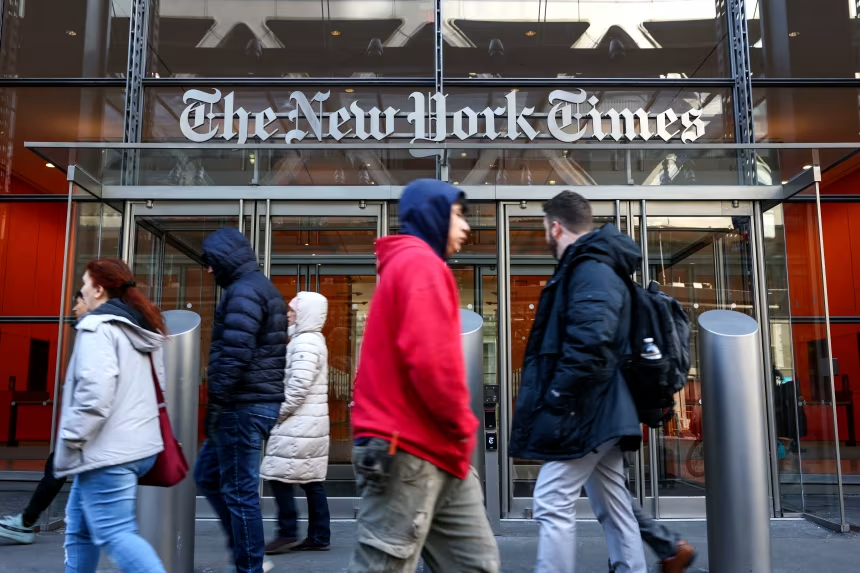
EEOC sues New York Times in a major federal lawsuit that has set off a fresh wave of debate about diversity, equity, and inclusion policies in American workplaces. The Equal Employment Opportunity Commission filed the case Tuesday, accusing the Times of denying a promotion to a white male employee due to his race and gender. The lawsuit comes amid growing political tension, increasing federal scrutiny of DEI policies, and an ongoing legal battle between the Trump administration and major media organizations.
A Major Federal Lawsuit Targets a Media Giant
The lawsuit, filed in U.S. District Court in Lower Manhattan, alleges that The New York Times violated key federal civil rights laws when it passed over an unnamed white male employee for a promotion. According to the EEOC, the case represents a clear violation of Title VII of the Civil Rights Act of 1964 as well as Title I of the Civil Rights Act of 1991.
This is no small matter. Title VII is the foundation of modern American workplace protection, prohibiting discrimination based on race, color, religion, sex, or national origin. The EEOC, which is responsible for enforcing federal anti-discrimination laws, says The New York Times’ DEI commitments may have crossed into territory the law forbids.
EEOC Chair Andrea Lucas, an appointee of President Donald Trump, made her position clear in a public statement. She emphasized that no organization, regardless of its prestige, is above federal law. According to her, race and sex discrimination remain equally unlawful regardless of who is the alleged target.
Why the Allegations Matter
The EEOC’s case rests on the idea that hiring or promotion decisions cannot be based, even partially, on race or gender. Lucas reaffirmed that federal law has no “diversity exception” to its anti-discrimination rules. She argued that even when an organization is striving to expand representation, it cannot do so by treating some employees differently because of their demographic profile.
Several core issues form the basis of the lawsuit:
- The unnamed employee’s qualifications were allegedly strong
- Other candidates may have been promoted under DEI considerations
- The newspaper’s leadership has publicly committed to DEI goals
- The EEOC believes the company’s policies created systemic risks
- The decision is being viewed as a test case for civil rights enforcement
This alignment of factors has made the case one of the most closely watched federal employment lawsuits in years.
The Times Pushes Back Hard
The New York Times responded forcefully on Sunday, calling the allegations “meritless and politically motivated.” A spokesperson stated that the publication categorically rejects the EEOC’s narrative and accused the agency of deviating from standard procedures.
According to the Times, the EEOC has acted in unusual and unprecedented ways during the investigation, allegedly using its traditionally independent role to support a predetermined storyline. The newspaper insists that its hiring practices are merit-based and aligned with industry-leading standards.
The Times’ rejection of the lawsuit is unsurprising given how publicly committed the publication has been to inclusive workplace practices. Its leadership has historically supported broader diversity commitments, particularly after public conversations following the social and political shifts of 2020.
The Wider DEI Battle
This lawsuit lands in the middle of a sweeping national debate about DEI policies. Once viewed as standard corporate practice, DEI initiatives have come under intense legal, cultural, and political scrutiny. Some of the major shifts shaping today’s environment include:
- Supreme Court rulings on race-based admissions
- A wave of corporate DEI rollbacks
- Increased lawsuits challenging promotion and hiring practices
- Political pressure from conservative officials
- Expanded federal investigations into corporate diversity programs
In particular, the Trump administration has signaled a clear intent to scale back DEI-related practices across the federal government and pressure private companies, especially major institutions, to follow.
Why the Times Is Considered a High-Profile Target
The New York Times is one of the most influential media organizations in the United States. As a result, it has long been at the center of cultural and political conversations, including those surrounding workplace diversity. Some of the reasons it draws elevated attention include:
- Its reputation as a leading global newsroom
- Its strong public commitments to representation
- Its 2021 “Call to Action” to diversify leadership
- Its prominent role in shaping public opinion
- Its history of public-facing corporate communications
When a major institution publicly states its diversity goals, it becomes more vulnerable to lawsuits if employees believe they were disadvantaged because of those policies. Whether or not the EEOC’s claims hold up in court, the optics alone are politically charged.
The Trump Administration’s Approach to DEI
This lawsuit fits into a much wider campaign to challenge DEI initiatives across various sectors. In recent months:
- The Trump administration has rolled back federal DEI programs
- Federal agencies have re-evaluated diversity training requirements
- The Department of Education has scaled back equity-focused mandates
- The FCC has examined DEI policies among broadcasters
- The DOJ is reviewing diversity practices in government contractors
This pattern reflects a coordinated effort to redefine how diversity initiatives operate in the U.S. While supporters argue that the administration is defending civil rights law as written, critics argue that the policies are politically motivated and target organizations seen as ideologically opposed to the administration.
A Possible Test Case for the Future
If the case proceeds, it could shape the legal future of DEI in ways many experts have predicted but few imagined would occur this rapidly. Possible outcomes include:
- A court ruling that limits how companies implement DEI
- Settlements involving operational changes inside the Times
- Stronger enforcement powers given to the EEOC
- New compliance requirements for media companies and corporations
- Increased pressure on universities and other institutions
Even if the case takes years to resolve, the legal arguments raised will likely influence corporate decision-making across America. Many companies will reevaluate their internal DEI rules to avoid potential lawsuits.
The Broader Cultural Conflict
The lawsuit also reflects deep cultural divisions over how America should handle questions of representation, fairness, and equity. Different sides see the case very differently.
Supporters of the EEOC’s position argue that:
- Civil rights law applies equally to all groups
- DEI policies can sometimes lead to reverse discrimination
- Employees should be evaluated based on individual merit
- Federal enforcement keeps companies accountable
- Major institutions should not have a pass on civil rights laws
Critics of the EEOC’s position argue that:
- DEI policies address persistent inequalities
- Lawsuits like this could chill efforts to broaden representation
- Federal action is being used to target ideological opponents
- The EEOC’s procedures may be politicized
- Civil rights frameworks must allow for proactive inclusion
The disagreement is reshaping employment law, corporate strategy, and political discourse simultaneously.
Why The New York Times Is in a Particularly Tough Spot
For The New York Times, the lawsuit is not just a legal challenge but a high-stakes communication moment. The publication is widely seen as a leader on cultural issues, including those tied to workplace fairness. To navigate this period, the company will need to:
- Defend its hiring practices in court
- Manage internal reactions among its staff
- Communicate transparently with subscribers and readers
- Remain consistent with its long-standing values
- Avoid public missteps that could damage its credibility
The Times has the resources to mount a strong defense, but the case is likely to demand careful long-term strategy.
A Tense Time for Media Organizations
The lawsuit is one of several federal actions targeting major media companies. Last week, the Federal Communications Commission ordered an accelerated review of ABC’s local broadcast licenses. The FCC is examining whether the stations violated unlawful discrimination rules tied to ABC’s DEI initiatives.
These two cases together suggest a coordinated federal push that places media organizations under unique pressure. Whether the goal is enforcement, political signaling, or both, the consequences for the industry could be significant.
What Could Happen Next
The lawsuit will likely move through several phases over the coming months. Possible early developments include:
- The Times filing motions to dismiss the case
- Discovery battles over internal communications
- Public testimony from current or former employees
- Potential mediation or settlement discussions
- Appeals if early rulings go against either party
Both sides have strong incentives to fight the case publicly. The EEOC sees this as a defining moment for enforcement, while the Times sees the lawsuit as a direct attack on its operations.
The Wider Stakes for American Workplaces
This lawsuit is more than just a clash between an agency and a media giant. It represents a major moment in the ongoing redefinition of American workplace law. The way the case is decided could influence:
- How corporations evaluate promotion decisions
- How HR departments train managers
- How companies design diversity programs
- How employees pursue fairness complaints
- How federal agencies enforce employment law
Whether or not the lawsuit succeeds, it has already triggered new conversations across American workplaces about how DEI should function in the years ahead.
Why the Public Is Paying Close Attention
Public interest in this case is high for several reasons. Some of the most cited concerns include:
- Curiosity about how diversity programs actually operate
- Debates about fairness in hiring and promotion
- Concerns about politicization of federal enforcement
- Interest in how major institutions respond to scrutiny
- Broader cultural conversations about race, identity, and equity
This blend of interest ensures that the case will remain in the headlines for months. Both supporters and critics of DEI are watching closely to see how the legal arguments unfold.
A Defining Legal Moment
For The New York Times, the lawsuit is a defining moment that will likely test its leadership, its public messaging, and its long-term position on diversity. For the EEOC, the case will determine how aggressively the agency pursues enforcement in the years ahead.
Whatever the outcome, the lawsuit underscores a profound shift in how the United States approaches workplace fairness. The boundaries between civil rights protections, organizational diversity strategies, and political pressure are becoming more closely intertwined.
Final Thoughts
EEOC sues New York Times marks a major escalation in the ongoing national debate over DEI. The lawsuit raises fundamental questions about how American workplaces should balance fairness, representation, and federal compliance.
Although the legal battle is just beginning, the implications are sweeping. From how corporations design hiring policies to how the federal government enforces civil rights laws, this case has the potential to influence American work culture for years to come.
For The New York Times, the road ahead will require careful legal strategy and clear communication. For the EEOC, the case represents a high-profile enforcement action that could redefine its mission. For Americans watching from the sidelines, it offers yet another reminder that the conversation around diversity, fairness, and equality is still evolving, and that the legal and political stakes have rarely been higher.
As the courts begin to process the lawsuit, one thing is certain. The result will not just affect one media organization. It could reshape how every major American employer thinks about diversity, equity, and inclusion in the years ahead
Author