The Hormuz oil toll question has moved from rumour to open debate. Middle East crude exports have climbed back above pre-war levels, yet oil prices remain stubbornly high. One senior analyst now suggests a hidden fee paid to Iran may help explain both facts, though she admits it is speculation.
Exports Are Back, Prices Are Not
Since the US-Israeli war on Iran began in February, Tehran has tried to blockade the Strait of Hormuz and has attacked vessels. Even so, regional crude exports topped pre-war levels on four days in the last week of September, reaching between 19.5 and 22.5 million barrels per day, according to provisional Kpler data. Before the war, the average was about 18 million.
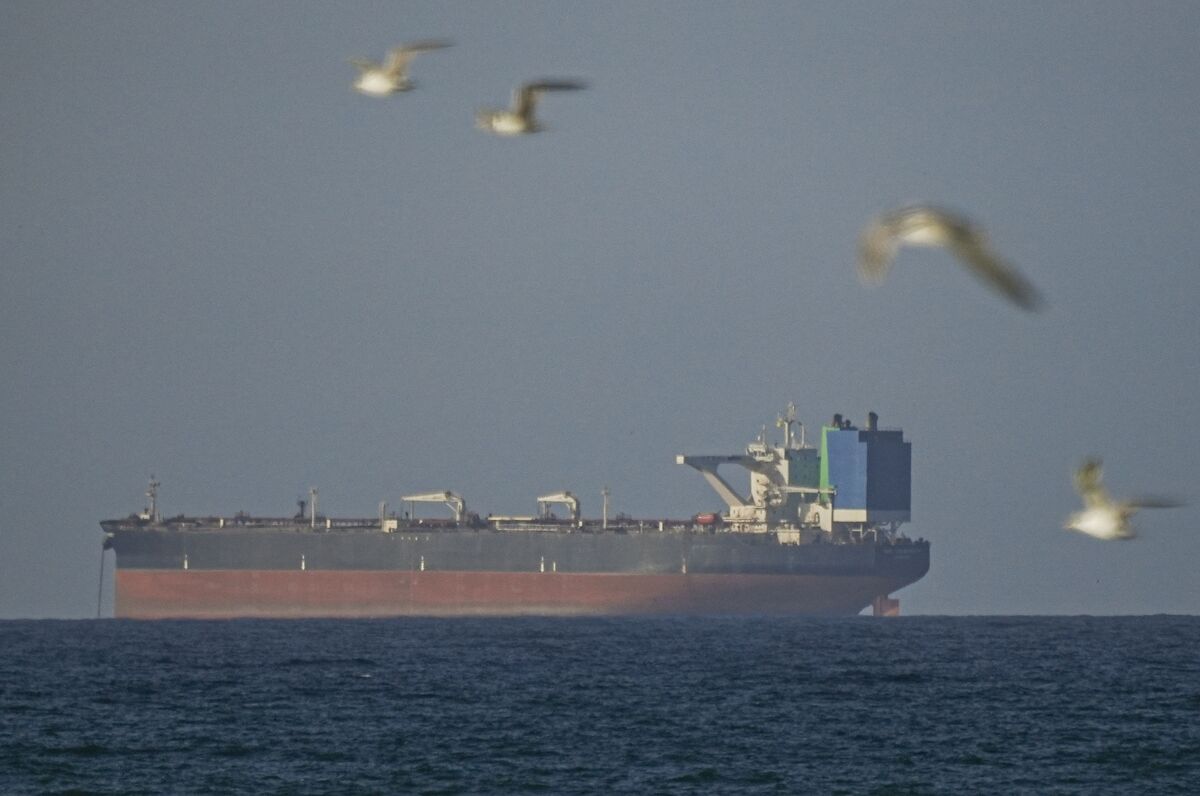
The seven-day average also rose above that pre-war figure for the first time since the conflict started. Crude exports excluding Iran recovered to at least 16.5 million barrels per day across September, and the trend has continued into October. Iraq’s state tanker company said it moved two million barrels through the strait on a supertanker, its first such operation in decades.
The usual explanations are:
- US ships escorting tankers out of the strait
- More ship-to-ship transfers, which lower the risk of being targeted
- Elevated insurance costs driven by fear of Iranian attacks
- A market pricing in the chance that full-scale fighting resumes
Brent crude traded around 101.59 dollars on Monday, and US benchmark crude near 90.05 dollars, both well above pre-war levels. The Group of Seven has also announced a release of 100 million barrels from emergency reserves.
The Analyst’s Theory
Michelle Brohard, head of policy and geopolitical risk at Kpler, said she suspects a toll is being paid in exchange for safe passage. She also suspects the countries involved know this is unsustainable, both because US escorts cannot continue indefinitely and because paying Iran a share of each cargo, perhaps 10 or 20 percent, is costly. The result, in her view, is a race to ship as much oil as possible before the war restarts.
Brohard presented this as a suspicion, not a finding, and it has not been independently verified.
What Supports It, and What Doesn’t
There are some hints. In March, Lloyd’s List reported that Iran’s Revolutionary Guard had set up a toll-booth system to control traffic. In September, the US sanctioned a digital assets firm, BitBank, which it said Iran’s Hormuz Safe Marine Services Authority used to move money to Tehran. That authority was created by Iran’s government to collect fees for safe transit.
Against this, the Trump administration has repeatedly said Iran will not be allowed to charge a toll under any deal. Academic Abdul Khalique of Liverpool John Moores University called the idea plausible but said it is better seen as an informal security arrangement than a formal levy, adding that no public proof confirms a systematic, state-run toll. He noted that international maritime law protects transit through straits, making formal tolls legally doubtful. Market analyst Chris Beauchamp said the scenario is possible “in part” and that much is happening under the radar.
Hormuz Traffic Is Changing Shape
Kpler says about 40 percent of exports now bypass Hormuz, using Saudi and Emirati pipelines and Red Sea routes, and most crude crossing the strait changes tankers offshore. Its figures exclude ships that may have crossed with tracking transponders switched off.
Iran disputes that it has lost control. A senior Revolutionary Guard commander said only three to four million barrels per day move along the US-supervised route, which he called negligible. Before the war, roughly 125 large vessels crossed daily. On Monday, another tanker was told by the Guard to turn back or face attack.
The Shipping Bottleneck
Beauchamp argues the real constraint is now shipping. The shuttle system moving oil out of the Gulf needs many vessels, which pushes up freight rates and thins supply elsewhere. Asian buyers must source crude from farther away, lengthening journeys. As he put it, ships do not get built overnight.
What to Watch Next
- Whether any evidence emerges of payments to Iran
- Further US sanctions on firms linked to fee collection
- Whether US escorts continue
- How oil prices respond if fighting resumes
The Bottom Line
The toll theory is unproven, but it fits an odd market in which oil flows freely while prices stay high. Whether or not Iran is being paid, the strait remains a flashpoint, and the real strain may be in shipping capacity and the risk of renewed war.
Author