The threatened Trump tariff on Canada was called off with barely an hour to spare, sparing roughly twenty billion dollars in cross-border trade from an immediate 50-percent levy. The reprieve is temporary, narrow and light on detail, but for exporters on both sides of the border it beat the alternative.
A Deal Struck Against the Clock
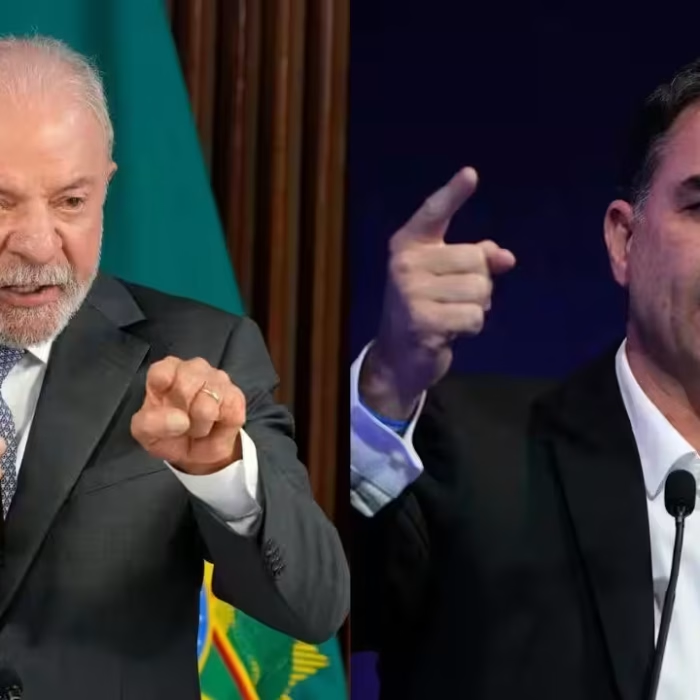
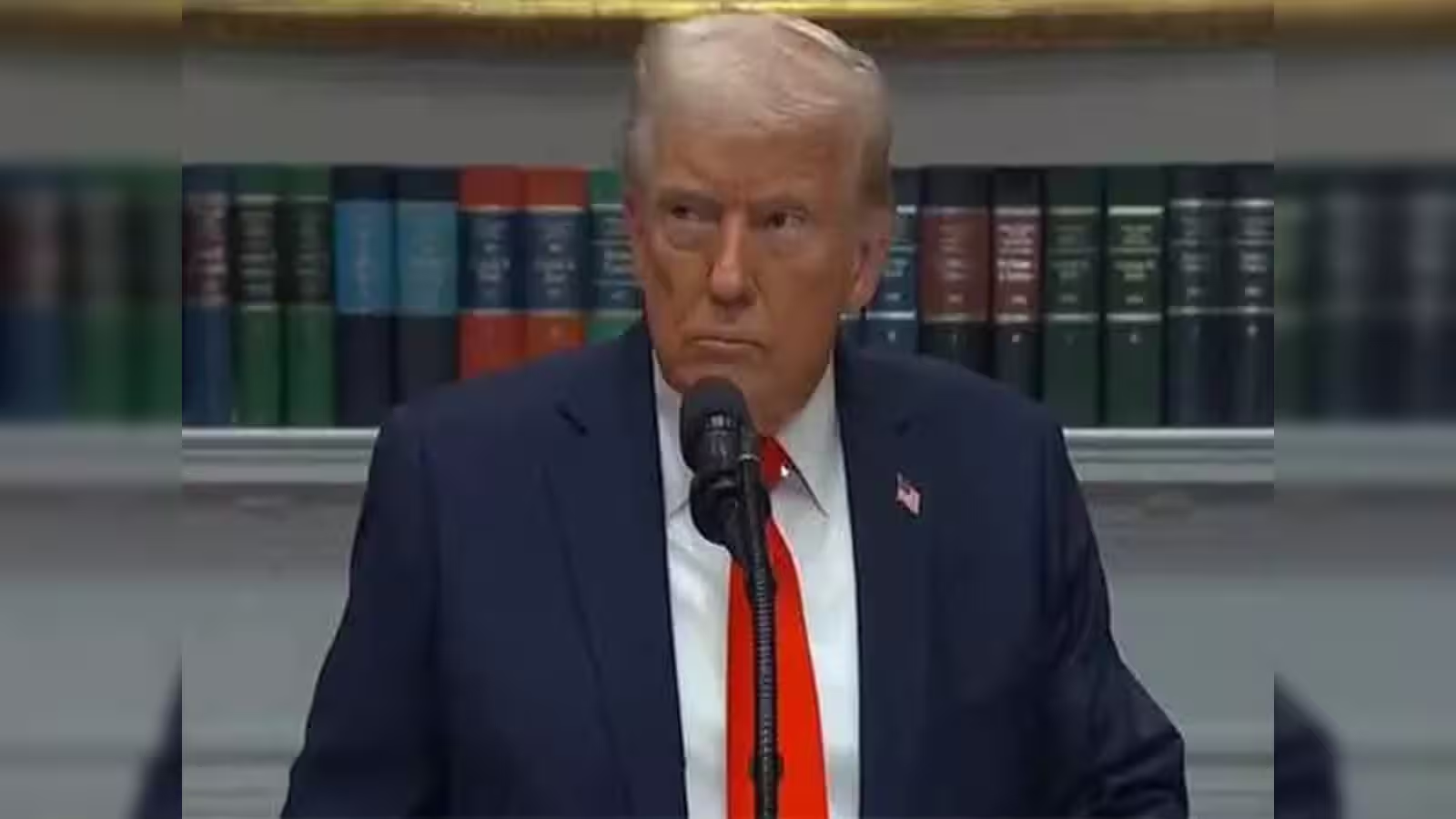
The duty was scheduled to bite at midnight. Shortly before that deadline passed, the US president announced that the measure would be held back, and the Canadian prime minister confirmed the suspension soon after, putting a new date of August 22 on the calendar.
The announcement followed direct talks between the two leaders on Tuesday, capping weeks of negotiations that had grown increasingly tense. In his social media post, Trump described the arrangement as a three-day pause contingent on paperwork still being finalised, which is another way of saying nothing is locked in yet.
Neither side released specifics. That silence is telling. When governments have a genuine breakthrough, they usually want to describe it. When they have bought themselves seventy-two hours, they tend to stay vague.
What Was Actually at Stake
The levy would have hit roughly twenty billion dollars worth of Canadian goods heading south. The affected list was broad rather than targeted, sweeping in categories such as:
- Electronics and consumer technology
- Industrial machinery and equipment
- Furniture and household goods
- Dairy products
- Wine and other beverages
For Canada, the exposure is enormous. Around seventy percent of everything the country exports goes to American buyers. The reverse figure is closer to thirty percent, which explains why the two countries do not feel the same pressure when a deadline approaches. Asymmetry shapes leverage, and both capitals know it.
The Pipeline That Came Back From the Dead
The strangest thread in this story involves a project many assumed was finished. Trump appeared to connect the tariff pause to renewed interest in the Keystone XL Pipeline, declaring that the venture, buried during the previous administration, might yet be revived.
The pipeline would move roughly 830,000 barrels of crude oil daily from Alberta down to Nebraska. First proposed back in 2008, it collected lawsuits, protests and delays for more than a decade before a key permit was pulled in 2021 on environmental and economic grounds.
Why resurrect it now, inside a tariff negotiation? One international business scholar at Ivey Business School offered a blunt read: the appeal has less to do with barrels of oil than with who cancelled it. Reversing a signature decision by his predecessor, the professor suggested, presses one of the loudest buttons available to this president. He also warned that the whole exercise could easily loop back to where it started, comparing the possibility to a Groundhog Day scenario if Friday arrives without a signed agreement.
Careful Words From Ottawa
Canada’s prime minister struck a measured tone. He acknowledged substantial progress while stressing that important work remains unfinished, and he paired that with a line about building a stronger, more independent and more competitive economy at home.
That last phrase is doing quiet political work. It signals to Canadians that the government is not simply waiting on Washington’s mood, and it hedges against the possibility that talks collapse.
He has been candid elsewhere about the atmosphere, describing the negotiations at various points as nasty, delicate and intense. Diplomats rarely reach for that vocabulary unless the room genuinely feels that way.
An Unusual Legal Weapon
What made these particular tariffs notable was not just the rate but the mechanism. Washington invoked Section 338 of the Tariff Act of 1930, a provision that had never been used before, citing what it called discriminatory treatment of American automobiles, dairy products and alcoholic beverages.
More significantly, the measure would have applied to goods that normally qualify for duty-free treatment under the United States-Mexico-Canada Agreement. That trilateral pact, ratified during Trump’s first term, has kept the overwhelming majority of North American trade free of tariffs. Reaching past those carve-outs suggested a willingness to treat existing agreements as negotiable rather than settled.
The Domestic Complications
Ottawa cannot simply hand over concessions. Canada’s federal structure means provinces hold real cards, and several are playing them.
Eight of the ten provinces have blocked sales of American alcoholic drinks since early last year, a retaliation Washington has since cited as justification for the new duties. Provincial leaders have also resisted touching the supply management system that governs production and import quotas for dairy, eggs and poultry, another long-standing American grievance.
Any deal, in other words, requires two negotiations running in parallel: one with Washington and one with the premiers.
Public Opinion Has Hardened
The mood among ordinary Canadians has shifted noticeably, and it constrains what any government can accept.
Polling from July found that sixty-nine percent of Canadians said they would still avoid buying American alcohol even if the provincial bans disappeared. Separate research released this month showed forty-eight percent holding an unfavourable view of Americans, edging out the forty-five percent who felt positively.
A political scientist at the University of British Columbia described the reaction as defiance mixed with genuine concern. Canadians understand that specific sectors would suffer real damage, he noted, but there is also a current of national pride that leaders cannot ignore. His summary was direct: most Canadians want sovereignty defended and are not interested in trade peace at any price.
What Comes Next
The pause buys days, not resolution. If documents are signed by Friday, exporters get breathing room and both leaders claim a win. If not, the same deadline returns with the same stakes.
For now, the Trump tariff on Canada sits frozen rather than cancelled, and everyone involved knows the difference.
Author