The trans sports ruling handed down by the Supreme Court this week settled one question while opening a much larger one. By affirming that states may bar transgender women and girls from competing in female sports, the justices gave legal cover to the 27 states that already have such bans on the books. What they didn’t do is compel the other 23 states to follow suit.
That leaves the country split roughly down the middle, and it shifts the real battle away from the courtroom and toward statehouses, ballot boxes, and the coming midterm elections.
What the Court Actually Decided
The ruling arose from two cases challenging laws in Idaho and West Virginia. In both, the Court concluded that reserving girls’ and women’s sports for biological females does not run afoul of Title IX or the Constitution’s equal protection guarantees.
Justice Brett Kavanaugh, writing for the conservative majority, took a firm stance on how the law defines sex. He argued that the term “sex” in Title IX can only reasonably be read to mean biological sex. That interpretation is significant because it aligns closely with the position the Trump administration has been advancing in its own legal fights.
But the opinion stopped short of one crucial step. It did not declare that Title IX outright forbids transgender students from playing on teams matching their gender identity. As Josh Block, an ACLU attorney who represented the West Virginia athlete, put it, this remains a policy matter where different states can legitimately land in different places.
In other words, the Court said states may enact these bans. It did not say they must.
The “May, Not Must” Distinction Matters
This is the detail that reshapes everything that comes next. The ruling doesn’t impose a nationwide standard. It simply removes the constitutional cloud that hung over existing bans, confirming they aren’t illegal.
For the 27 states with bans, all of which have Republican-led legislatures, nothing changes; their laws stand. For the 23 states without them, the decision creates no obligation whatsoever. A transgender athlete’s ability to compete now depends heavily on which state she happens to live in.
Advocates on Both Sides Waste No Time
Supporters of the bans made clear the ruling is a beginning, not an end. Kristen Waggoner, president of the Alliance Defending Freedom, whose organization defended the Idaho and West Virginia laws, signaled on social media that Democratic-led states are the next target. Her group wants to see similar restrictions spread nationwide, whether through legislatures, courts, or voters.
Several avenues are already in motion:
- Ballot questions on transgender athlete participation are advancing in Colorado and Washington, both Democratic-led states.
- The Trump administration has opened dozens of investigations into transgender sports policies.
- The Justice Department has filed lawsuits aiming to strike down a California law that protects students’ right to play on teams aligned with their gender identity, along with comparable policies in Minnesota.
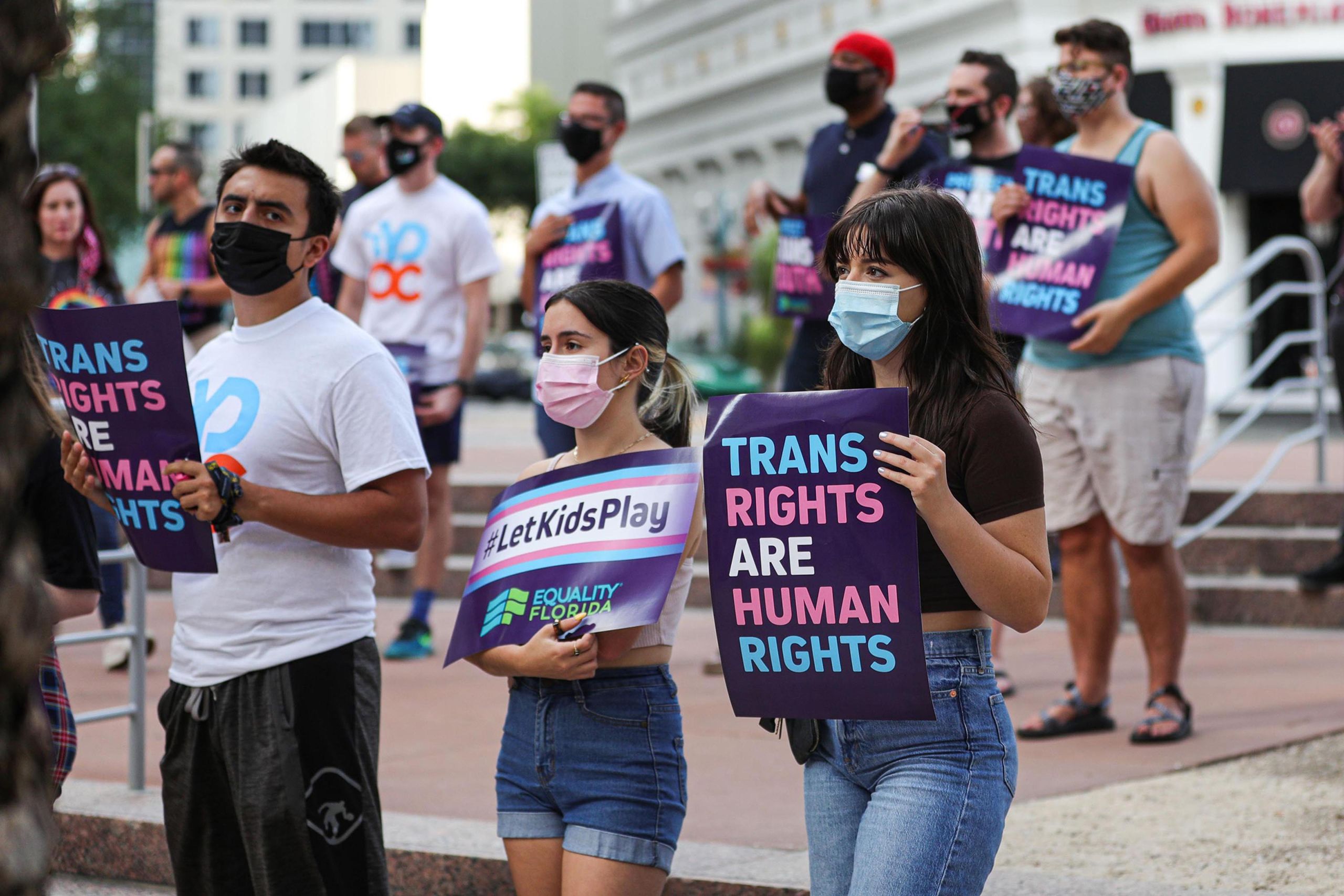
On the other side, LGBTQ advocates are urging Democratic-led states to strengthen protections for transgender athletes before the momentum tilts further. Kelley Robinson, president of the Human Rights Campaign, called on states to adopt inclusive policies so that no student gets left behind. Advocates also warn that bans rooted in biological sex can end up subjecting any girl who doesn’t fit feminine stereotypes to unwanted scrutiny.
A Politically Awkward Issue for Democrats
Heading into the midterms, this is shaping up to be a pressure point for Democratic candidates, and the polling helps explain why.
In a Gallup survey last spring, roughly two-thirds of adults said transgender athletes should compete only on teams matching their sex assigned at birth. Notably, that included about four in ten Democrats, a sign that the party’s voters are far from unified on the question.
Some prominent Democrats have already broken from the party’s traditional stance. California Governor Gavin Newsom, among others, has suggested he views transgender participation in women’s sports as unfair. The issue gained fresh attention in May when a transgender high school senior in California shared two state titles, in the high jump and triple jump, with the athlete who finished behind her, under a policy adopted the previous year.
Where the Legal Fight Goes Next
Expect the courtroom battles to keep centering on Title IX. In its case against California, the Trump administration is arguing that once a school separates teams by sex, the girls’ and women’s teams cannot include athletes who identify as female but whose biological sex is male.
The Supreme Court’s endorsement of a biological definition of sex appears to lend weight to that argument. Still, because the justices avoided the question of whether Title IX flatly bars transgender participation, plenty of legal ground remains contested. Activist states are likely to seek injunctions and other delays, meaning these disputes could stretch on for years.
A Note of Restraint in the Opinion
Even as the majority sided with the states, the ruling carried a measured tone toward transgender athletes themselves. Kavanaugh, who has long coached youth basketball, wrote that their desire to compete deserves respect and that no student athlete, transgender or not, should be ostracized or vilified.
That language won’t resolve the underlying conflict. But it hints at how the Court tried to thread a difficult needle, upholding the bans while acknowledging the human stakes for those affected.
The Bottom Line
The trans sports ruling clarifies what states are permitted to do without dictating what they will do. The result is a patchwork map in which policy varies by geography, and the outcome in any given state now hinges on the choices of lawmakers, the pressure of advocacy groups, and ultimately the will of voters.
For a debate that has consumed so much political oxygen, the Supreme Court’s answer was, in a sense, to hand the question back to the states. What happens next will be decided far from Washington.
Author