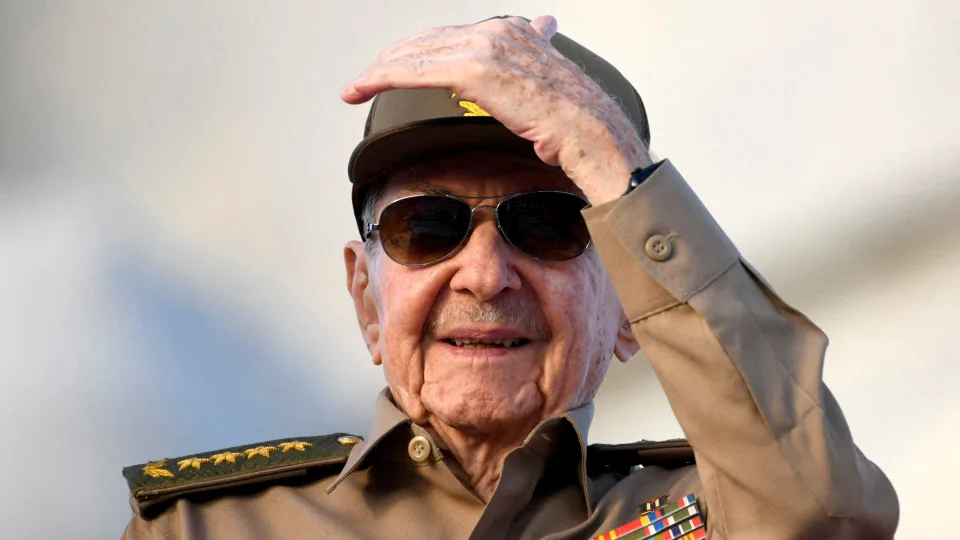
The U.S. indictment of Raúl Castro on murder and conspiracy charges has sent shockwaves through diplomatic circles worldwide, but inside Cuba itself, the news traveled at a frustratingly slow pace. With much of the island plunged in darkness from chronic power cuts and weakened phone networks, many Cubans only learned hours later — through flickering smartphones and aging television sets — that Washington had taken its most aggressive legal step yet against the former Cuban president.
A Country Living in the Dark — Literally and Politically
Cuba has been crumbling under a deepening fuel shortage, frequent island-wide blackouts, food scarcity, and a public health emergency tied to mosquito-borne illnesses. Conditions worsened sharply after the Trump administration almost entirely cut off Cuba’s oil supplies in January.
Caught between an unyielding government at home and tightening sanctions from abroad, many residents are simply worn out. For some, the indictment offered a flicker of hope that something — anything — might finally shift.
“This has to change,” said Yoandy Benítez Ramirez, a 24-year-old tobacco factory worker in Havana, echoing a sentiment heard across the city.
What the Indictment Actually Says
The U.S. Justice Department’s charges accuse Raúl Castro of murder and conspiracy in connection with the 1996 shootdown of two civilian aircraft operated by Brothers to the Rescue, a Cuban-American humanitarian group. Four people were killed in the incident, three of them American citizens.
The case has been raised in Washington several times over the decades, but the decision to formally indict the former president marks a major escalation in U.S. policy toward Havana.
A Population Split on the Charges
Reactions inside Cuba have been deeply divided. Some welcomed the U.S. action, viewing it as long-overdue accountability. Others rejected it as politically motivated interference.
Frank Alejandro Font, a 24-year-old mechanical engineer in Havana, defended the Cuban government’s 1996 decision, arguing the planes had repeatedly violated Cuban airspace.
“Cuba took the right decision to shoot them down,” he said, while also expressing concern about the possibility of foreign military involvement. “Many Cubans are asking for an intervention,” he added, “there is always collateral damage.”
Fears — and Hopes — of a U.S. Military Move
The indictment landed against a tense regional backdrop. Earlier this year, the Trump administration used a similar federal indictment against Venezuelan leader Nicolás Maduro as justification for a January raid that removed him from power. Whether Washington plans a comparable operation in Cuba remains unclear, but the parallel was not lost on Cubans.
Some openly hoped for forceful U.S. action to end decades of one-party rule.
“I don’t think a military intervention is the solution, but if that’s what it takes, well — what we need is for this to end once and for all, right now,” said Yasiel Lugones, a 27-year-old delivery driver speaking from his motorbike in Havana.
Lugones called for the complete removal of Cuba’s ruling elite, including every member of the Castro family. He described the country’s political system as a stagnant inheritance handed down for more than 60 years. “We don’t want them,” he said.
The Cuban Government Pushes Back
Officials in Havana wasted no time rejecting the indictment. President Miguel Díaz-Canel labeled it “a political action, lacking any legal basis,” and accused Washington of laying the groundwork for potential military aggression against the island.
Government supporters echoed his framing, casting the U.S. move as another chapter in a long-running campaign of hostility rather than a legitimate legal proceeding.
Rumors, Anxiety, and Dark Humor
In the days before the announcement, rumors swirled across Havana that something significant was on the horizon. Would American forces arrive? Would mass protests erupt? Conversations between younger and older Cubans turned uneasy — sometimes laced with grim humor about dusting off old Soviet-era rifles tucked away in closets.
While anti-government demonstrations have grown more frequent amid worsening conditions, analysts say the protests remain too fragmented to threaten the regime’s grip on power.
What the Data Suggests About Cuban Sentiment
Although reliable surveys are difficult to conduct in Cuba, a recent large-scale poll by Cuban news outlet El Toque drew more than 40,000 responses. The results indicated:
- About 56% of Cubans living on the island said they would support a U.S. military intervention.
- Nearly 70% of Cubans living abroad expressed similar support.
The survey was voluntary and not statistically representative, but experts say it captures the mood.
“I don’t think it means that Cubans relish the idea of a foreign power coming in and fixing their problems,” said Professor Michael J. Bustamante, who chairs Cuban and Cuban American Studies at the University of Miami. “But I think people are at such a level of exasperation, desperation, they’ll take help from wherever they can get it.”
A Population Demanding Resolution
For many Cubans, the specific mechanism of change matters less than the change itself. Decades of economic hardship, political stagnation, and now a crippling energy crisis have created a population eager for closure — even if the path forward is uncertain.
Raúl Cardoso, a 70-year-old retiree, summed up the impatience felt by many of his generation.
“If they are going to go in, they should come in,” he said. “And if not, they should stop talking so much.”
Whether the U.S. indictment leads to deeper diplomatic isolation, a negotiated transition, or something far more dramatic remains unknown. But across Cuba, one feeling cuts through the uncertainty: the status quo cannot hold much longer.
Author