The Strait of Hormuz blockade is back, and with it comes a strange spectacle: two governments simultaneously insisting they control the same stretch of water while shooting at each other across it.
US Central Command announced the naval blockade of Iranian ships would begin Tuesday at 4 p.m. Eastern. Iran, meanwhile, vowed to assert its own authority over the waterway — forever, in the words of its foreign minister.
How We Got Here
The blockade is not new. American forces previously restricted maritime traffic to and from Iranian ports from April 13 to June 18.
What ended that arrangement was a 60-day ceasefire agreed in June, built around a 14-point memorandum of understanding meant to produce a final deal and reopen the strait.
The two sides have now reached the halfway point of that ceasefire. It is in ruins.
The truce began unraveling over the weekend when Iran attacked a commercial vessel transiting the strait on Saturday. The US retaliated with strikes. President Trump had already declared the ceasefire “over” during a NATO summit in Turkey last week, though he stopped short of ruling out further talks.
The Weekend Escalation
On Monday, the US launched another wave of strikes on Iran. CENTCOM said it targeted Iranian defense systems, missile and drone sites, and maritime capabilities — all framed as an effort to degrade Iran’s ability to attack commercial shipping.
Iran’s response was expansive.
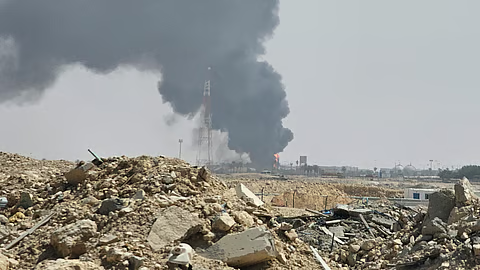
The Revolutionary Guard said Tuesday it had struck two “non-compliant” supertankers in the strait. It also claimed missile and drone attacks on:
- US military infrastructure in Bahrain, home to the Navy’s Fifth Fleet
- US military outposts in Jordan
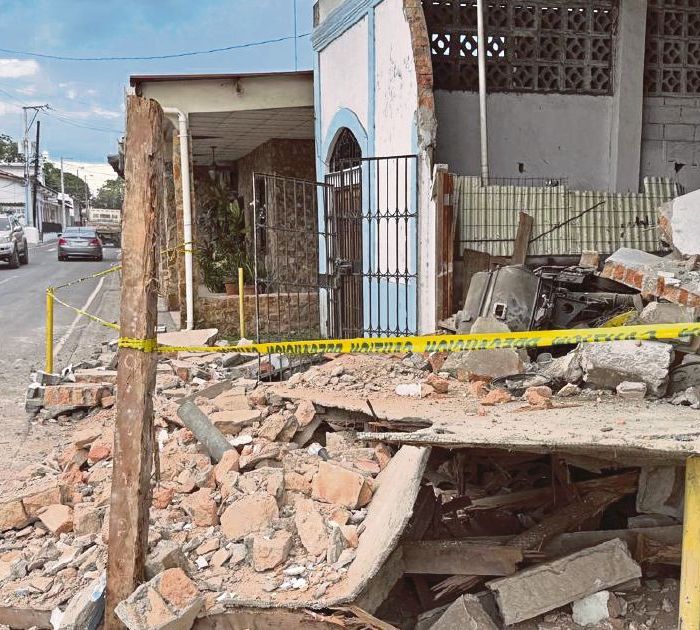
The consequences landed on civilians. The United Arab Emirates said two of its tankers were hit by Iranian cruise missiles while transiting Omani waters, killing one person.
Bahrain sounded sirens and urged citizens to seek shelter. Jordanian state media reported that its air defenses intercepted four Iranian missiles entering its airspace early Tuesday.
Trump’s Toll
Trump laid out the terms of the blockade in his own idiosyncratic fashion.
He said the US would not permit Iranian vessels to move through the strait, describing the measure as “THE IRANIAN BLOCKADE” — so named, he wrote, because it stops only Iran’s ships and customers.
Other countries may still pass through. But there is a price. The US will charge a 20 percent toll on cargo as reimbursement for what Trump called the job of providing safety and security to a volatile part of the world.
Henceforth, he declared, America would be known as “THE GUARDIAN OF THE HORMUZ STRAIT.”
This is a reversal. Until now, Washington’s position had been that no tolls or fees should be imposed on shipping through the strait.
CENTCOM made no mention of fees in its own guidance, instructing mariners approaching the Gulf of Oman and the strait to contact US naval forces on bridge-to-bridge channel 16, with formal notice to follow.
Iran’s Counteroffer
Foreign Minister Abbas Araghchi’s response was almost mocking.
He agreed with Trump on one point — that providing safe passage deserves compensation. He then rejected everything else, writing that Iran has always been the guardian of the strait and will remain so forever.
Then came the haggling. “20% is of course too much,” Araghchi posted. “We will be fair.”
The Deal That Wasn’t Clear Enough
Critics of the June memorandum argue its vagueness is precisely what produced this crisis.
Michael Singh, managing director of the Washington Institute for Near East Policy, points to paragraph five, which states that Iran would use its “best efforts for the safe passage of commercial vehicles.”
Washington and Tehran read that sentence entirely differently. Singh argues the wording favors Iran, appearing to place responsibility for the strait in Iranian hands rather than affirming it as an international waterway.
Iran’s parliament speaker and negotiator, Mohammad Bagher Ghalibaf, posted an image of the deal highlighting the phrase “Iran will make arrangements,” adding: “The era of one-sided deals is OVER.”
Both sides now accuse each other of breaching the agreement. Before announcing the blockade, the US had urged ships to use a southern route hugging Oman’s coast — a move Iran called a violation of the memorandum.
The Cost to Shipping
The economic damage is already severe.
The strait carries roughly 20 percent of the world’s energy supplies. Since the war began on February 28, Tehran has claimed control, demanding that vessels seek permission and follow approved routes — and attacking those that refuse.
According to shipping analytics firm Kpler, crossings dropped to just 22 ships last week. That represents nearly an 85 percent collapse from pre-war traffic.
Is Diplomacy Alive?
Araghchi said Monday that Iran remains in contact with mediators including Oman, Qatar, and Pakistan, whose role he described as de-escalation.
The actual status of US-Iran negotiations remains murky.
Qatar’s foreign minister had indicated ceasefire talks would resume after last week’s multi-day funeral for Iranian Supreme Leader Ayatollah Ali Khamenei, who was killed in US-Israeli airstrikes at the start of the war in late February.
What Comes Next
The blockade begins Tuesday afternoon. Iranian forces are attacking tankers. American forces are striking Iranian territory. Missiles are landing in Bahrain and Jordan.
And both governments continue to insist, publicly and simultaneously, that they are the rightful guardian of a waterway that almost nobody is willing to sail through anymore.
Author