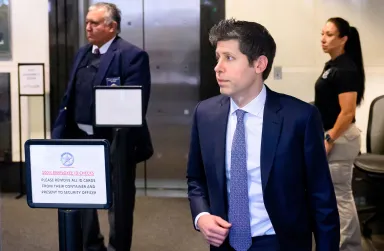
Is Sam Altman a liar? That uncomfortable question has followed the OpenAI chief executive for years — and a high-profile courtroom battle in Oakland, California, has given it fresh and forceful life. Even as Altman sits atop the company that ignited the AI revolution, a parade of his former close associates has taken the stand to say, in effect, that he cannot be trusted.
A Trial Built Around One Man’s Honesty
The drama played out over three weeks in the U.S. District Court for the Northern District of California. The case was brought by Elon Musk, who co-founded OpenAI as a nonprofit alongside Altman and OpenAI president Greg Brockman back in 2015.
Musk’s argument is pointed. He alleges that after he left the project in 2018, Altman and Brockman abandoned OpenAI’s original mission of ensuring AI benefits humanity, instead reshaping it into a profit-driven company designed to enrich themselves. His lawsuit asks the court to remove both men from leadership and return OpenAI to a fully nonprofit structure.
Closing arguments wrapped up on Thursday. The nine-person jury — six women and three men — is set to begin deliberations on Monday. Notably, the jury’s verdict will be advisory only; U.S. District Judge Yvonne Gonzalez Rogers retains final authority over the outcome. A separate remedies phase, where potential damages and penalties would be decided by the judge alone, also begins Monday.
One Question, One Telling Exchange
The trial’s central theme crystallized in a tense courtroom moment. An attorney for Musk bluntly asked Altman whether he always tells the truth. Altman responded that he believes he is a truthful person. Pressed on whether business partners might feel he had misled them, Altman said he could not speak for other people.
The problem for Altman is that several of those people already had — under oath.
Former Insiders Take the Stand
The most damaging testimony came not from strangers but from Altman’s onetime inner circle.
Tasha McCauley, a former board member, said in a deposition that Altman had contributed to a “culture of lying” at the company. Helen Toner, another former director, said she believed Altman had misled people to get his way. Both had voted to fire him in November 2023.
Ilya Sutskever — a legendary AI researcher, OpenAI co-founder and its former chief scientist — testified that ahead of that firing, he had gathered evidence of what he described as Altman’s pattern of dishonesty to present to the board.
Even Mira Murati, OpenAI’s former chief technology officer, said in a deposition that she had initially supported the 2023 decision to remove Altman. Her concern, she explained, was Altman telling one person one thing and another person something entirely different. She later shifted to backing his return, fearing his departure would cause the company to collapse.
That 2023 episode — when the board abruptly fired Altman, accused him of not being “consistently candid,” then rehired him days later after an employee and investor revolt — first turned his honesty into a matter of public debate. Nearly all the directors who voted him out were subsequently replaced.
Questions About Conflicts of Interest
The trial also revisited concerns about self-dealing. Musk’s lawyers questioned whether Altman’s personal investments clashed with his OpenAI role. Court documents revealed Altman held a roughly $1.65 billion stake in Helion, a fusion energy company that has a future deal to sell power to OpenAI. Altman said he recused himself from those discussions, and OpenAI board chair Bret Taylor testified that independent board members approved the Helion agreement unanimously.
Altman has also long maintained, including in Senate testimony, that he holds no equity in OpenAI itself. In court, he acknowledged owning a stake in a Y Combinator fund that holds some OpenAI shares — an admission Musk’s lawyers said showed he had misled the Senate. Altman was previously asked to leave Y Combinator in 2019, reportedly amid concerns he was prioritizing his own interests.
Pressure Beyond the Courtroom
The fallout has spread well past Oakland. James Comer, chairman of the House Oversight Committee, wrote to Altman seeking information about potential conflicts of interest raised by trial evidence. Separately, ten Republican state attorneys general asked the Securities and Exchange Commission to closely scrutinize any OpenAI filings, citing Altman’s alleged history of self-dealing and undisclosed conflicts.
Altman’s Defenders Push Back
OpenAI, Altman and Brockman have firmly denied Musk’s claims. They argue the lawsuit is driven by Musk’s desire to damage a competitor to his own AI venture, xAI, which was recently folded into SpaceX.
The defense also brought its own witnesses. Board chair Bret Taylor and longtime employee Joshua Achiam, OpenAI’s chief futurist, both testified that Altman remains genuinely committed to building AI that benefits humanity. Achiam said plainly that he did not share the concerns about Altman’s truthfulness.
OpenAI’s lead lawyer, Bill Savitt, defended the CEO outside the courthouse, saying it is not easy to face an opposing attorney “barking” at you, and characterizing the attacks as the kind of character assassination that surfaces when one side lacks evidence.
A Reputation Already Tested
OpenAI remains a dominant force — valued at over $850 billion, with ChatGPT used by hundreds of millions of people weekly, even as rivals Google and Anthropic close the gap. Altman has cemented his standing as Silicon Valley’s most influential AI leader.
But observers warn the reputational damage may outlast the verdict. As one independent trial attorney put it, even if Musk loses the legal fight, Altman has arguably already lost the public one — you cannot have your chief scientist, your CTO and two former board members publicly call you a liar and emerge unchanged.
For now, the legal question rests with the jury. The question of whether the public still trusts Sam Altman may take far longer to settle.
Author