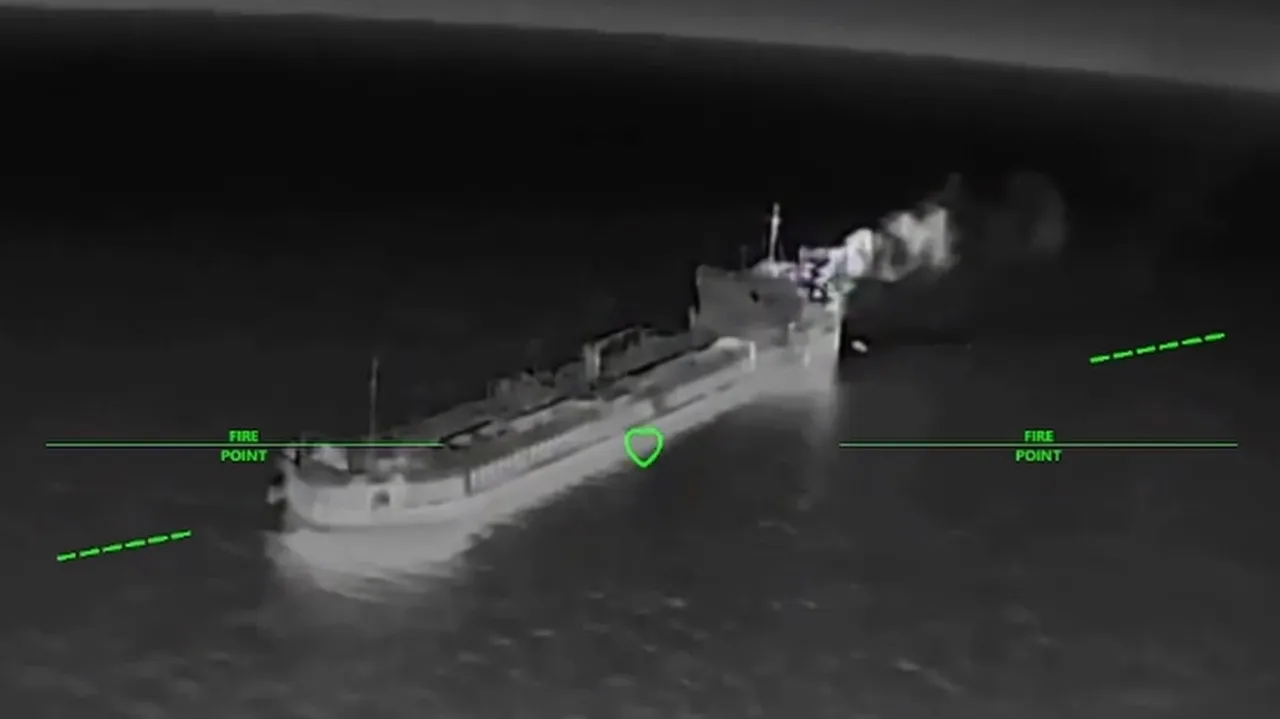
Ukraine strikes on Russian vessels in the Sea of Azov continued overnight, with the country’s Unmanned Systems Forces hitting eleven more ships between 13 and 14 July.
The cumulative figure is now considerable. According to Robert “Magyar” Brovdi, commander of Ukraine’s Unmanned Systems Forces, a total of 116 vessels have been hunted down over nine days as part of Operation MoLoChKa.
Among them: five tankers, five dry cargo vessels, and one tugboat.
The Target: Russia’s Feeder Fleet
The operation is not random. It is aimed at a specific and vulnerable link in Russia’s oil export chain.
Brovdi described the objective as paralysing Russia’s feeder fleet — small and medium flat-bottomed tankers roughly 140 metres in length, each with a deadweight around 7,000 tonnes.
These vessels form a critical component of Russia’s shadow fleet. They move oil through the Volga-Don Canal and across the Sea of Azov, carrying it from ports and oil terminals out toward larger tankers waiting in the Black Sea.
Why the Feeder Ships Matter
The logic of the target becomes clear once the logistics are understood.
Large tankers cannot enter these shallow ports. Their draught is simply too deep. So they sit at anchor in the Black Sea and take on cargo delivered to them by the smaller feeder vessels.
The ratio is what makes this a pressure point. According to Brovdi, a single large tanker absorbs the volume delivered by twelve to fifteen feeder ships.
Destroy the feeders, and the large tankers have nothing to load.
The Crimea Fuel Squeeze
There is a second consequence, and Brovdi was explicit about it.
Burning out what he colourfully called the “worm-like camel-tankers” — along with the tugboats that stubbornly haul them across the sea after they’ve been struck — also chokes off the delivery of scarce petrol into Crimea.
The Sea of Azov is shallow and narrow, functioning as a bottleneck. Constrict it, and Russia is left with road and rail tankers as the primary means of resupply.
Brovdi noted those alternatives are hardly safe. Ukrainian forces, he said, have those routes under fire control as well.
The Pace of the Campaign
The tempo has been relentless.
Brovdi previously reported that his units struck fifteen shadow-fleet vessels on the night of 12-13 July, bringing the total to 105 over eight days.
The additional eleven overnight pushes the nine-day tally to 116.
What This Represents
This is a campaign conducted almost entirely by unmanned systems against commercial shipping infrastructure — not warships, not naval bases, but the unglamorous vessels that keep an economy’s oil moving.
It reflects a strategic calculation: that Russia’s ability to sustain both its export revenue and its occupation of Crimea depends on a fleet that is slow, shallow-drafted, and largely defenceless against drones.
Whether the pace can be maintained is another question. But over nine days, Ukraine has demonstrated that the Sea of Azov is no longer a safe corridor for anything Russia needs to move.
Author