Iran War Updates: Strait of Hormuz Grinds to a Halt as Strikes Escalate and Oil Prices Surge
The Iran war intensified sharply on Friday, with fresh strikes, stalled shipping, and rattled global markets all pointing toward a dangerous new phase. As the U.S.-Iran ceasefire collapses, one of the world’s most vital waterways has effectively frozen, and analysts are warning that the situation has slid back to a worst-case scenario.
Here’s a look at where things stand and why the fallout is spreading well beyond the battlefield.
Iran Claims a Wave of New Strikes
Iran’s Revolutionary Guard announced a fresh series of attacks on Friday, claiming to have targeted U.S. military facilities scattered across the Middle East. According to the group, the strikes hit bases in Syria, Kuwait, Oman, Bahrain, and Jordan.
However, those claims come with a significant caveat. U.S. officials offered no confirmation of any impacts, and Iranian forces have a well-documented pattern of overstating the scale and success of their operations. As a result, the actual damage — if any — remains unverified.
The announcement nonetheless signals Tehran’s intent to keep escalating rather than retreat, even as American forces press their own campaign.
The Strait of Hormuz Freezes Up
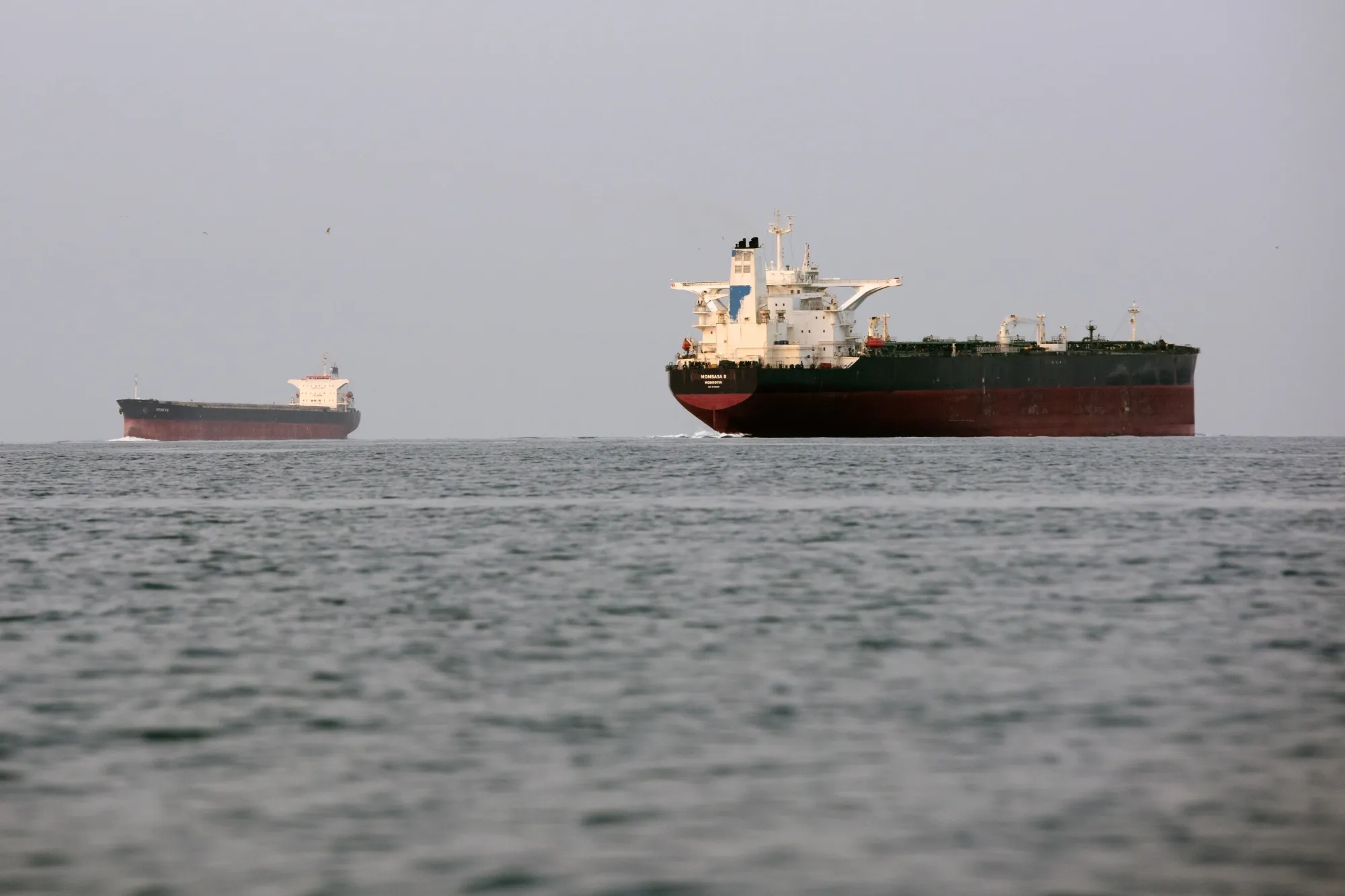
Perhaps the most consequential development is unfolding at sea. Ship crews operating around the Strait of Hormuz are refusing to make the dangerous passage, spooked by the breakdown of the ceasefire.
The assessment from the shipping industry was stark. The CEO of a Greek maritime risk management company summed up the mood bluntly, saying the situation had returned to the worst-case scenario and that no one is willing to move.
That paralysis matters enormously. The Strait of Hormuz is one of the planet’s most critical chokepoints for oil and cargo, and when crews decline to sail through it, the ripple effects reach global energy supplies and prices almost immediately.
Six Straight Nights of U.S. Strikes
The American military, for its part, shows no sign of easing off. U.S. forces announced early Friday that they had completed a sixth consecutive night of strikes, hitting what they described as dozens of Iranian military targets.
According to Central Command, those targets included:
- Coastal surveillance and air defense sites
- Military logistics infrastructure
- Maritime capabilities
The White House reinforced that hard-line posture. Press secretary Karoline Leavitt said President Trump would not permit continued attacks on ships and Gulf states without ensuring that Iran faces consequences — a clear signal that Washington intends to keep up the pressure.
Markets Take a Hit
The conflict is bleeding directly into the global economy, and Friday brought fresh evidence of the strain.
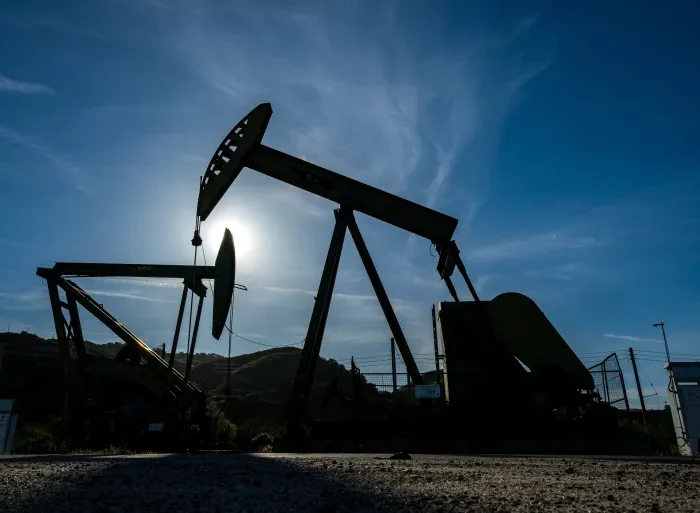
Oil prices climbed again as the two sides traded new attacks, with international benchmark Brent crude pushing above $85 a barrel. One senior analyst captured the anxiety plainly, noting that developments in the Middle East were deteriorating by the hour.
Stock markets absorbed the shock as well. Asian and European exchanges followed Wall Street lower, where steep declines in major tech names like Nvidia and Amazon had dragged the Nasdaq down more than one percent the previous day.
The losses were widespread but uneven:
- Sharp drops hit Hong Kong, Shanghai, Singapore, and Sydney
- Bangkok, Manila, and Mumbai managed to rise against the trend
- Europe’s main markets slipped into the red, though London held up relatively well as the U.K. prepared to welcome its new Prime Minister, Andy Burnham
A Devastating Human Toll
Behind the market numbers and military claims lies a far more painful reality. According to Iran’s semi-official Fars news agency, shrapnel from a U.S. strike on southern Iran severely wounded a one-year-old child and killed the child’s mother.
Fars reported that the woman died in the hospital after suffering severe wounds in a strike on a telecommunications tower in Bandar Abbas, a southern port city sitting right on the Strait of Hormuz. The child was left in intensive care, having reportedly lost a hand and sustained serious chest injuries.
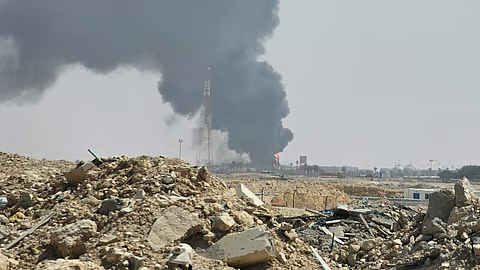
The report underscores the civilian cost mounting alongside the military campaign. The U.S. has carried out repeated strikes across Iran this week, including attacks on infrastructure in and around Bandar Abbas — the same area where Central Command said its forces struck coastal surveillance, air defense, and maritime targets during the sixth night of operations.
Why This Moment Feels Different
Taken together, Friday’s developments paint a picture of a conflict spiraling in several directions at once. The collapse of the ceasefire has removed the guardrails that had briefly contained the fighting, and each side now appears locked into escalation.
Several dynamics make this phase especially precarious:
- A vital shipping lane has effectively shut down, threatening global energy flows
- Oil prices are climbing toward crisis territory, squeezing economies worldwide
- Civilian casualties are rising, hardening positions and inflaming tensions
- Both Washington and Tehran are signaling resolve rather than restraint
The Bottom Line
The war between the United States and Iran has entered a volatile stretch where military action, economic disruption, and human suffering are feeding into one another. With the Strait of Hormuz at a standstill, oil markets on edge, and strikes continuing night after night, the path back toward de-escalation looks increasingly narrow.
For now, the warnings from analysts and shipping executives carry a grim consistency — the worst-case scenario is no longer a hypothetical but the reality unfolding hour by hour across the region.
Author