Andy Burnham Rises to Labour Leader, Poised to Become Britain’s Next Prime Minister
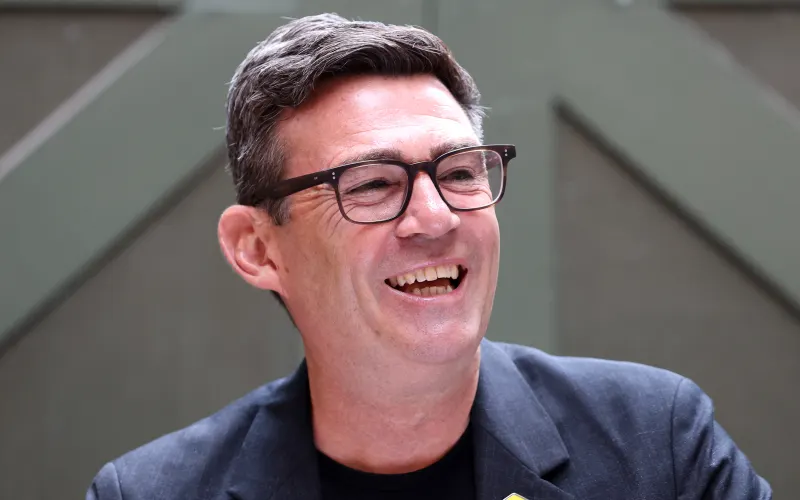
Andy Burnham has taken the reins as leader of Britain’s Labour Party, setting him on course to become the country’s next prime minister. His installation on Friday marks the final step before a formal transfer of power, and it signals a notable shift in tone and direction for a party searching for renewed connection with ordinary voters.
Burnham arrives with bold promises — more public control over essential services, a redistribution of power toward local governments, and a renewed drive for economic growth. Whether he can deliver may define the years ahead for British politics.
The Final Step Before Power
Burnham’s rise reached a pivotal moment on Friday when he was formally installed as Labour leader. Under Britain’s system, the next stage is largely ceremonial but deeply significant: on Monday, King Charles III is expected to ask him to form a government, making him the nation’s 59th prime minister.
Speaking to a special conference of Labour Party members in central London, Burnham struck an ambitious note. He called for the courage to fix the big problems that politics has long neglected, and pledged to challenge both a political culture and an economic model that, in his words, simply fails to work well enough for ordinary people.
It was a message aimed squarely at voters who feel left behind — and a clear attempt to define his leadership from the outset.
Taking Aim at Labour’s Infighting
One of Burnham’s boldest promises tackles a problem that has haunted Labour for years: internal division. Several leaders before him have vowed to end the party’s factionalism, with little lasting success.
Burnham insisted he would be different. He argued that Labour cannot defeat Britain’s new right if it remains consumed by infighting and pulling in opposite directions, describing such division as an indulgence that hits hardest the very people who need Labour most. Rooting out that infighting — along with what he called the insidious briefing culture that accompanies it — would, he said, define his leadership going forward.
His background may lend him credibility on this front. Widely viewed as sitting slightly to the left of his predecessor, Burnham has served under Labour leaders spanning very different political traditions, from Tony Blair to Jeremy Corbyn. That range of experience could give him a unique ability to bridge the party’s competing wings. The first real test arrives Monday, when he selects his cabinet.
A Leader for All of Britain
Burnham faces a genuine balancing act. His deep roots in the north of England, where he grew up, and the brand of politics he championed as mayor of Greater Manchester — sometimes dubbed “Manchesterism” — risk alienating voters in other parts of the country.
He appeared keenly aware of that danger. In a pointed move, he promised to be a leader for every corner of the nation, naming the north, south, east, and west, along with Scotland, Wales, and Northern Ireland. The message was unmistakable: his focus would extend well beyond the region that shaped him.
Part of Burnham’s appeal stems from a widely held perception that Labour had drifted away from many everyday voters. In an age of populist politics, the party turned to someone seen as better able to understand and represent them. He leaned into that image, promising to always stay close to the ground and close to the people.
Style, Substance, and a New Suit
Burnham has never been shy about his personal brand, and he made clear he doesn’t intend to abandon it. Declaring that he has a distinct style and won’t change it, he nonetheless offered a subtle nod to his new role.
Rather than the navy or black t-shirts he so often favored during his time as mayor, he delivered his leadership speech in a coat and tie — a small but symbolic gesture toward the gravity of the office he’s about to assume.
The Cabinet Question Everyone Is Watching
For all the attention on Burnham himself, one of the biggest unanswered questions concerns the team he will build around him. He confirmed that he is still deciding on his top cabinet positions, which means speculation over key appointments will continue a while longer.
Chief among those is the role of chancellor of the Exchequer, a position of enormous consequence. The chancellor controls Britain’s public finances and determines how much money flows to other government departments.
Financial markets and investors are watching this choice especially closely for signals about the direction of economic policy. The central question is whether Britain will:
- Borrow more to fund public priorities, or
- Aggressively work to drive down its public debt
That decision carries real weight for ordinary households. It ultimately influences interest rates, which in turn shape mortgage costs and how easily businesses can secure loans. In other words, the identity of the next chancellor could touch the finances of families and companies across the country.
What Comes Next
Burnham’s ascent represents both an opportunity and a challenge. He inherits a party eager for unity, a public hungry for change, and an economy that markets are scrutinizing for any hint of its future course.
The coming days will offer the first concrete tests of his leadership:
- On Monday, King Charles III is set to formally invite him to form a government
- His cabinet selections will reveal how he intends to balance the party’s factions
- His choice of chancellor will send an early signal to markets and voters alike
For now, Burnham steps forward with a clear vision and a set of ambitious promises. The harder task — turning that vision into governance while holding a fractious party together and reassuring an anxious economy — lies just ahead. Whether he can rise to it will shape not only Labour’s fortunes but the direction of Britain itself.
Author