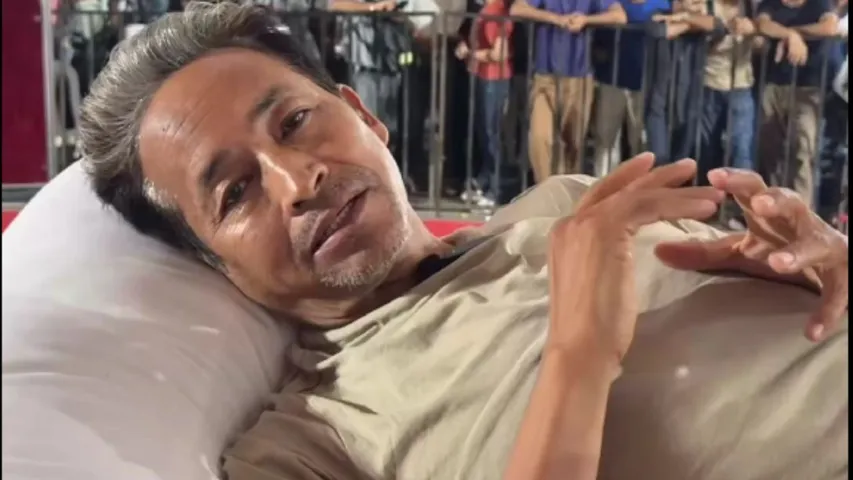
The Sonam Wangchuk hunger strike ended not by choice but by force. Delhi police moved the prominent activist from his protest site to a hospital after 20 days without food, acting on medical advice and a court directive as his condition deteriorated.
The removal has intensified rather than defused a movement that began over an examination scandal affecting millions of students.
What He Was Demanding
Wangchuk began fasting last month in solidarity with the youth-led Cockroach Janta Party.
His demand was singular: the resignation of India’s education minister, Dharmendra Pradhan, over an examination scandal linked to a number of student suicides.
The allegations centre on medical exam papers leaked in advance — a breach that compromised results for an enormous number of candidates competing for a small number of places, in a system where a single exam can determine an entire career path.
Several hundred students had gathered around his stage at New Delhi’s Jantar Mantar in recent weeks.
How the Removal Happened
Video from the protest site showed confusion as police, carrying white sheets, moved quickly to take Wangchuk from the stage.
Delhi Police said the hospitalisation followed his worsening health.
Deputy Commissioner of Police Sachin Sharma said Wangchuk had been transferred to an appropriate government hospital under medical supervision, describing the intervention as necessary and carried out under both medical guidance and a court order.
A New Delhi court had directed government doctors on Thursday to monitor the activist’s health daily. The court framed its reasoning simply, noting that every citizen’s life is precious. The order followed a petition from activist lawyer Rakesh Kumar Saini warning that Wangchuk might not survive much longer without ending the fast.
The Movement’s Response
Supporters saw the removal differently.
Abhijeet Dipke, a Boston University student and founder of the Cockroach Party, announced almost immediately that he would begin his own hunger strike and called for nationwide protests.
Dipke accused police of using force during the removal, saying Wangchuk had been covered in sheets and taken away like a criminal rather than a peaceful protester.
He also confirmed the movement’s plan to march on India’s parliament Monday, timed to coincide with the opening of its session.
Authorities responded by tightening security around the protest site, where students and party activists remain camped.
The Family’s Position
Wangchuk’s wife, Gitanjali J Angmo, posted on X that she was with her husband at the Delhi hospital.
Her statement carried a specific instruction: nothing should be administered to him orally or intravenously without consent from her, his family, and the doctors who have been monitoring him throughout the 20 days.
That request goes to the heart of what makes forcible hospitalisation contentious during a hunger strike. Moving someone to a hospital preserves the option of intervention. Administering nutrition without consent ends the protest against the protester’s will.
The line between saving a life and defeating a political action becomes difficult to locate.
A Rare Public Challenge
Wangchuk’s campaign has stood out as an unusual open confrontation with Prime Minister Narendra Modi’s government.
It gathered support across the country and travelled widely on social media, accumulating millions of views and shares — reach that gave a single protest site national significance.
On the third day of his fast, Wangchuk said it would continue for six weeks unless he died first. He added that he hoped it wouldn’t come to that, expressing an expectation that a government sensitive to democratic pressure would listen to public pain and act.
Twenty days in, no resignation had come.
Why Exam Integrity Matters So Much in India
The intensity of this movement is difficult to understand without the context of what these examinations represent.
Competitive entrance exams in India function as the primary mechanism for social mobility. Millions of students compete for limited seats in medical and engineering programmes, often after years of preparation and significant family financial sacrifice.
A leaked paper doesn’t just advantage a few cheaters. It invalidates the effort of everyone who prepared honestly, and it does so in a system where there is rarely a second chance at the same opportunity.
The reported link between the scandal and student suicides reflects that weight. For candidates who staked years on a single result, discovering the process was compromised is not an abstract injustice.
What Happens Next
Several things will shape the coming week.
The first is Wangchuk’s medical situation and whether treatment proceeds with or without family consent. Either outcome carries consequences for the movement’s momentum.
The second is Monday’s planned march to parliament, timed for the session opening. How authorities handle it will determine whether the protest expands or contracts.
The third is whether Dipke’s hunger strike and the call for nationwide demonstrations produce mobilisation beyond Delhi.
And underneath all of it sits the original demand, still unaddressed. Pradhan remains education minister, the exam scandal remains without accountability, and the students who gathered at Jantar Mantar have shown no sign of dispersing.
Author