UN Sexual Violence Blacklist Names Israel and Russia for the First Time
The United Nations has placed both Israeli and Russian security forces on its UN sexual violence blacklist for the first time, according to an annual report set for release on Friday. The document accuses Israeli forces of abuses against Palestinian detainees and details hundreds of sexual violence cases linked to Russian forces in Ukraine. Both countries have firmly denied the allegations.
The inclusion of these two nations marks a significant moment, expanding a list that has long focused on a range of state and non-state actors accused of conflict-related sexual violence.
Content warning: This article references sexual assault and violence.
A Warning That Preceded the Listing
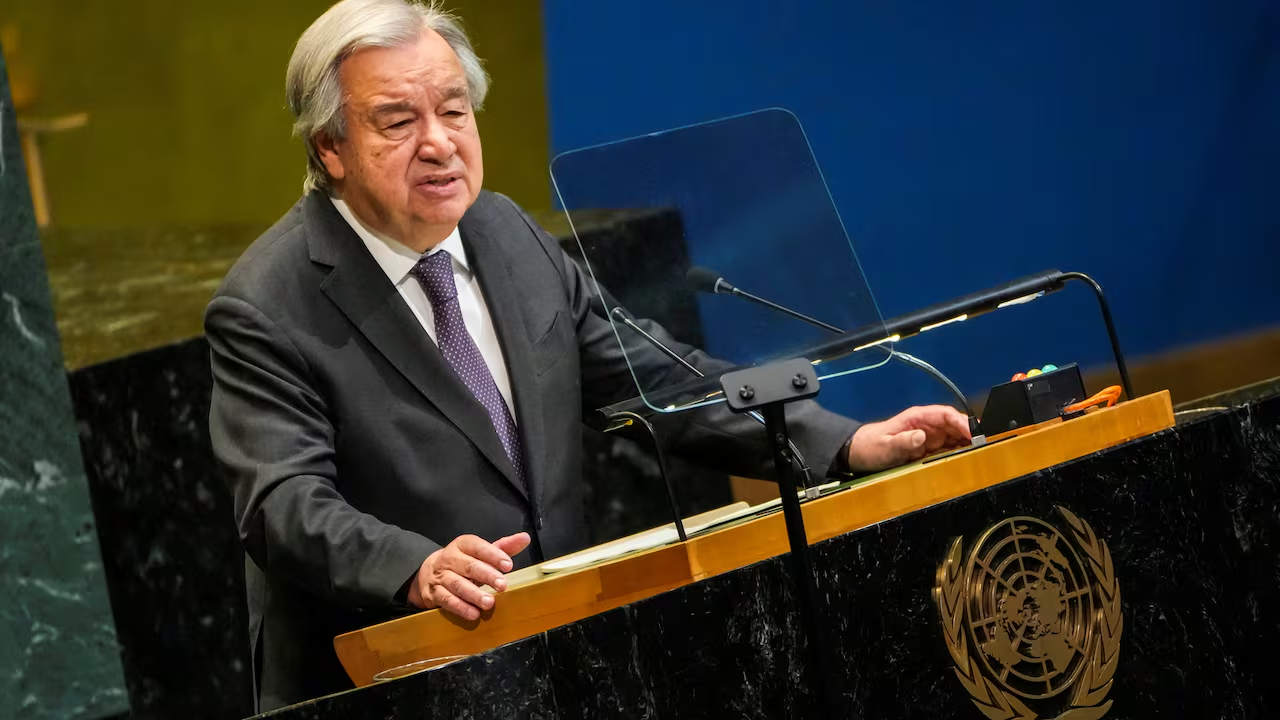
The decision did not come without notice. UN Secretary-General António Guterres had warned both Israel and Russia last year that they could be added to the blacklist. In both cases, the countries rejected the allegations against them.
The scope of the report is broad. It blacklists 77 state and non-state actors across roughly a dozen countries over alleged conflict-related sexual violence. Notably, the report found that such cases rose sharply in 2025 compared to the previous year, underscoring a troubling upward trend.
Allegations Against Israeli Forces
The report documents what it describes as patterns of sexual violence carried out by Israeli forces against Palestinian detainees in the occupied territories of Gaza and the West Bank.
According to the report, the alleged violations were severe and varied, including:
- Rape, including with objects, as well as gang rape and attempted rape
- Physical violence to the genitals and targeted shooting of the genitals
- Touching of breasts and genitals
- Strip and cavity searches conducted without apparent security justification
- Forced nudity and threats of rape
The report identified the alleged perpetrators as members of the Israeli military, security forces, and prison services.
Israel’s Sharp Rejection
Israel responded with strong condemnation. Israeli Ambassador to the UN Danny Danon dismissed the report as shameful and absurd, expressing frustration with the Secretary-General.
Danon objected particularly to Israel being placed alongside groups it considers among the world’s most dangerous. He noted that the blacklist also includes Hamas, which the United States, the European Union, Israel, and other countries classify as a terrorist organization. Hamas had previously been added to the list following the October 7, 2023, attack on Israel.
The report acknowledged a complication regarding the allegations against Hamas, noting that many claims could not be independently verified. This was attributed to Israel’s continued refusal to grant UN investigators the access needed to conduct investigations.
The timing of the report is also notable, as it follows by just days a New York Times investigation into widespread alleged sexual abuse against Palestinian detainees.
Allegations Against Russian Forces
The report likewise turned its attention to Russia. The UN cited 310 verified cases of sexual violence by Russian forces against military prisoners and civilian detainees in Ukraine.
Russia rejected the findings outright. Russian envoy Vassily Nebenzia characterized the report as unsubstantiated lies that, in his words, once again portray Russia as a villain, as he claimed the UN does consistently. He added that Russia is preparing its own report on how Ukrainians treat Russian prisoners of war.
Ukraine and Other Countries on the List
Notably, Ukraine was not added to the blacklist. However, the report did document 31 cases involving Ukrainian security forces, most of which reportedly occurred before 2025.
The blacklist extends well beyond the headline cases of Israel and Russia. Other countries named in the report include Sudan, Haiti, the Democratic Republic of Congo, Myanmar, Syria, and Mali, reflecting the global scope of the issue the UN seeks to address.
What It All Means
The addition of Israel and Russia to the UN sexual violence blacklist represents a notable development in how the international body confronts allegations of conflict-related abuses. By naming two prominent nations for the first time, the report signals a willingness to apply scrutiny broadly, even to powerful state actors.
At the same time, the strong denials from both Israel and Russia highlight the deeply contested nature of these findings. Each government has framed the allegations as unfounded, and the question of access for investigators, particularly in the case of claims against Hamas, illustrates the practical challenges of verifying such accusations in active conflict zones.
As the full report becomes public, it is likely to draw continued debate over the credibility of the findings, the responses of the accused parties, and the broader effectiveness of the blacklist as a tool for accountability. For now, the document stands as a stark reminder of the persistent and rising toll of sexual violence in conflicts around the world, and of the difficulties involved in documenting and addressing it.
This article discusses sexual violence in the context of armed conflict, a sensitive and distressing subject. If you or someone you know has been affected by sexual violence, support and resources are available through professional organizations, and I can help point you toward appropriate ones if needed.
Author