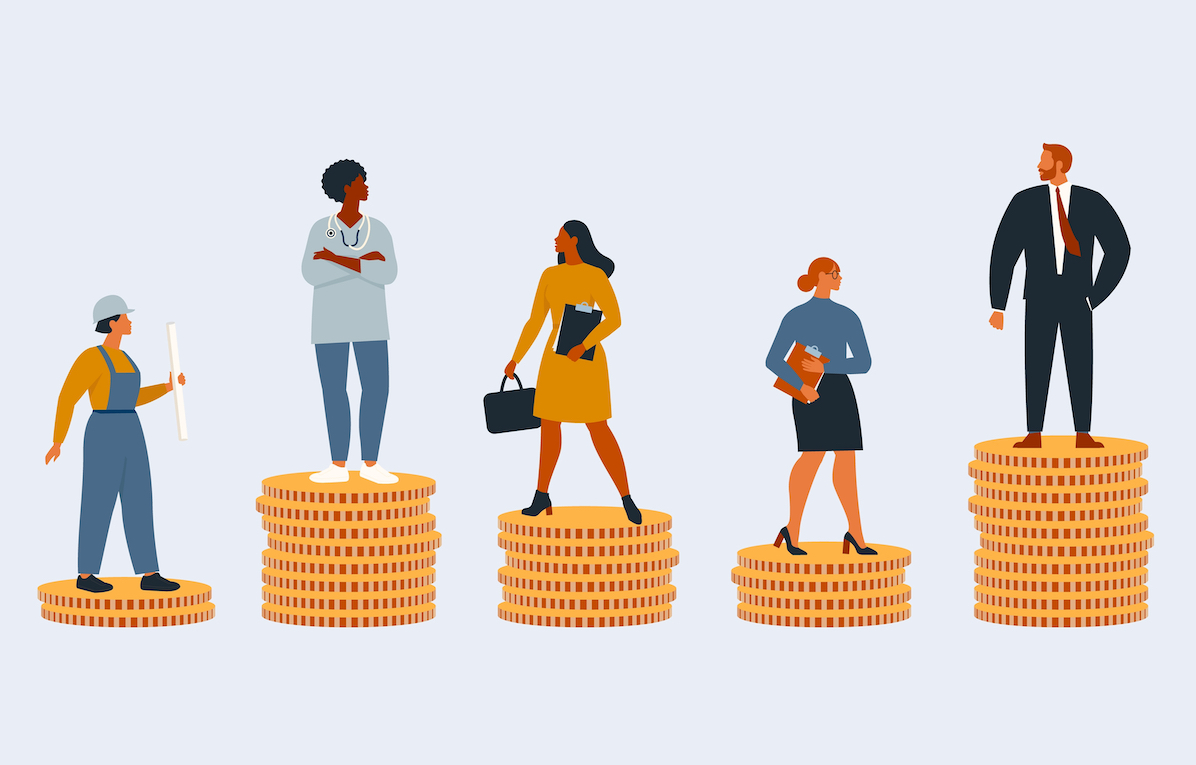
US economic inequality has reached a striking new extreme, captured vividly by two events from a single week that lay bare the contradictions at the heart of the American economy.
On Wednesday, the Bureau of Labor Statistics reported that a surge in energy prices had wiped out a year and a half of wage gains for the average American worker. Two days later, the public-markets debut of SpaceX made Elon Musk the world’s first trillionaire.
That jarring juxtaposition helps explain a sentiment echoed in survey after survey: many Americans no longer believe the economy is working for them.
A Gilded Age on Steroids
Inequality is nothing new in America. But the explosion of wealth at the very top is genuinely unprecedented in the nation’s history.
The numbers are stark. At the peak of the Gilded Age in the late 19th century, the richest handful of Americans held a net worth equal to roughly 3% of the country’s annual economic output, according to data compiled by economists Gabriel Zucman and Emmanuel Saez. Today, the fortunes of the same sliver—about 20 individuals—amount to nearly four times that share, or around 12% of annual output.
While different economists arrive at somewhat different figures using different methods, almost no one disputes the basic reality: the wealthiest few have made extraordinary gains in recent years.
The More Complicated Reality for Everyone Else
For the other 99%, the picture is murkier. More than half of U.S. households own stocks, directly or through retirement accounts, meaning they’ve benefited at least somewhat from record-setting share prices. Wealth for middle-class families has risen more slowly than for the rich over the past decade, but it has still risen.
The trouble is that, for most people, “wealth” feels abstract—locked up in the home they live in and retirement accounts they hope not to touch. What matters far more day to day is income. And there, the trend is grim:
- The share of national income going to workers has been falling for decades
- It hit a record low in the first quarter of this year
- Inflation-adjusted hourly wages have dropped for three straight months
The recent jump in energy prices—a consequence of the war with Iran—pushed annual inflation to a three-year high in May, erasing all the wage gains made during President Trump’s first year in office. As gas prices climbed, consumer sentiment plummeted.
Why Relief at the Pump Won’t Fix It
Oil prices have eased somewhat lately on hopes of a lasting cease-fire, and could fall further if the U.S. and Iran strike a deal that allows more tankers to move through the Strait of Hormuz. But cheaper gas alone won’t dissolve the deeper anxiety.
Americans have weathered a relentless string of shocks: the pandemic that threw tens of millions out of work, inflation at its highest in four decades, followed by high interest rates, tariffs and repeated recession scares.
“If you think about what it felt like to go through Covid, and then inflation, and also political unrest and instability, you come out of those things thinking, ‘How am I supposed to plan for the future?'” said Elizabeth Wilkins, president of the Roosevelt Institute.
Harvard economist Stefanie Stantcheva has found that bouts of high inflation leave a lasting mark on consumer attitudes—not just because of the budget strain, but because it feels unfair. The wealthy can absorb higher prices easily while lower-income households struggle. “It goes hand in hand with a big sense of inequity and injustice,” she said.
The New Threat: Artificial Intelligence
Layered on top of these pressures is a fresh source of dread: AI. Tech industry leaders warn the technology could eliminate whole categories of white-collar work.
Many economists are skeptical of the most dramatic predictions, but polls show workers are genuinely worried about their careers. The unease extends beyond jobs—voters across the country have pushed back against plans to build AI data centers in their communities, citing the impact on electricity bills, water supplies and air quality.
Against that backdrop, it’s little wonder the public feels uneasy about the wealth surge accompanying the AI boom. Companies tied to the technology have driven much of the recent stock market gains. SpaceX’s debut was the first in what’s expected to be a wave of giant AI-related IPOs—and beyond making Musk a trillionaire, it alone was projected to mint thousands of new millionaires and several billionaires.
A Backlash in the Making
Some economists see the seeds of public revolt. “Many of the tech moguls who are the current superrich have not helped themselves in the conversation by saying, ‘My innovation is going to obliterate your life,'” said Glenn Hubbard, a Columbia Business School economist and former adviser to President George W. Bush. “It’s not too crazy to imagine a backlash.”
Hubbard doesn’t necessarily object to the existence of billionaires—or even trillionaires—so long as fortunes come from innovation rather than corruption or cronyism. But he urged policymakers to take public sentiment seriously, suggesting Congress consider taxing the ultra-wealthy more effectively and limiting their outsized political influence.
Progressive economists go further, arguing that fortunes like Musk’s inherently distort both the economy and democracy. “It’s the power to influence markets, it’s the power to buy competitors, it’s the power to influence policymaking,” said Zucman. “If you want a well-functioning market economy, it’s not good to have too much concentrated power with extreme wealth at the very top. It distorts markets. It distorts democracy.”
The Worker’s Catch-22
There’s a deeper bind buried in all of this. The AI boom is still in its early stages, and some analysts doubt that SpaceX and similar companies will ever earn profits to justify their sky-high valuations. If the skeptics are right, share prices could tumble—and Musk’s trillionaire status could prove fleeting.
But such a crash wouldn’t spare ordinary Americans. AI-related investment has helped carry the economy through a turbulent stretch, with the stock market propping up consumer spending even as wage growth cooled. A bursting AI bubble would endanger millions of jobs—from electricians wiring data centers to waiters serving wealthy investors—while vaporizing trillions in paper wealth held in 401(k)s and college savings plans.
That leaves workers facing an uncomfortable paradox: if AI succeeds in remaking the economy, they could lose their jobs; if it fails to live up to the hype, their retirement savings could evaporate.
It’s a dilemma that helps explain why so many Americans feel the system is rigged against them. As Heather Boushey, a former Biden administration adviser who has written about inequality, put it: “Clearly our economy is designed to create a handful of billionaires and a trillionaire. It is no longer about creating opportunity and stability for the majority.”
Author