Interior Department Scraps Automatic Protections for Threatened Species in Sweeping Rollback
The Endangered Species Act rollback finalized on Friday eliminates a rule that has automatically extended federal protections to species classified as threatened — a change conservation groups say will make it substantially harder to prevent extinctions.
The Interior Department’s decision is the latest in a series of moves reshaping how one of America’s foundational environmental laws operates.
What Actually Changed
Under the previous system, a species listed as threatened received protections automatically upon listing. The new approach removes that default.
Instead, each newly listed threatened species will require an individualized protection plan developed separately. That process can take considerable time — and during it, companies can seek exemptions for oil and gas drilling, mining and other development in areas where those species live.
The practical effect is a gap. A species may be recognized as heading toward extinction while the safeguards meant to prevent that outcome are still being negotiated case by case.
A second rule finalized the same day requires officials to weigh economic impacts when determining whether habitat qualifies as critical to a species’ survival. Critics argue this hands industry a formal channel to influence decisions that were previously grounded in biology.
Who Stands to Be Affected
Roughly 30 species are currently proposed for threatened status. Among them:
- Monarch butterflies
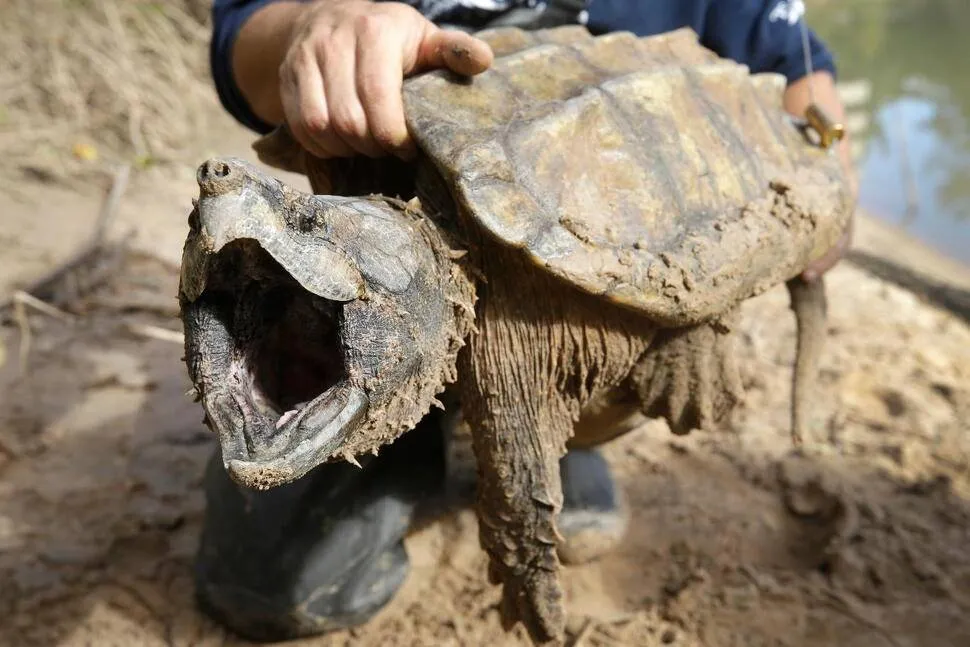
- Alligator snapping turtles
- California spotted owls
- Various snakes, fish, freshwater clams and insects
Each of these would now face the individualized-plan process rather than receiving immediate protection.
A Listing Process That Has Stopped
One statistic stands out from the reporting: no species have been added to the endangered or threatened lists during Trump’s second term.
For comparison, more than 20 species were listed during his first term. Around 60 were added under President Biden.
That contrast is difficult to explain through normal administrative variation. Listing decisions are supposed to follow scientific determinations about population trends. A complete halt suggests the pipeline itself has been closed rather than the science having changed.
The Administration’s Argument
Interior Secretary Doug Burgum defended the changes in blunt terms, saying the Endangered Species Act has been used for too long to block almost any new project in America — driving up costs for families, weakening competitiveness and undermining national security.
He added that success ought to be measured by species recovering and being removed from the list, rather than by how many species get added to it.
Burgum also noted that 97 percent of species granted protections still retain them, a figure Republican lawmakers cite as evidence that recovered species aren’t being delisted quickly enough.
That statistic can be read two ways. Critics counter that species facing habitat loss and climate pressure rarely recover fast, and that a high retention rate reflects ongoing threats rather than bureaucratic inertia. Recovery of a bird or amphibian population often takes decades, not budget cycles.
The Opposing View
Noah Greenwald of the Center for Biological Diversity focused on the exemptions themselves, arguing that exempting industries responsible for habitat destruction means exempting the very thing driving many species toward extinction in the first place.
That objection cuts to the core issue. For most listed species, the primary threat isn’t direct killing — it’s the loss of the places they need to live. A framework that permits habitat development while prohibiting only direct harm addresses a smaller problem than the one that exists.
Part of a Broader Pattern
Friday’s action fits into a rapid sequence of changes, moving faster and reaching further than similar efforts during Trump’s first term. Those earlier changes were reversed under Biden.
Recent measures include:
- March 2026 — Oil and gas drilling in the Gulf of Mexico was exempted from the Endangered Species Act, after Defense Secretary Pete Hegseth argued that environmental litigation threatened domestic energy supplies while the US wages war against Iran.
- Last week — Interior officials sharply narrowed the definition of “harm” to a species, permitting development on critical habitat provided animals aren’t immediately killed or injured.
- This week — Critical habitat designated for Canada lynx in the Rocky Mountains was substantially reduced. The forest-dwelling wildcats face pressure from climate change among other factors.
- This week — Burgum announced during a Montana visit that the Fish and Wildlife Service would transfer more grizzly bear management authority to state governments, a longstanding goal of Republican governors in Wyoming, Idaho and Montana.
The Redefinition of Harm
Of these, the narrowed definition of harm may prove the most consequential.
Habitat destruction rarely kills animals on the spot. It removes nesting sites, breeding grounds and food sources, and populations decline gradually over years. A standard that requires immediate death or injury to qualify as harm excludes the mechanism by which most species are actually lost.
What the Law Has Accomplished
The Endangered Species Act, whose blanket protections date to 1975 for wildlife and 1977 for plants, is credited with recovering species that were once near disappearance — including the bald eagle and the American alligator.
Both are frequently cited by supporters as proof the framework works when applied consistently. Both also took decades.
The Underlying Disagreement
Beneath the regulatory detail sits a straightforward dispute about what the law is for.
One position holds that protecting species imposes real economic costs — on energy production, housing, infrastructure — and that those costs deserve explicit weight in the decision.
The other holds that extinction is permanent in a way that development delays are not, and that building economic considerations into biological determinations guarantees the economics will usually prevail.
What Happens Next
Legal challenges appear likely. Environmental organizations successfully contested similar rules during Trump’s first term, and the litigation history suggests these changes will be tested in court.
Whether they survive review, and whether a future administration reverses them again, will determine how much of this proves durable. In the meantime, the species awaiting listing decisions continue waiting — and the pressures on them don’t pause for the regulatory process.
Author