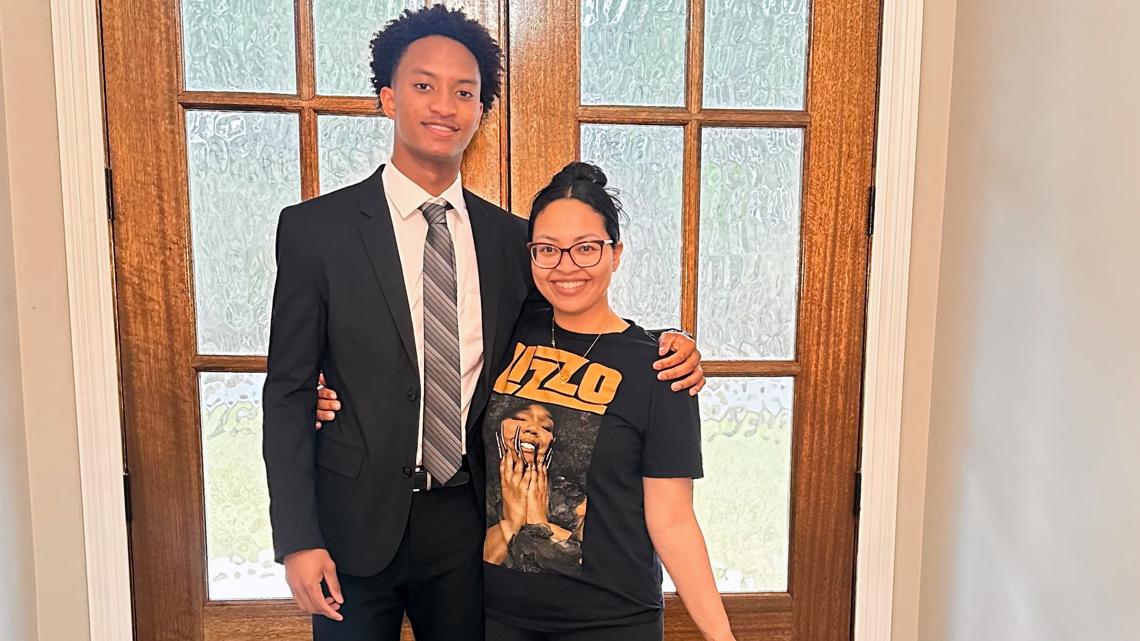
The Nolan Wells death investigation took on national dimensions Monday as mourners packed a church in Ocean Springs, Mississippi, to bury an 18-year-old whose final hours remain unexplained more than two weeks after he vanished during a Fourth of July boat trip.
The Rev. Al Sharpton delivered the eulogy, and he used it to press for something the family still does not have: a clear account of how Nolan Xavier Wells died.
A Son Remembered
The service opened with his parents, both struggling through tears, describing the young man they raised.
His mother, Christine Wonsley, spoke about the effect he had on people around him. She said he had a way of making others feel seen, welcomed and valued, and that he could raise someone’s confidence with just a handful of words and make them feel they belonged.
He was the older sibling others looked up to. He was also a serious athlete with ambitions that reached toward the NFL.
His father, Elmore Wonsley, recalled the time the two spent together working on his game, poring over film and running drills on the beach.
“I nicknamed you Mr. Cool Hands because it seemed like you were catching a touchdown every game,” he said.
Wells would have turned 19 next month. He played wide receiver at Southwest Mississippi Community College in Summit and hoped to move up to a high-level Division I program.
His father closed by saying his son meant a great deal to many people, and that the turnout demonstrated how much he meant to the community, the country and the world.
The $100,000 Reward
Sharpton’s eulogy shifted the tone from remembrance to demand.
He announced a $100,000 reward for new information about the circumstances surrounding Wells’ death. Half of that amount is being covered by actor and producer Tyler Perry, who also paid for the funeral itself.
“Somebody knows something,” Sharpton told the congregation, which responded with applause.
The crowd included director Spike Lee, former NFL player Terrell Owens and a substantial contingent of prominent Black clergy.
Sharpton pushed further, calling for every stone to be rolled back and every veil torn away so the truth might emerge like a flower breaking through soil.
What Is Known About July 4
Wells traveled to Horn Island, a barrier island off the Gulf Coast that draws crowds every Fourth of July, with a group of friends from high school. Wells was Black. All of the friends on the trip are white.
He did not come back with them that evening.
His body was recovered two days later in the waters off the island.
Jackson County Sheriff John Ledbetter has said early interviews indicated Wells opted to remain on the island, and that his friends assumed he had arranged another way back. The sheriff said the friends have been cooperating with investigators.
The Questions That Won’t Go Away
That account has not satisfied the family or the many people following the case, and the vacuum has drawn heavy speculation online.
Sharpton asked the congregation to hold off on conclusions until more facts emerge. In the same breath, he laid out the specific points he finds difficult to accept.
He questioned why Wells’ phone and keys were found in the possession of his friends. He questioned why the friends did not contact police immediately upon realizing Wells was missing. And he questioned why local officials seemed so quick to rule out foul play.
Then he reached for history. Referencing the lynching of Emmett Till and the assassination of Medgar Evers, Sharpton addressed Mississippi law enforcement directly, saying that before there can be any healing, the state’s record has to be reckoned with.
That framing explains why the case has resonated far beyond the Gulf Coast. For many following it, the specifics of one teenager’s death are inseparable from a longer pattern of investigations in the region that families felt were closed too easily.
Legal Steps Underway
Attorney Ben Crump, representing the family, led mourners in a chant of “Nolan’s life mattered” while Wells’ mother wept against her husband’s shoulder.
At a news conference afterward, Crump laid out where things stand:
- An independent autopsy commissioned by the family has not yet returned results
- The official autopsy has also not been released publicly
- Crump is working with the local prosecutor to examine Wells’ phone
- The prosecutor has agreed to bring the completed investigation before a grand jury
Crump distilled the family’s position into a single sequence during the funeral. They went out on the boat, he said, the boat came back, and Nolan washed up on shore two days later dead. He asked whether anyone in that position would not want answers.
What Comes Next
The immediate milestones are the two autopsy results and the contents of the phone. Either could substantially change the public understanding of what happened, or confirm the sheriff’s initial account.
The grand jury commitment matters as well. It means the evidence will eventually face review outside the sheriff’s office, which addresses at least part of the independence concern that critics have raised.
Whether the reward produces anything is a separate question. Rewards work when someone with information is weighing silence against consequence. Sharpton is betting that someone on that island, or someone who has heard something since, falls into that category.
A Family Waiting
For the Wonsley family, the funeral closed one chapter and left another wide open. They have buried their son. They have not been told how he died.
The gap between those two facts is what filled the church Monday, and it is what will keep this case in the national conversation until the autopsies, the phone records and the grand jury supply an answer the family can accept.
Author