The IAEA Saudi nuclear verification arrangement being discussed in Washington and Riyadh has not yet reached the agency actually expected to carry it out.
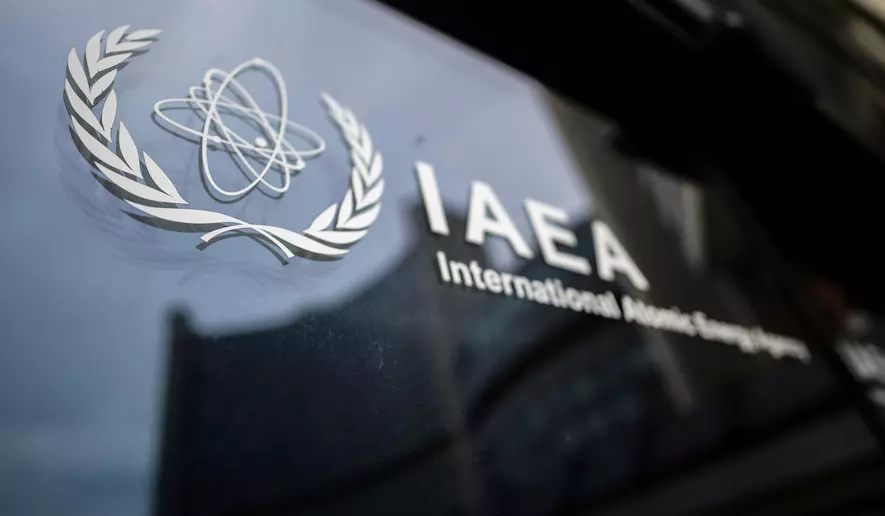
The International Atomic Energy Agency said Thursday that it is aware Washington and Riyadh intend to ask it to perform verification work tied to the nuclear cooperation deal the two governments are negotiating. What it has not received is the request itself.
In its statement, the agency said it looks forward to receiving that request and to working with both the United States and the Kingdom of Saudi Arabia to ensure the resulting measures are implemented.
Diplomatically worded. Also, unmistakably, a statement about something that has not happened yet.
Why the Sequencing Matters
There is a meaningful gap between announcing that a deal includes international verification and actually arranging for it.
Verification is not a clause you write into an agreement and consider settled. It is an operational commitment requiring the agency to define what will be monitored, negotiate access terms, allocate inspector resources, and establish the technical protocols that make monitoring meaningful.
None of that begins until a formal request arrives in Vienna.
The announcement, in other words, has traveled faster than the mechanism it describes.
What the IAEA Actually Does
For readers unfamiliar with the agency’s role, the distinction matters here.
The IAEA is the body that gives international assurance about whether nuclear material is being used for the purposes a state claims. Its work includes:
- Accounting for declared nuclear material at facilities
- Conducting inspections, both scheduled and short-notice depending on the agreement
- Installing and monitoring surveillance equipment
- Verifying that fuel is not diverted toward weapons applications
- Reporting findings to its Board of Governors
The strength of that oversight varies enormously depending on what a state has agreed to. There is a wide spectrum between basic material accounting and the intrusive access provided under an Additional Protocol.
The Question Vienna’s Statement Doesn’t Answer
The agency said it awaits a request. It did not describe what that request will contain.
That is the substance of the entire matter.
Reporting on the U.S.-Saudi framework has indicated the arrangement departs from the standard model applied to other partner nations, replacing conventional international inspections with narrower measures defined within the agreement itself.
If that holds, the verification the IAEA is eventually asked to conduct may be considerably more limited than the phrase “international verification” typically implies to a general audience.
Until the request lands, nobody outside the negotiating rooms knows which it will be.
Why This Is Worth Watching Closely
Saudi Arabia’s nuclear ambitions have drawn scrutiny for a specific reason: the kingdom’s leadership has stated publicly that it would pursue nuclear weapons if Iran obtains them.
That declaration changes how every technical detail of a civilian nuclear program is read. Enrichment capability, once established, is dual-use by nature. The same infrastructure that produces reactor fuel can, with modification and intent, produce something else.
Safeguards exist precisely to detect that transition. Their design determines whether detection would occur in time to matter.
The Precedent Problem
There is also a structural concern that extends beyond Saudi Arabia.
The United Arab Emirates accepted stringent terms — including a renunciation of enrichment — in its own nuclear cooperation agreement with the United States. That deal has been treated as the standard other aspirants should meet.
An arrangement offering Riyadh looser conditions creates an obvious question for every other government considering nuclear energy: why accept the stricter terms if a different set is available?
Verification standards are how that question gets answered in practice. A robust IAEA role would narrow the gap. A limited one would widen it.
What Happens Next
The process from here is procedural but consequential:
- Washington and Riyadh submit a formal request to the agency
- The IAEA reviews what is being asked and assesses feasibility
- Technical negotiations establish scope, access, and methodology
- Implementation arrangements are documented
- Inspection activity eventually begins
Each stage takes time. None of it can start until the first step occurs.
The Bottom Line
Thursday’s statement from Vienna was brief and contained no criticism. The agency expressed willingness to cooperate and left it there.
But the substance is a reminder worth holding onto as this story develops. A nuclear agreement’s safeguards are only as real as the arrangements that implement them, and those arrangements do not exist yet.
The deal has been announced. The verification framework has been described. The organization responsible for carrying it out is still waiting for someone to ask.
Author
-
Lucienne Albrecht is Luxe Chronicle’s wealth and lifestyle editor, celebrated for her elegant perspective on finance, legacy, and global luxury culture. With a flair for blending sophistication with insight, she brings a distinctly feminine voice to the world of high society and wealth.