The Trump Smithsonian signs order marks one of the most unusual attempts yet by a sitting president to influence how the country’s past is presented to the public — not by rewriting an exhibit, but by posting notices on the pavement outside the building.
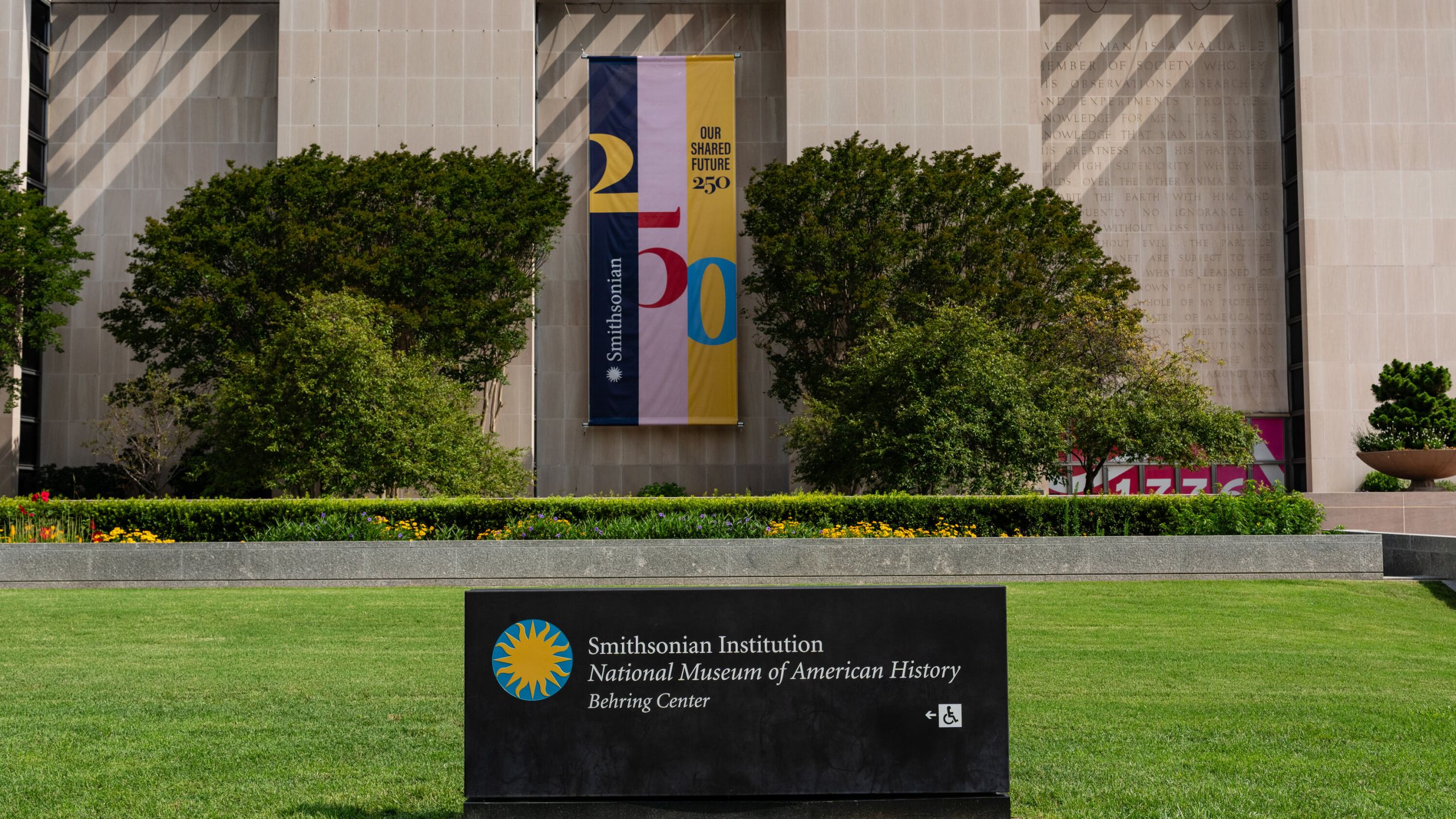
On Friday, President Donald Trump directed his administration to place signage in front of the Smithsonian Institution’s U.S. history museum informing visitors that certain displays inside contain inaccurate information. It is the latest step in an ongoing campaign to reshape the national story told in Washington’s most visited cultural spaces.
The Report That Set It Off
The order grew out of a document released on July 4 by Trump’s Domestic Policy Council. That review concluded that officials at the Smithsonian and its National Museum of American History fail to present the nation’s history in a manner the council described as inspiring, unifying and befitting the republic.
That assessment became the foundation for Friday’s action. But the president faced an immediate obstacle: he does not have the power to dismiss Smithsonian leadership on short notice, nor can he dictate what goes on the walls inside the museum.
A Workaround Through the Sidewalk
So the order targets the one piece of ground the executive branch does control — the walkways outside.
Those sidewalks fall under the care of the National Park Service, which does report to the administration. The directive instructs officials to erect signs alerting visitors to the White House report and pointing them toward materials the administration describes as offering accurate accounts of American history. It also calls for a temporary display designed to correct what the president considers errors in the museum’s presentation.
In effect, the government is building a rebuttal at the front door of an institution it cannot enter.
Smithsonian representatives declined to respond to the order.
The Museum Director Pushes Back
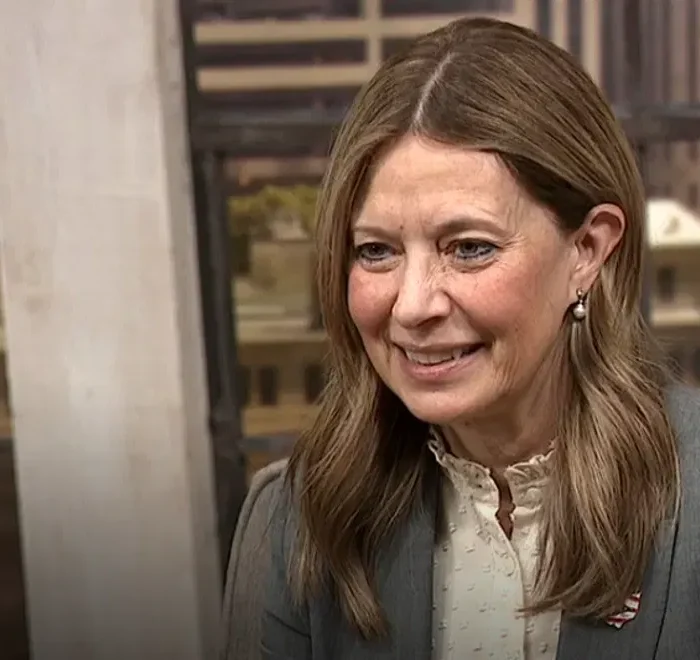
Anthea M. Hartig, who leads the National Museum of American History, had already challenged the White House report during congressional testimony earlier in the week.
She told lawmakers that staff were still working through the report’s claims and reviewing them against the record, and that in her view the document does not offer a fair or complete picture of what the museum actually produces. She acknowledged that any institution can do better, but defended the depth of the collections, the quality of the exhibitions and the expertise behind the museum’s programming.
Her position highlights the structural tension at the heart of the dispute.
Why the Smithsonian Sits Outside Presidential Control
The Smithsonian is not a typical federal agency. It operates independently of the executive branch, with museum directors answering to Secretary Lonnie Bunch, who in turn reports to a Board of Regents.
That governance arrangement was designed to insulate the institution from shifting political winds. It also explains why the administration’s approach has focused on pressure points around the edges — funding conditions, public messaging and now physical signage — rather than direct orders to curators.
Part of a Wider Campaign
Friday’s move fits into a broader pattern in which Trump has sought to reshape cultural institutions he views as misaligned with conservative values, from universities to the arts.
The most visible example came at the John F. Kennedy Center for the Performing Arts, where Trump installed himself as chairman with the stated goal of overhauling programming. The board he selected voted to attach his name to the building, though a federal judge later ordered that the signs come down.
The effort has extended beyond the capital as well. In Philadelphia, the administration secured a court ruling last week permitting it to reinstall interpretive panels at the site of George Washington’s presidential residence. Critics argue the revised panels soften the history of slavery at the property. For months, historians, advocates and local officials have warned that a version rewritten to satisfy the administration risks minimizing the suffering embedded in that history in favor of a more celebratory telling.
The groundwork was laid in March, when Trump signed an executive order signaling his intent to force change at the Smithsonian. That order took aim at funding for programming the administration characterized as promoting divisive narratives and improper ideology.
What the Fight Is Really About
Underneath the procedural maneuvering sits a genuine and long-running disagreement about the purpose of a national museum.
One view holds that public history should primarily inspire — emphasizing achievement, shared identity and the ideals the country aspires to. The competing view holds that credibility depends on confronting failures honestly, and that visitors are capable of holding both pride and discomfort at once.
Museums have wrestled with that balance for decades, usually through curatorial debate, peer review and scholarly argument rather than presidential decree. What makes this moment different is the method. Rather than persuading historians or working through the Board of Regents, the administration is placing a counter-narrative in the physical path of every visitor walking toward the entrance.
Unanswered Questions
Several practical matters remain unresolved. The order does not make clear who will determine what the corrective exhibit contains, what sources will be treated as authoritative, or how long the temporary display is intended to stand.
Legal challenges are also plausible, given that the Kennedy Center signage was ultimately blocked in court. And there is a question of effect: visitors who pass a government notice disputing a museum’s accuracy may respond with skepticism toward the exhibits, toward the signs, or toward both.
For now, the National Museum of American History continues operating as it has. The argument over what it should say has simply moved outdoors.
Author
-
Lucienne Albrecht is Luxe Chronicle’s wealth and lifestyle editor, celebrated for her elegant perspective on finance, legacy, and global luxury culture. With a flair for blending sophistication with insight, she brings a distinctly feminine voice to the world of high society and wealth.