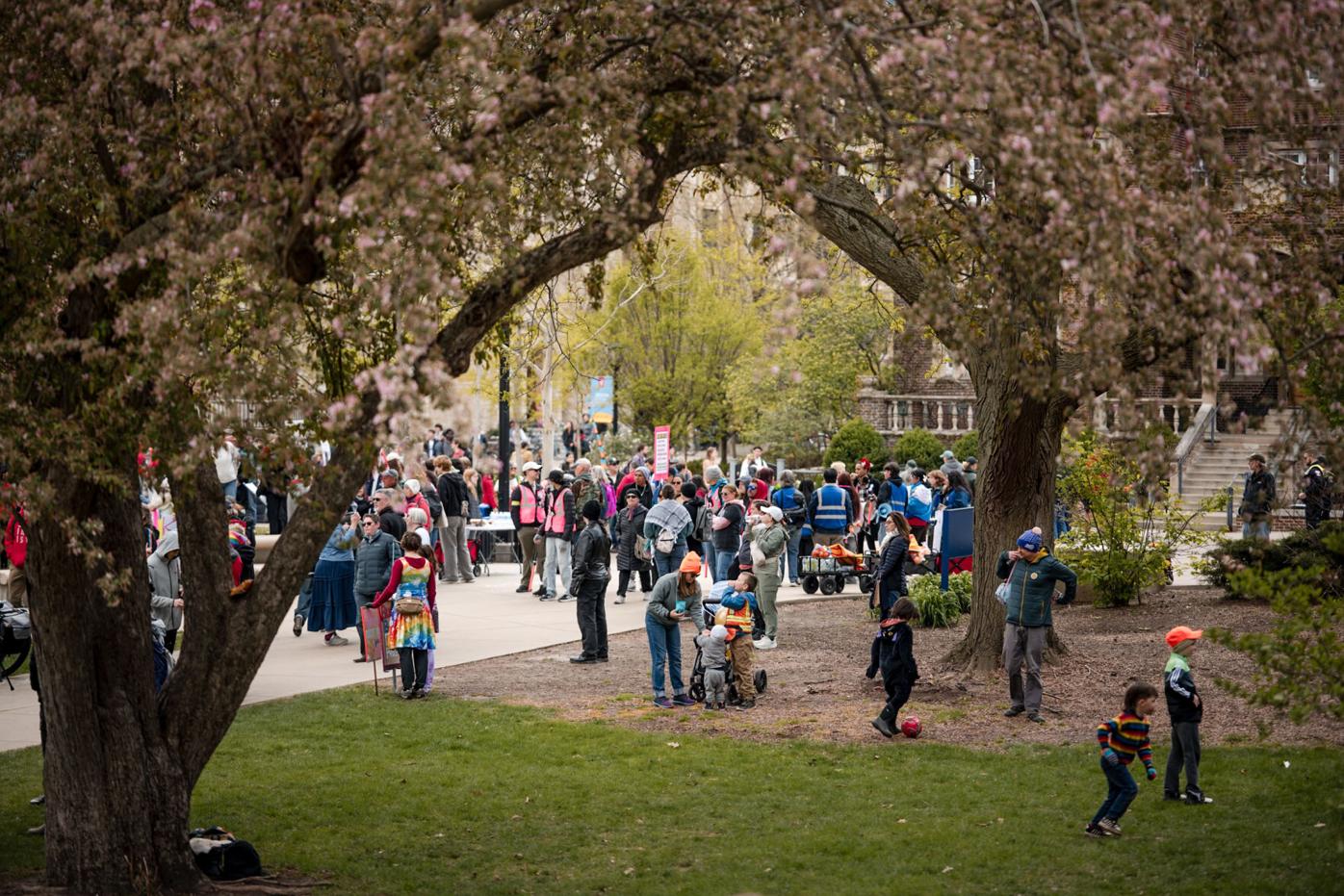
The Corey Ruiz vigil Madison residents built at the intersection where he was killed has outgrown what a vigil usually means. Five days after a Madison police officer shot and killed the 38-year-old, the corner is no longer just a place where people pause. It has become a place where they stay.
Flowers and candles arrived first. Then handwritten notes. Then artwork. What started as a spontaneous tribute has settled into something closer to an ongoing occupation of the space, with people cooking, organizing and holding services on the same pavement.
What Police Have Said
According to the police account, Ruiz was carrying a knife and injured one of the four officers who were attempting to detain him.
The Wisconsin Department of Justice’s Division of Criminal Investigation has taken over and is examining the death as a homicide case. That designation is worth understanding correctly. In this context, homicide is a classification describing a death caused by another person, not a determination that a crime occurred. It is the standard starting point for reviews of this kind.
Wisconsin requires that officer-involved deaths be investigated by an outside agency rather than the department whose officer was involved. Findings are eventually forwarded to prosecutors, who decide whether charges are appropriate. That process typically takes weeks or months.
The Man People Are Describing
Earlier in the week, a friend of Ruiz spoke to News 3 Now with a request that has become the emotional center of the gathering. She wanted people to remember that he was a human being.
She did not present him as flawless. She acknowledged openly that he had struggled with homelessness and with mental health.
Court records show a lengthy list of convictions, most of them misdemeanors, along with 12 felony convictions. Those included strangulation and suffocation; battery or threat to a judge, prosecutor or law enforcement officer; and taking a vehicle without consent.
Those two accounts sit side by side rather than cancelling each other out, and much of the argument playing out in Madison this week is about which one should govern how his death is understood.
For those defending the officer’s actions, the record and the reported knife establish a genuine threat. For those at the memorial, a record does not determine whether the force used in a particular moment was necessary — and a person cycling through homelessness and untreated mental illness is describing a system that failed long before an officer arrived.
Both positions will ultimately be tested against the same evidence, which investigators have not yet released.
Life at the Site
The intersection has taken on a rhythm of its own.
Residents are making signs. Others are handing out food, grilling meals and playing music. Mental health services have been brought to the encampment for anyone who needs them — a detail that says a great deal about what the community believes was missing in the first place.
City officials announced Friday that Williamson Street and South Baldwin Street will stay closed until further notice, effectively ceding the space to the people occupying it for now.
Prayer services have begun at the site, with pastors from across Madison taking part. Those gatherings have leaned into messages of hope and solidarity rather than confrontation, offering a different register from the protests happening elsewhere.
Demonstrations Across the City
The activity has not stayed at one corner. Protests have taken place across Madison every day since Ruiz died.
On Saturday night, organizers launched a sit-out on State Street, extending the demonstrations into the city’s main commercial and pedestrian corridor.
The persistence is notable. Public reaction to a police shooting often peaks within 48 hours and then fades as attention moves on. Five consecutive days of activity, combined with a physical encampment, suggests something with more durability behind it.
Why This Case Has Held Attention
Several factors appear to be sustaining it.
The first is video. Bystander footage of the shooting circulated widely, and Madison police officers do not wear body cameras. That means the only visual record available came from someone who happened to be filming — a fact that has fueled calls for the department to adopt body-worn cameras and has made the absence of official footage part of the story itself.
The second is location. The intersection sits in a dense, walkable near-east side neighborhood where people pass through constantly. A memorial there is not tucked away. It is in the path of daily life, which makes it harder for the city to move past.
The third is the underlying subject matter. Ruiz’s history of homelessness and mental illness places the case inside a debate cities across the country have been having for years about who should respond when someone in crisis is behaving unpredictably, and whether armed officers are the right first contact.
The Questions Still Open
Very little has been formally established. Investigators have not released a detailed timeline, the officer involved has not been publicly identified, and no findings have been issued.
What remains unresolved includes how the encounter began, what de-escalation was attempted, how the officer who was injured sustained that injury, and what the sequence looked like in the seconds before shots were fired.
Until the state’s investigation concludes, both the police account and the community’s reading of the video remain competing interpretations rather than settled fact.
What Comes Next
The immediate practical questions are municipal. How long the street closures remain in place. Whether the encampment persists or gradually thins. Whether the city engages formally with organizers or waits them out.
The larger questions belong to the investigation and to whatever policy conversation follows it — particularly on body cameras, which Madison has debated for years without resolution, and on crisis response for people experiencing mental illness.
For now, a corner that was an ordinary intersection a week ago has flowers on it, food cooking on it, and people who intend to stay.
If any of this raises difficult feelings, support is available through local crisis counseling services, and reaching out to someone you trust can help.
Author
-
Lucienne Albrecht is Luxe Chronicle’s wealth and lifestyle editor, celebrated for her elegant perspective on finance, legacy, and global luxury culture. With a flair for blending sophistication with insight, she brings a distinctly feminine voice to the world of high society and wealth.