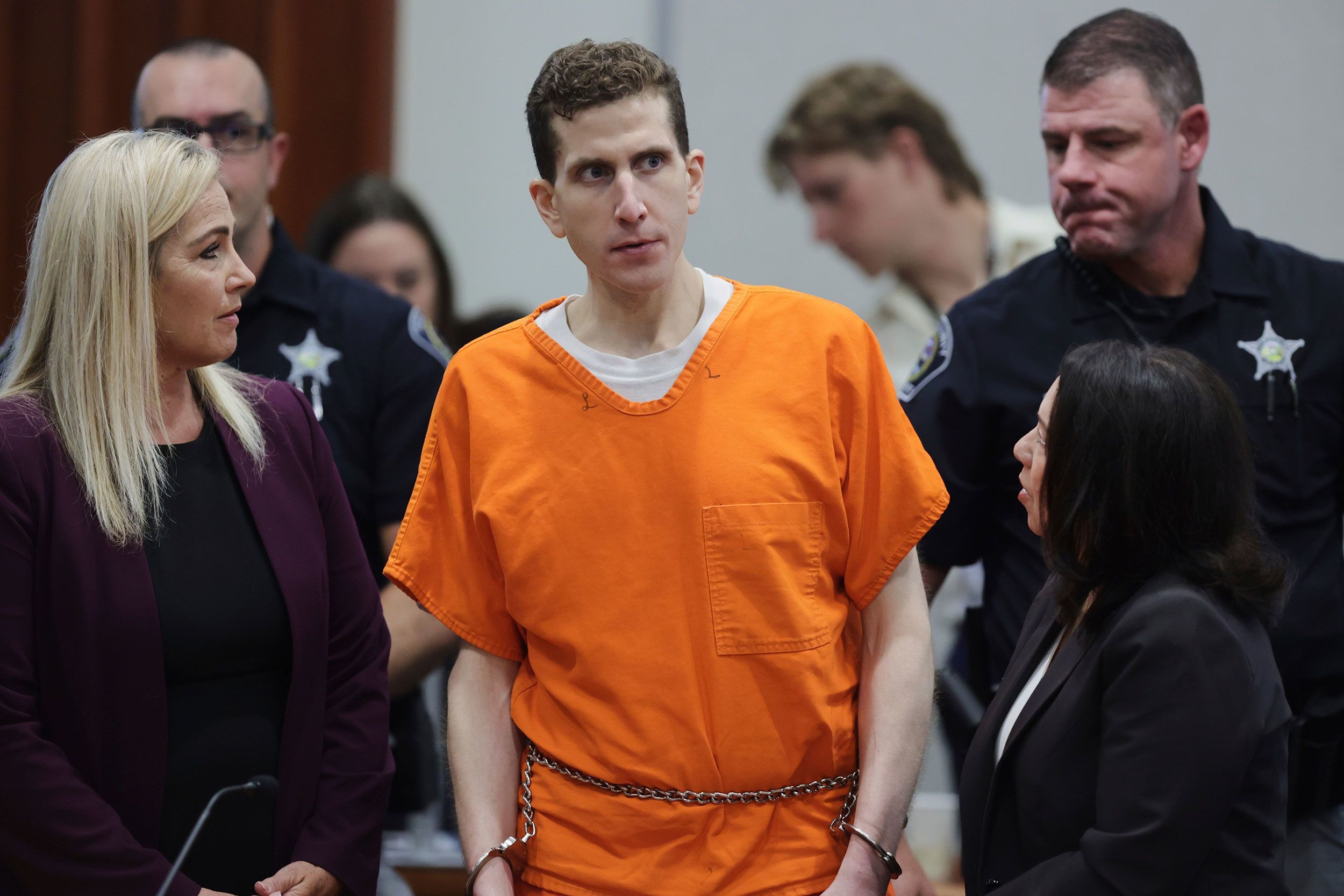
The Bryan Kohberger guilty plea that closed one of the most closely watched murder cases in recent American history is now being challenged by the man who entered it. Kohberger, who admitted to killing four University of Idaho students and is serving four consecutive life terms, has asked an Idaho court to let him take back that admission and stand trial after all.
The Filing That Reopened a Closed Case
On Monday, Kohberger submitted a petition for post-conviction relief in Ada County District Court. Court records show he is handling the filing himself, without an attorney listed on the paperwork.
Post-conviction relief is a legal avenue that sits outside the standard appeals process. Rather than arguing that a judge misapplied the law during trial, a petitioner uses it to raise problems that fall outside the trial record entirely, such as newly surfaced evidence or, as in this case, allegations that the defense team failed at its job.
That is precisely what Kohberger claims. In documents reviewed by NBC News, he argues that the lawyers who represented him provided inadequate counsel and steered him toward confessing to crimes he insists he did not commit. He describes being persuaded that whether he was actually guilty had little bearing on whether the plea would be accepted, and says he was encouraged to make untrue statements in exchange for what was framed to him as a favorable legal outcome.
His former attorneys had not publicly responded to requests for comment as of Monday.
Echoes of a Weekend Interview
The petition did not arrive without warning, at least not entirely. A day earlier, Kohberger had given a statement to The New York Times asserting his innocence and claiming he had been misled into pleading guilty.
In that statement, he described his innocence as the truth of the matter and insisted the plea, which he said rested on false assurances and misleading information, had to be undone. He dismissed the account assembled by state investigators as a narrow story built on shaky assumptions, arguing that those assumptions were never tested in a courtroom because no trial ever happened. Without a trial, he claimed, the public was denied the clarity it needed, and he characterized the outcome as a failure of justice that could only be corrected by withdrawing the plea.
Before that interview and the court filing, Kohberger had given no public indication that he intended to reverse course.
What Kohberger Admitted To
The killings took place in the early hours of November 13, 2022, at an off-campus rental house in Moscow, Idaho. Four students died: Madison Mogen, 21; Kaylee Goncalves, 21; Xana Kernodle, 20; and Ethan Chapin, 20. Two other residents of the house survived.
Kohberger was a doctoral candidate studying criminal justice at the time. In July 2025, facing a capital murder trial, he accepted a plea agreement and admitted to four counts of first-degree murder along with a burglary charge. He received four consecutive life sentences plus an additional ten years.
Standing before the judge, he confirmed that he had entered the home and killed four of the six students inside, most of whom were asleep. What he has never offered, then or since, is any explanation of why.
The State Responds
Idaho Attorney General Raúl Labrador said his office is prepared to take whatever steps are necessary to see the case through and ensure the sentence stands. Writing on social media, he acknowledged the families of the four victims, noting that people who have already carried an unbearable loss are now being asked to absorb another painful development.
The response from the Goncalves family was considerably sharper. In a statement, they compared Kohberger to a persistent insect that refuses to be swatted away, and criticized The New York Times for giving him a platform. The article, they said, amounted to little more than a convicted man restating a claim of innocence.
The family has been open about their frustration with the plea agreement from the beginning. They had wanted the case to go before a jury, and they had wanted the death penalty to remain on the table. Kohberger’s decision to plead guilty removed both possibilities.
They also expressed suspicion about his motives. In their view, he is looking for another roll of the dice, and a court appearance offers more than legal opportunity. It means leaving solitary confinement, taking a ride, eating something different, having his photograph taken, and once again occupying the center of public attention while insisting he did nothing wrong.
What Happens Next
Petitions for post-conviction relief face steep odds, particularly when the underlying conviction came from a voluntary plea entered in open court with counsel present. To succeed on an ineffective assistance claim, a petitioner generally has to show both that his lawyers performed below an acceptable professional standard and that the outcome would likely have been different without those failures. That is a demanding threshold in any case, and it is harder still when a defendant stood before a judge and described his own actions in detail.
The state will have an opportunity to respond, and the court will decide whether the claims warrant a hearing. That process can stretch across months.
For the families of Madison Mogen, Kaylee Goncalves, Xana Kernodle and Ethan Chapin, the filing reopens a chapter many had hoped was finished. The plea agreement was meant to spare them a lengthy trial and the ordeal of hearing evidence recounted publicly. Instead, nearly four years after the killings, the case is once again unresolved, and the man who confessed to it is asking for a different ending.
Author
-
Lucienne Albrecht is Luxe Chronicle’s wealth and lifestyle editor, celebrated for her elegant perspective on finance, legacy, and global luxury culture. With a flair for blending sophistication with insight, she brings a distinctly feminine voice to the world of high society and wealth.