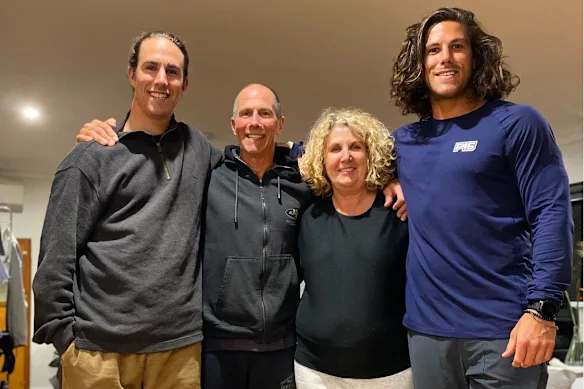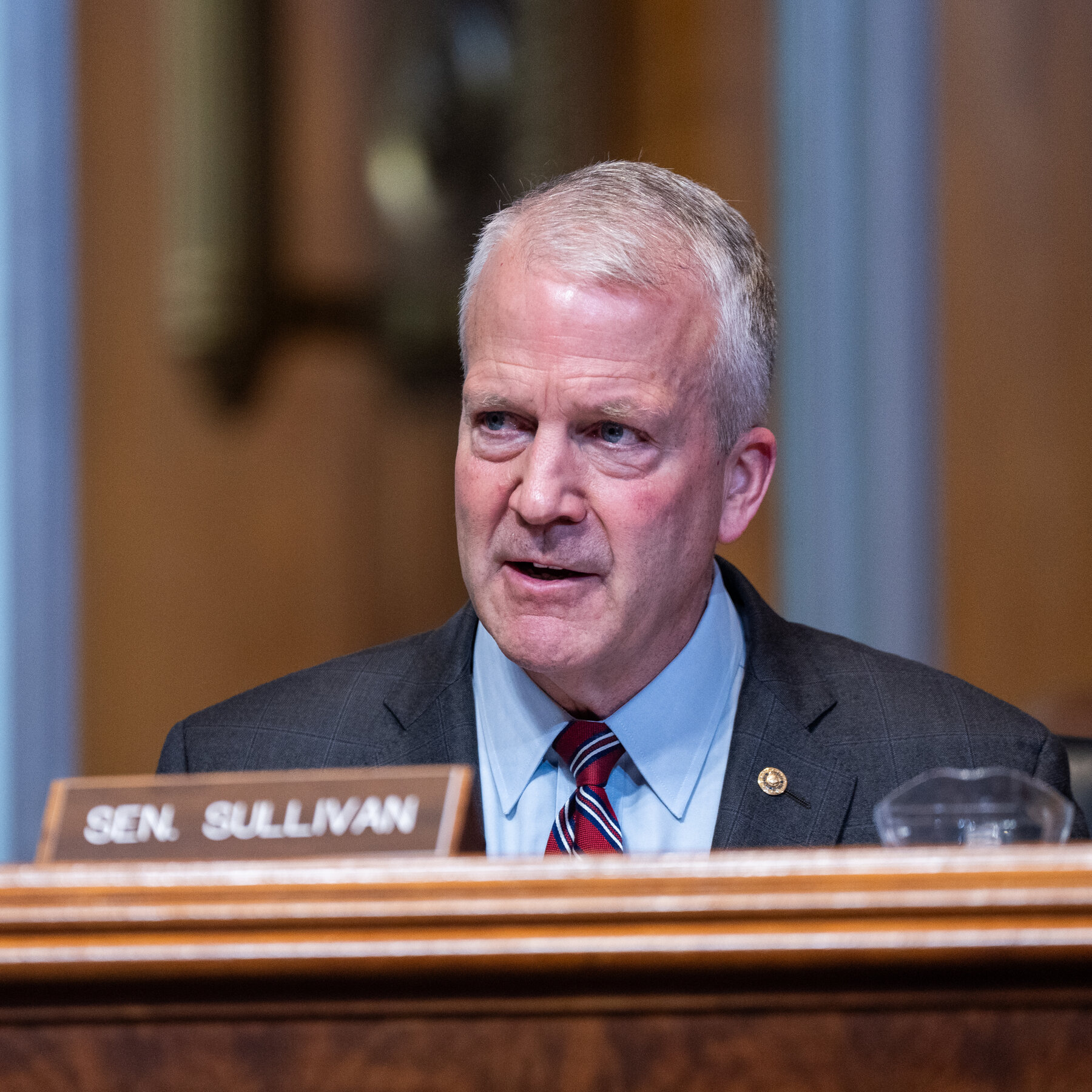
The Alaska Senate race just picked up a wrinkle that no amount of campaign spending can fully erase. Republican Senator Dan S. Sullivan will appear on November’s ballot alongside another candidate named Dan Sullivan, and there is nothing his campaign can do about it.
Retired teacher Dan J. Sullivan secured a spot in the general election early Wednesday after advancing through Alaska’s top-four, all-party primary. His presence now hangs over a contest that could help determine which party controls the Senate.
The Matchup That Matters
The race Republicans are actually watching pits Senator Sullivan against former Democratic Representative Mary Peltola. It is one of a handful of seats capable of shifting the chamber’s balance.
Into that already tight equation drops a second Dan Sullivan, appearing on the same ballot, with the same recognizable name and no meaningful way for casual voters to distinguish between the two beyond a single middle initial.
Republicans Tried to Stop It
This was not a surprise that caught anyone off guard. Republicans went to court to keep Dan J. Sullivan off the primary ballot entirely, arguing that his candidacy was engineered to help Peltola by peeling votes away from the incumbent through simple confusion.
The effort failed. The challenger remained on the ballot, and he has advanced.
Both Dan J. Sullivan and Peltola’s campaign have rejected the claim of any coordination between them.
Fighting Confusion With Punctuation
The senator’s allies have not waited for the courts to solve their problem. They have adapted their messaging, in some cases building advertisements around the senator’s middle initial so voters can tell the two apart.
It is an unusual thing to build a campaign around, and it points to a genuine vulnerability. In a race decided by narrow margins, even a modest number of misdirected votes can matter enormously. Voters who show up intending to support the incumbent but check the wrong box will never know they did it.
Does Ranked-Choice Voting Solve This?
Alaska uses ranked-choice voting in the general election, and defenders of the system argue it blunts precisely this kind of spoiler dynamic. Because voters rank their preferences rather than picking one name, support that lands on a minor candidate can transfer onward as rounds are eliminated.
That is the theory. The practical picture is messier.
Ranked-choice voting can redistribute votes, but it cannot correct a mistake. If a voter genuinely believes they are ranking the incumbent first when they are actually ranking his namesake, no tabulation method fixes that error. The system handles strategic splitting better than it handles mistaken identity.
Beyond the name issue, a crowded field can still distort results in ways that are difficult to forecast, particularly in a race where the margin is expected to be thin.
Money Is Already Flowing to the Margins
The primary offered a preview of how outside interests intend to shape this contest. More than $2 million poured in to elevate an assortment of fringe candidates, spending that has little to do with those candidates winning and a great deal to do with how the field looks on election day.
There is every reason to expect a repeat before November. Cluttering a ballot is considerably cheaper than persuading voters, and in a ranked-choice environment the arithmetic of who else appears on the list carries real strategic value.
Peltola’s Own Steep Climb
None of this means the Democratic challenger is comfortably positioned. Peltola is attempting to flip a Republican seat in a state Trump carried by 13 points in 2024, which is a substantial deficit to overcome regardless of what happens with the name confusion.
Her campaign has also been in flux. She replaced her campaign manager in a staffing shakeup shortly before the primary, part of a broader set of internal changes.
Whether that reset produces a sharper operation heading into the general election is one of the open questions of the race.
What to Watch
Several threads will determine how this plays out.
How much of the vote Dan J. Sullivan actually attracts, and whether it comes disproportionately from voters who intended to back the incumbent.
Whether the middle-initial messaging penetrates, particularly among voters who pay limited attention until the final weeks.
How heavily outside groups invest in keeping the field crowded ahead of November.
And whether Peltola can close a 13-point structural gap in a state that has not been kind to Democratic Senate candidates.
For now, Alaska has handed political observers something rare: a marquee Senate race where one of the decisive variables may simply be whether voters can tell two men apart.
Author