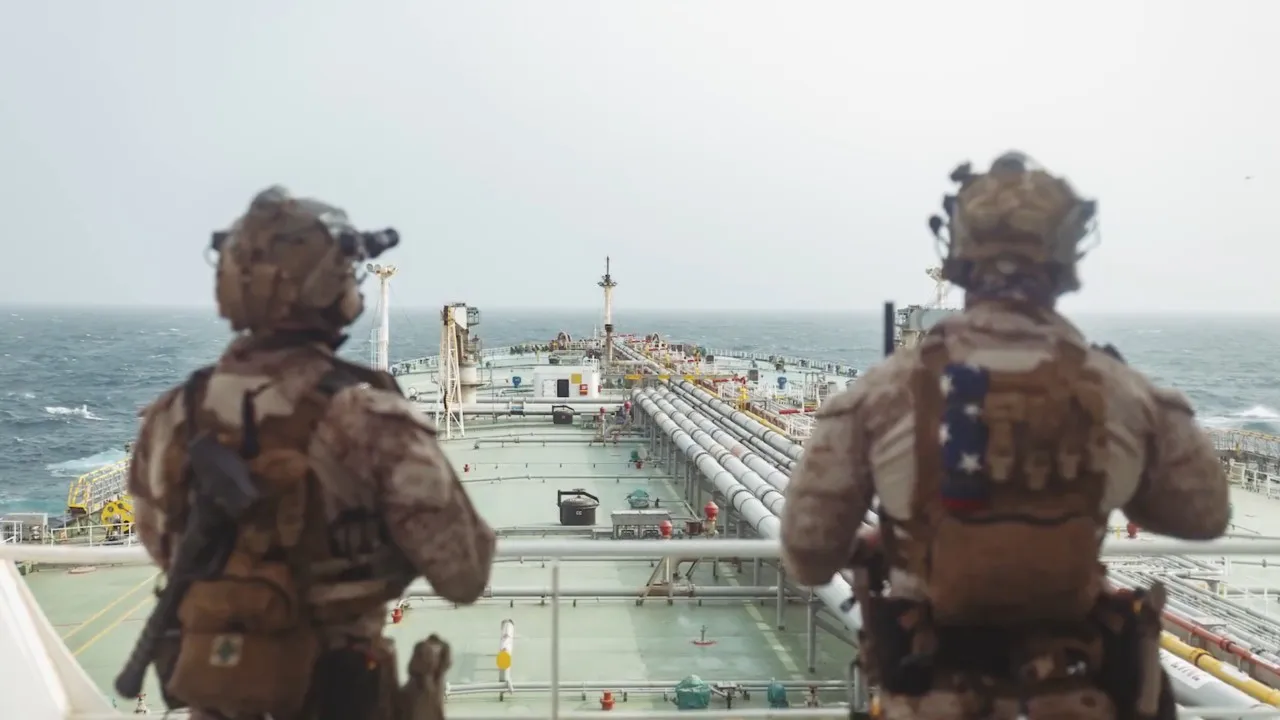
Houthi Red Sea fees may soon become a line item on shipping invoices. Regional sources with knowledge of the discussions told Reuters that Yemen’s Houthi movement is examining plans to charge commercial vessels for passage through the southern Red Sea — a move that would convert a war tactic into a revenue system.
The consideration comes barely a week after the group declared a naval embargo against Saudi Arabia on July 20, opening a fresh front in the Iran war and pushing attacks on energy tankers well beyond the Gulf.
The Chokepoint in Question
The proposed charges would apply to most traffic moving through the Bab el-Mandeb, the narrow gateway connecting the southern Red Sea to the Gulf of Aden. Sources said no timeline has been set for putting the plan into effect.
The Houthi media office did not respond to a request for comment.
Geography explains why this particular passage carries so much weight. Sailing through the Bab el-Mandeb toward Asia takes about 16 days. Rerouting cargo around it — north through the Red Sea, into the Suez Canal, then down around southern Africa — stretches the same journey to roughly 50 days.
That difference is not merely inconvenient. It ties up vessels, inflates fuel and crew costs, and delays deliveries across entire supply chains. A fee that looks modest against the alternative starts to look like something shipowners might simply pay.
Tehran’s Fingerprints on the Plan
The idea did not emerge in isolation.
Houthi officials travelled to Iran in July for the funeral ceremony of the late Supreme Leader Ayatollah Ali Khamenei. According to two regional officials briefed by Tehran, Iranian counterparts used that visit to discuss imposing transit fees at the Bab el-Mandeb.
The objectives, as those sources described them, were twofold: normalise the practice of charging vessels for passage through international waterways, and tighten economic pressure on the United States.
An Arab official in the region added a further detail. When Houthi representatives flew back from Tehran, Iranian advisers travelled with them, arriving on the ground to help establish an authority capable of regulating and collecting fees.
Afrah al-Zouba, foreign minister-designate with Yemen’s internationally recognised government, framed the trajectory bluntly. The Houthis will attempt to gain control over the Red Sea, she said, and if they succeed they will charge ships for using it.
One Country Would Sail Free
The plan reportedly contains a significant carve-out. Chinese vessels would be exempt from the charges, and sources said the Houthis support that arrangement.
That exemption fits a pattern already visible. China has held direct talks with the group aimed at ensuring its tankers can transit the southern Red Sea without being attacked. Beijing is the largest single buyer of Saudi Arabian crude, which makes its interest in uninterrupted passage considerable.
The exemption also serves a strategic function. A fee regime that spares one major power while charging everyone else creates incentives to accept the arrangement rather than confront it — and complicates any coordinated international response.
Why Saudi Arabia Is the Real Target
For Riyadh, the Bab el-Mandeb has been the escape valve.
With the Strait of Hormuz effectively choked off for months, the Red Sea route offered the kingdom an alternative path to market. Closing or taxing that corridor would remove the last convenient exit, raising genuine fears of supply shortages rather than merely higher prices.
Those fears are compounded by the state of diplomacy elsewhere. A senior Iranian official told Reuters on Wednesday that Tehran has ruled out Oman’s proposal for joint regional management of the Strait of Hormuz, which would have included voluntary contributions from transiting ships. That rejection extinguishes near-term hope of reopening the Gulf chokepoint.
Pressure is also being applied directly. At least one Saudi tanker was attacked in the past week off the southern port of Jizan, close to the Yemeni border. The Houthis claimed responsibility.
This Has Happened Before
The concept of paying for safe passage is not new to these waters.
A 2024 United Nations Panel of Experts report alleged that the Houthis collected payments from some shipping agencies transiting the Red Sea and Gulf of Aden during the peak of their maritime campaign, in exchange for guarantees of safety. The panel noted it could not independently verify the claims.
Estimates cited in that reporting put the sums at around $180 million per month, though those figures were likewise unverified.
What would be different now is formality. Informal payments to avoid attack are extortion. A published fee schedule administered by a regulatory authority is something else — an attempt to establish the appearance of legitimate sovereignty over a waterway.
Why Nobody Is Likely to Stop It
Two Western diplomats said such a move would draw strong objections from Gulf states and European governments.
Objection, however, is not prevention. The same diplomats noted that international naval forces in the region are already overstretched and unable to provide adequate protection for merchant shipping. Just as importantly, there is little political appetite anywhere to commit the resources that would change that.
That gap between opposition and capability is precisely what makes the plan viable. A group does not need to defeat navies to charge tolls. It only needs enough range and enough credibility that shipowners conclude paying is cheaper than risking a strike or adding a month at sea.
The Longer Shadow
Red Sea traffic never fully recovered from the attacks that began in November 2023, which the Houthis described as solidarity with Palestinians during the Gaza war. Those assaults on merchant vessels ceased only with the Gaza ceasefire last October.
Now the shipping lanes are contested again, this time with an explicitly economic objective attached.
If fees are implemented at the Bab el-Mandeb while Hormuz stays shut, two of the world’s most consequential maritime passages will be under the control of Iran and its allies simultaneously. Energy would still move, but on terms set in Sanaa and Tehran rather than in the markets that depend on it.
For the shipping industry, the practical question arrives before the geopolitical one: pay, reroute, or gamble. None of those options is cheap, and every day the standoff continues, the cost works its way further down the chain toward consumers who have never heard of the Bab el-Mandeb.
Author
-
Lucienne Albrecht is Luxe Chronicle’s wealth and lifestyle editor, celebrated for her elegant perspective on finance, legacy, and global luxury culture. With a flair for blending sophistication with insight, she brings a distinctly feminine voice to the world of high society and wealth.