The Iran Oman Strait of Hormuz negotiation has become the quiet centre of a very loud war. Tehran has turned down Muscat’s plan for shared oversight of the waterway and put forward a counteroffer that would hand Iran considerably more authority than its neighbour. Both capitals are now working through the details of what any final arrangement might contain.
Iran’s Deputy Foreign Minister Kazem Gharibabadi announced the rejection on state television on Tuesday, saying the Omani plan did not go far enough in addressing Tehran’s concerns about who governs passage through the channel.
Why This Waterway Decides So Much
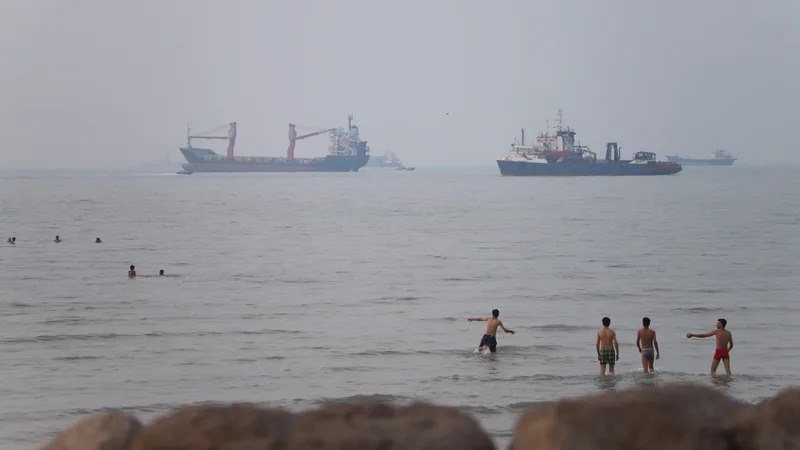
Before fighting began in late February, roughly one-fifth of the world’s oil and liquefied natural gas moved out of the Gulf through this single passage. It is narrow, it runs between Iranian and Omani territorial waters, and there is no practical alternative route for most of the cargo that uses it.
Iran shut it soon after US and Israeli attacks started, and global supply chains felt the effect almost immediately. Washington answered with a blockade of Iranian ports.
A memorandum of understanding signed by the two governments on June 17 was supposed to reopen the strait to shipping free of charge for at least sixty days. The document was written loosely enough that both sides read it differently, particularly on the questions of ultimate control and which lanes vessels should use. Those disagreements helped trigger renewed American strikes and Iranian retaliation against US assets in the region.
The shooting stopped at the end of last week. The argument over the strait did not.
Oman’s Offer: An Even Split
Gharibabadi described what Muscat had put on the table. It amounted to a joint regional mechanism dividing the waterway down the middle.
Under that framework, Iran would manage transit lanes on its side and Oman would manage the lanes hugging its own coast. As Gharibabadi outlined it, a vessel might enter through Iranian waters and exit through Omani waters, with the route split evenly between the two jurisdictions.
The plan also included voluntary contributions from shipping companies, with proceeds going to both countries.
That structure was not invented from scratch. It closely resembles the arrangement covering the Strait of Malacca, where Indonesia, Malaysia and Singapore invite transiting ships to contribute voluntarily toward navigation aids, environmental protection and search-and-rescue capability.
Oman also appears to have regional backing. Gulf Cooperation Council foreign ministers met on Tuesday to discuss regional security, according to Qatar’s foreign ministry.
Iran rejected it anyway, citing national security.
Iran’s Counteroffer: Oversight of Both Directions
Tehran’s alternative is more ambitious in a specific way.
Gharibabadi said Iran wants one full route lying entirely inside its territorial waters, with a portion of the second route also passing through Iranian waters. The purpose, in his framing, is to let Iran exercise effective oversight of both inbound and outbound traffic.
That is the crux of the disagreement. Oman proposed parity. Iran is proposing something closer to supervision of the whole corridor, with Muscat administering only part of the opposite lane.
Gharibabadi paired the offer with two warnings. If Oman refuses, the strait stays closed. And there will be no return to the pre-war situation in which ships passed without paying anything at all.
A Third Idea Is Already Circulating
Reporting from Tehran, Al Jazeera’s Resul Serdar Atas indicated that Oman is now weighing a further option involving three lanes rather than two: one through Iranian waters, one international corridor, and one through Omani waters.
How Tehran responds is unclear, though sources described Iran as showing some flexibility.
An international lane in the middle would be a meaningful concession from Iran’s current position, since it would create passage that neither government controls outright. Whether Tehran can accept that while still claiming a security win is the question the next round of talks will test.
The Details Nobody Has Settled
Several unresolved issues sit beneath the headline dispute, according to reporting from Al Jazeera’s Tohid Asadi in Tehran.
Direction of travel within each lane remains contested, as does who holds authority to define and enforce whatever gets agreed. Fee structures are unsettled. So is mine clearance.
That last item carries particular risk. The United States has accused Iran of mining the strait. Tehran has never confirmed it. What Iran did do, in April, was publish a map through the Islamic Revolutionary Guard Corps showing an approved route for permitted shipping, saying it would keep vessels clear of potential mines. That corridor ran much nearer the Iranian coastline than traditional shipping lanes.
The Money Gap Is Enormous
Fees may prove the hardest gap to close, because the two sides are not describing the same order of magnitude.
Paul Musgrave, a professor at Georgetown University in Qatar, pointed out that the Malacca voluntary system generates roughly $70 million per year across all three participating states.
Tehran has reportedly floated a service fee of $1 million per ship.
With thousands of transits annually in normal conditions, that figure would produce revenue on a completely different scale — closer to a toll on global energy than a contribution toward navigation safety. Iran has previously said such income would fund reconstruction after the infrastructure damage inflicted by American and Israeli strikes.
What Is Actually at Stake
Strip away the diplomatic language and the negotiation comes down to a single question: does Iran emerge from this war holding a permanent lever over a fifth of the world’s seaborne energy?
Oman’s proposal says no, or at least only half. Iran’s proposal says yes, with a revenue stream attached.
Shipping companies, insurers and importers are watching a technical argument about lanes and fees that will ultimately determine what they pay and whether they sail at all. For now, the strait stays shut, the war stays paused, and the maps keep getting redrawn.
Author
-
Lucienne Albrecht is Luxe Chronicle’s wealth and lifestyle editor, celebrated for her elegant perspective on finance, legacy, and global luxury culture. With a flair for blending sophistication with insight, she brings a distinctly feminine voice to the world of high society and wealth.