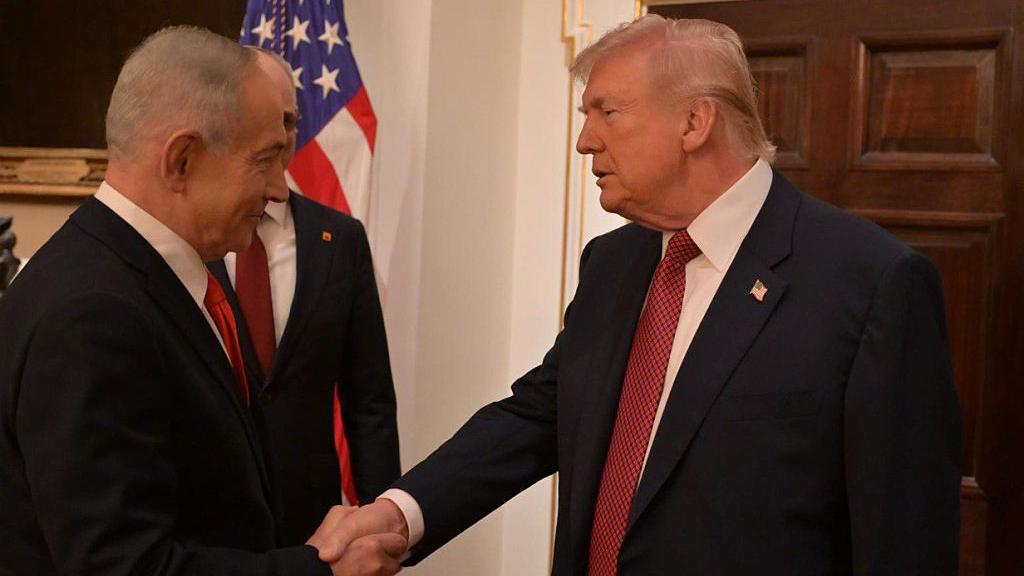
The Trump Netanyahu relationship has entered a remarkable new phase, one in which the Israeli prime minister, long skilled at playing Washington’s divisions to his advantage, suddenly finds himself with nowhere left to turn.
A Familiar Playbook That No Longer Works
For decades, when American presidents tried to rein him in, Netanyahu had a reliable strategy. He could exploit the rifts in U.S. politics, find a friendlier audience somewhere in Washington, and slip free of whatever constraints were being placed on him.
That escape route has closed. In his standoff with President Donald Trump, Netanyahu has discovered there is no higher court of appeal. Trump holds a viselike grip over the Republican Party, and Democrats, for their part, have little sympathy left for the Israeli leader. The result is that Netanyahu has fewer allies in Washington than at almost any point in his career.
Trump Asserts Power No President Has in Decades
In recent days, Trump has wielded blunt authority over Israel in a way no modern U.S. president has. On Monday, he declared that he had personally forced Netanyahu to reverse an attack already launched against Iran, telling the prime minister he would otherwise “end up alone” against Tehran.
That warning marked a sharp break from the long-standing American practice of backing Israel against Iran under nearly any circumstance. The irony is hard to miss: Netanyahu had played a central role in persuading Trump to join the initial February strike on Iran in the first place.
The two leaders have built a strong alliance over the years, often weathering international criticism together. But their domestic agendas have now pulled apart, producing an unusually public rupture.
Two Leaders, Two Diverging Goals
At the heart of the breach lies a simple conflict of priorities:
- Trump wants a quick end to the Iran war, aiming to reopen the Strait of Hormuz and impose strict limits on Iran’s nuclear program.
- Netanyahu feels he cannot leave direct Iranian attacks, like those over the weekend, unanswered, and faces accusations at home that he has become an American vassal.
Trump signaled optimism in a Truth Social post, predicting that negotiations would soon produce a deal unless “ignorance or stupidity” got in the way, and claiming both sides want the war to end. Speaking to Israel’s Channel 12, he said he had ordered Netanyahu to stand down, recounting that five regional countries had urged him to pressure the prime minister and that he warned Netanyahu he might “end up alone against Iran.”
When Iran struck Israeli territory on Sunday, the kind of move that would normally trigger a forceful Israeli response, Netanyahu ultimately hit targets in both Iran and Lebanon, where he has been battling the Iranian-backed Hezbollah.
The Domestic Pressures Driving Each Man
Both leaders are being pushed by forces at home. Netanyahu, whose standing took a major blow from Hamas’s October 2023 attack, trails in the polls with Israeli elections expected by October. He cannot easily afford to look weak.
Trump faces his own squeeze. Republicans are bracing for significant losses in November’s midterms, and a prolonged Iran war that drives up gas prices could deepen them. That gives him a concrete incentive to end the conflict fast.
Analysts describe the leverage Trump now holds as historic. Aaron David Miller of the Carnegie Endowment noted that no American president has ever publicly spoken about an Israeli prime minister the way Trump speaks about Netanyahu, attributing that unprecedented leverage largely to Trump’s ownership of the Republican Party. Trump himself put it bluntly in an interview, insisting that he calls all the shots and Netanyahu does not.
A White House Trying to Smooth Things Over
The administration has worked to downplay any friction. Spokeswoman Olivia Wales described Trump’s relationship with Netanyahu as strong, called Israel a great ally, and framed Trump as both a true friend to Israel and a fighter for peace, adding that the joint strikes on Iran had been highly successful.
Netanyahu’s Political Tightrope
For months, Netanyahu has resisted any deal with Iran and openly pushed for regime change. He has bristled at efforts, first from Iran and now from Trump, to restrain him in Lebanon, where he has fought Hezbollah on and off for nearly three years. Having promised Israelis he would eliminate the Hezbollah threat, he now risks looking like he’s caving if he agrees to a ceasefire that halts the Lebanon campaign.
So far, he has stayed quiet about his relationship with Trump, a delicate matter given the president’s popularity in Israel. Confirming tensions publicly could provoke Trump’s anger or damage Netanyahu’s carefully cultivated image as the one Israeli leader who can manage Washington better than anyone else.
His domestic rivals have seized the opening. Former prime minister Naftali Bennett accused him of having “lost control of Israeli sovereignty,” while opposition leader Yair Lapid charged that Israel had become a “total vassal state.” After both sides called off strikes Monday, Netanyahu pushed back with a defiant speech, insisting he retained the freedom to act in Lebanon and rejecting any new “equation” imposed by Iran and Hezbollah.
A Rift Iran May Try to Exploit
The tension carries risks for both men, and Iran appears eager to widen it. Former CIA Middle East operations chief Ted Singer suggested Tehran is testing the seam between the two leaders while simultaneously shoring up its proxies, including Hezbollah, and reminding Gulf states that the Houthis in Yemen remain a threat.
Sima Shine, a former Mossad analysis chief, said recent reporting points to genuine and growing distrust between Netanyahu and Trump’s circle. Some of Trump’s advisers, she noted, worry about Netanyahu’s ability to sway the president, aware of his reputation as a skilled manipulator who does not want an agreement with Iran. At the same time, she stressed, Netanyahu faces real danger at home if he appears to yield on matters Israelis consider vital to their security.
Not the First Flare-Up
While the latest exchanges have been especially striking, friction between the two has surfaced repeatedly across both of Trump’s terms. Trump complained in 2020 that Netanyahu had congratulated Joe Biden on his election win and had declined to join the Soleimani assassination. During last year’s brief war with Iran, Trump vented his fury on camera at the White House over Netanyahu’s attempt to keep bombing Iran after a ceasefire. And after a botched Israeli strike in Qatar aimed at Hamas leaders, Trump reportedly made Netanyahu apologize to the Qatari leader by phone from the Oval Office.
That long history of clashes suggests the current rift, however sharp, fits a recurring pattern, even as the stakes this time may be higher than ever. How these two leaders resolve their competing pressures could shape the Middle East for a generation.
Author