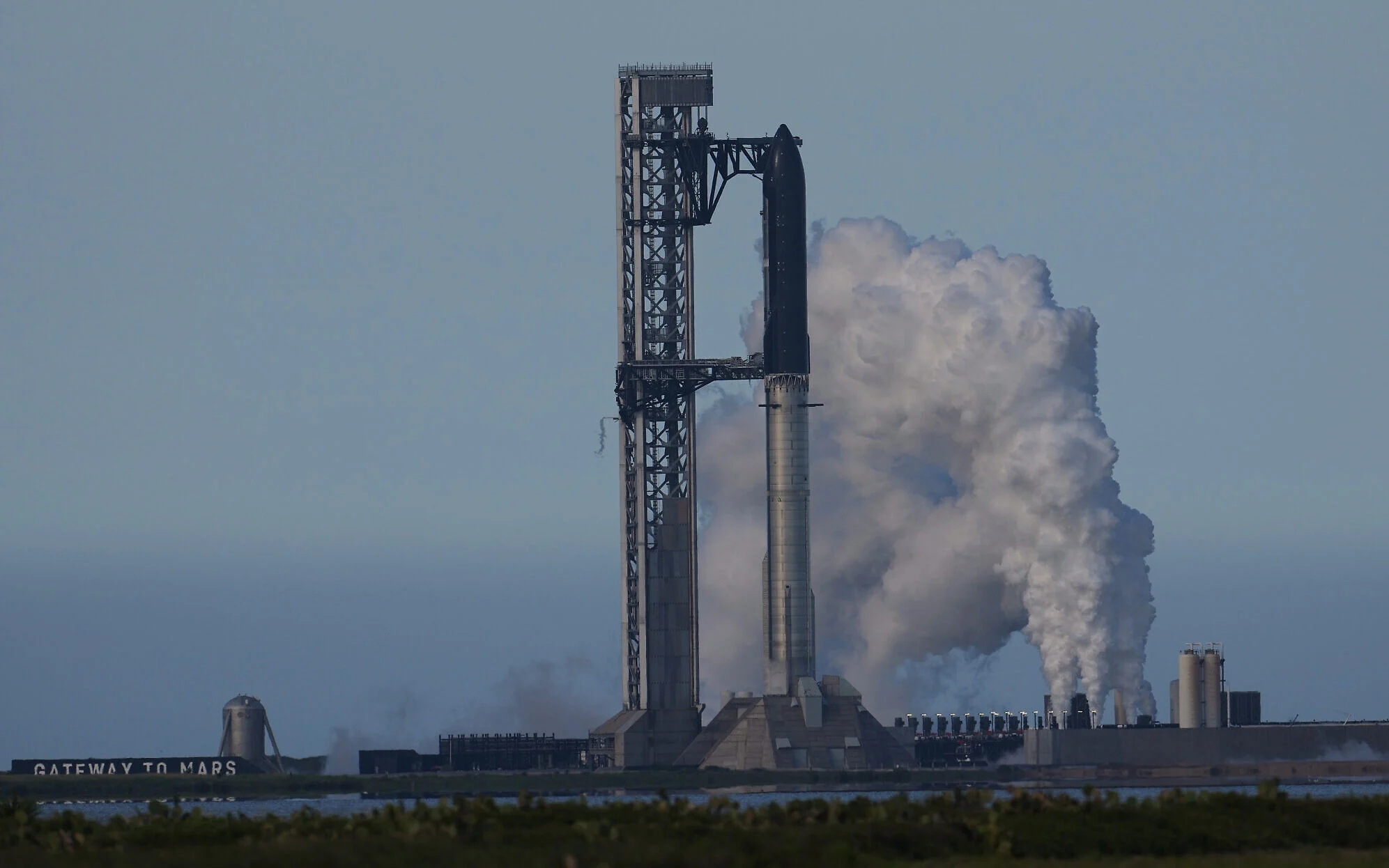
SpaceX Starship sits at the very center of Elon Musk’s grandest ambitions, from sending humans to Mars to launching what could become the largest initial public offering in history. Standing an astonishing 407 feet tall, it is the biggest rocket ever built, and the company is betting its future on it.
A $15 Billion Gamble
The AI-to-satellite empire led by the world’s richest person has poured more than $15 billion into developing Starship. In the regulatory filings for its upcoming IPO this month, SpaceX described the vehicle as central to its plans for future growth.
The goal is to make Starship the world’s first fully reusable launch system. By recycling both stages of the rocket and sharply increasing payload capacity, SpaceX hopes to launch more equipment into orbit, carry larger satellites, and eventually mount missions to the Moon and Mars at dramatically lower cost.
That promise underpins some of the company’s boldest projections. As Musk put it in a 2024 post, becoming multiplanetary would greatly extend the survival of human consciousness, since humanity would no longer have everything riding on a single planet.
Powered by 33 of the company’s Raptor engines, Starship dwarfs even NASA’s legendary Saturn V, the rocket that carried astronauts to the Moon during the Apollo program.
Still Far From Ready
For all its promise, Starship is not yet operational. US regulators grounded the rocket after SpaceX lost control of its booster during a test flight in May. Turning the vehicle into a dependable transport system will demand major technical breakthroughs, including the difficult feat of refueling the spacecraft while it is in orbit.
The road so far has been rocky. SpaceX has launched Starship 12 times, using each flight to test critical systems. Several missions ended in failure, including:
- Incidents where the company lost control of the vehicle, scattering debris over parts of the Caribbean.
- A rocket that exploded on the launch pad during a test firing.
These setbacks underline just how hard it is to build a fully reusable heavy-lift rocket. SpaceX is not struggling alone, though. Rivals such as Jeff Bezos’s Blue Origin and United Launch Alliance have also hit obstacles developing their own next-generation systems.
Why SpaceX Needs Starship
The company insists its current workhorses, the Falcon 9 and Falcon Heavy, simply cannot carry the load its future demands. Neither rocket, SpaceX says, can deploy the next generation of Starlink satellites at the scale required, nor support plans for space-based data centers.
As analyst Caleb Henry of Quilty Space put it, Starship is fundamental to nearly everything SpaceX hopes to achieve.
There has been real progress. In October 2024, the company successfully caught a returning booster using its giant “mechazilla” mechanical arms at the Starbase facility in Texas, a key milestone in the quest for rapid reusability.
Building on a Decade of Success
Over the past ten years, SpaceX has transformed reusable boosters from a controversial idea into the backbone of the commercial launch market. Falcon 9 has flown hundreds of missions, driven down launch costs, and made the company the dominant provider of commercial access to space.
That dominance has fueled Starlink, the satellite broadband network that now serves more than 10 million customers worldwide and generated $4.4 billion in operating income last year. SpaceX argues that Starship is essential to expanding this network further, enabling it to launch larger and more capable satellites than its current fleet can handle.
Demand has been so strong that the company has felt little pressure to cut prices. As University of Central Florida’s Greg Autry observed, market demand currently outstrips available capacity, leaving SpaceX no reason to lower its rates.
An Extraordinary Vision
Even if Starship clears its engineering hurdles, the scope of SpaceX’s ambitions remains staggering.
The company says Starship will eventually carry up to 100 metric tonnes of cargo into orbit, with later versions able to haul even more. That capacity could allow SpaceX to deploy bigger satellites, move large amounts of equipment beyond Earth, and pursue projects currently impractical because of launch costs.
Musk has long talked of building self-sustaining cities on Mars. More recently, SpaceX has told investors that Starship could also support enormous orbital data centers designed to run AI systems.
This reflects one of the most striking assumptions in the company’s long-term plans: that AI computing infrastructure might one day move into space, where solar power is effectively unlimited. Musk predicted in February that within 36 months, space could become by far the cheapest place to run AI, driven by rising energy and data-center costs on Earth.
Not everyone is convinced. Analysts at SemiAnalysis argue that orbital data centers remain far more expensive than ground-based options and would require major advances in engineering and materials science before they could ever be commercially viable.
The Real Challenge: Frequency
Ultimately, the hardest problem may not be building Starship at all, but operating it at a pace no launch provider has ever matched.
Across its history, SpaceX has carried thousands of tonnes of payload into orbit. Realizing its most ambitious goals, however, would require launching vastly more material, potentially through several thousand Starship flights every year.
The company’s appetite for risk and rapid testing has helped it outpace competitors. But the future it has sold to investors, one of humanity spreading across the solar system, hinges on proving that Starship can become a routine and reliable way to reach space.
As Henry of Quilty Space summed it up, no one yet knows whether launching 5,000 flights a year is truly feasible. Then again, SpaceX has defied industry expectations many times before.
Author