The ICC chief prosecutor removal that member states approved on Friday marks something the International Criminal Court has never done before — stripping its top prosecutor of office mid-term — and it arrives at a moment when the institution can least afford internal turmoil.
British barrister Karim Khan was voted out by a large majority of the court’s 125 member states, roughly two years after allegations of sexual misconduct involving a female aide first became public through a series of reports by The Associated Press. Khan has consistently rejected the claims.
The Finding Against Him
The court’s oversight body, the Assembly of States Parties, concluded that Khan had committed what its president Päivi Kaukoranta described as serious misconduct and a serious breach of duty.
That conclusion followed a report by the oversight body’s executive committee, which reached a similar finding in June and prompted Khan’s temporary suspension pending Friday’s vote. Documents reviewed by the AP indicate investigators determined the 56-year-old had entered into a sexual relationship with the woman and subsequently attempted to discourage her from pursuing her complaint.
Khan disputes those findings in full.
A Vote That Moved Faster Than Expected
The session itself proved shorter than anticipated. Early in proceedings, Sierra Leone introduced a motion that would have raised the threshold required to remove Khan. It failed.
With that obstacle cleared, diplomats moved directly to the removal vote — several hours ahead of the planned schedule, according to three diplomats familiar with the proceedings.
The speed reflected how thoroughly positions had hardened during the long investigation. The process had divided human rights advocates, court staff and member governments against one another over questions of due process, institutional credibility and whether removing a sitting prosecutor would strengthen or weaken the court.
Bad Timing for an Institution Under Siege
The internal crisis landed while the ICC was already absorbing sustained external pressure, particularly from Washington.
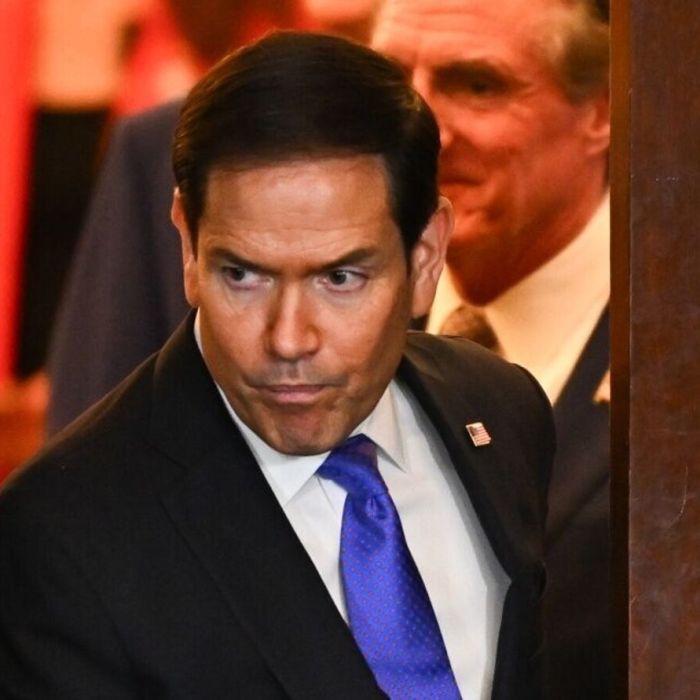
In a statement last week, Secretary of State Marco Rubio announced what he called a sweeping campaign to dismantle the threat the court poses to American sovereignty. The stated plan involves pressing member states to withdraw from the institution, imposing sanctions on organisations that cooperate with it, and barring court personnel from entering the United States.
Rubio also indicated that countries benefiting from American security guarantees would be urged to reject the court’s jurisdiction over U.S. citizens — an approach that turns alliance relationships into leverage against the tribunal.
That campaign builds on earlier measures. The Trump administration had already sanctioned Khan along with a dozen other ICC personnel, retaliation for arrest warrants the court issued against senior Israeli officials, including Prime Minister Benjamin Netanyahu, over the war in Gaza, as well as for investigations touching American personnel in Afghanistan.
Venezuela Heads for the Exit
Within hours of the vote, Venezuela announced its withdrawal from the court.
Foreign Affairs Minister Félix Plasencia framed the decision around geography rather than the prosecutor’s removal, stating that the court’s record reflects a demonstrated regional bias that has concentrated its attention disproportionately on African and Latin American countries at the expense of the Global South.
The timing complicates that argument somewhat. Earlier this year, ICC prosecutors dropped an inquiry into whether U.S. sanctions on Venezuela amounted to crimes against humanity, citing insufficient evidence. A separate investigation into alleged crimes by Venezuelan security forces during Nicolás Maduro’s presidency remains open — and that case, rather than any bias claim, may explain more about the withdrawal than the official statement suggests.
Israel Claims Vindication
Israel’s ambassador to the United Nations, Danny Danon, seized on the result. He said Khan had believed that pursuing what Danon characterised as a political witch hunt against Israel, and seeking a politically motivated warrant against Netanyahu, would cause the world to overlook the misconduct allegations against him. In Danon’s assessment, that calculation failed.
That framing illustrates precisely why the case has been so difficult for the court to manage. The misconduct allegations and the Gaza investigation are legally unrelated, but they have become impossible to separate in public argument.
Iva Vukusic, a researcher at Utrecht University who has followed the process closely, told the AP that political considerations have been woven into the affair, particularly because this represents the first occasion on which an ICC prosecutor sought warrants against a Western ally.
That dynamic cuts both ways. Supporters of the Gaza investigation worry the misconduct finding will be used to discredit the underlying case. Critics of the court argue the opposite — that the allegations were minimised for as long as Khan remained politically useful.
What the Removal Does Not Change
One point matters for anyone tracking the Gaza proceedings: Khan’s departure has no immediate effect on the arrest warrants issued in 2024 for Netanyahu and former Defence Minister Yoav Gallant on charges of crimes against humanity.
Those warrants are judicial instruments. Only ICC judges hold the authority to withdraw them, and a change of prosecutor does not alter their legal status.
The office continues to operate under a deputy prosecutor structure while member states determine how to fill the position permanently — a process that will itself become a political contest, given the range of governments now invested in who occupies the role.
The Larger Question
The court was established to prosecute those responsible for the gravest crimes, and its authority rests almost entirely on perceived impartiality. It has no police force and no independent enforcement power. It functions only when states choose to cooperate.
Friday’s vote presents a genuinely contested picture. One reading holds that an institution willing to remove its own most senior official, at enormous reputational cost, has demonstrated that its rules apply internally as well as externally. The competing reading holds that a court losing members, facing sanctions from a major power and now removing its chief prosecutor is an institution in retreat.
Both interpretations will be argued vigorously in the months ahead. What is certain is that the ICC now faces the task of appointing new leadership while defending its jurisdiction, its funding and its membership simultaneously — with the Gaza warrants, the sanctions campaign and the withdrawal question all still unresolved.
Author
-
Lucienne Albrecht is Luxe Chronicle’s wealth and lifestyle editor, celebrated for her elegant perspective on finance, legacy, and global luxury culture. With a flair for blending sophistication with insight, she brings a distinctly feminine voice to the world of high society and wealth.