A Houthi missile attack on Saudi Arabia widened the regional conflict again on Saturday, even as Iran reported its first night in two weeks without American strikes — a pairing that captures how unevenly this war is unfolding across the map.
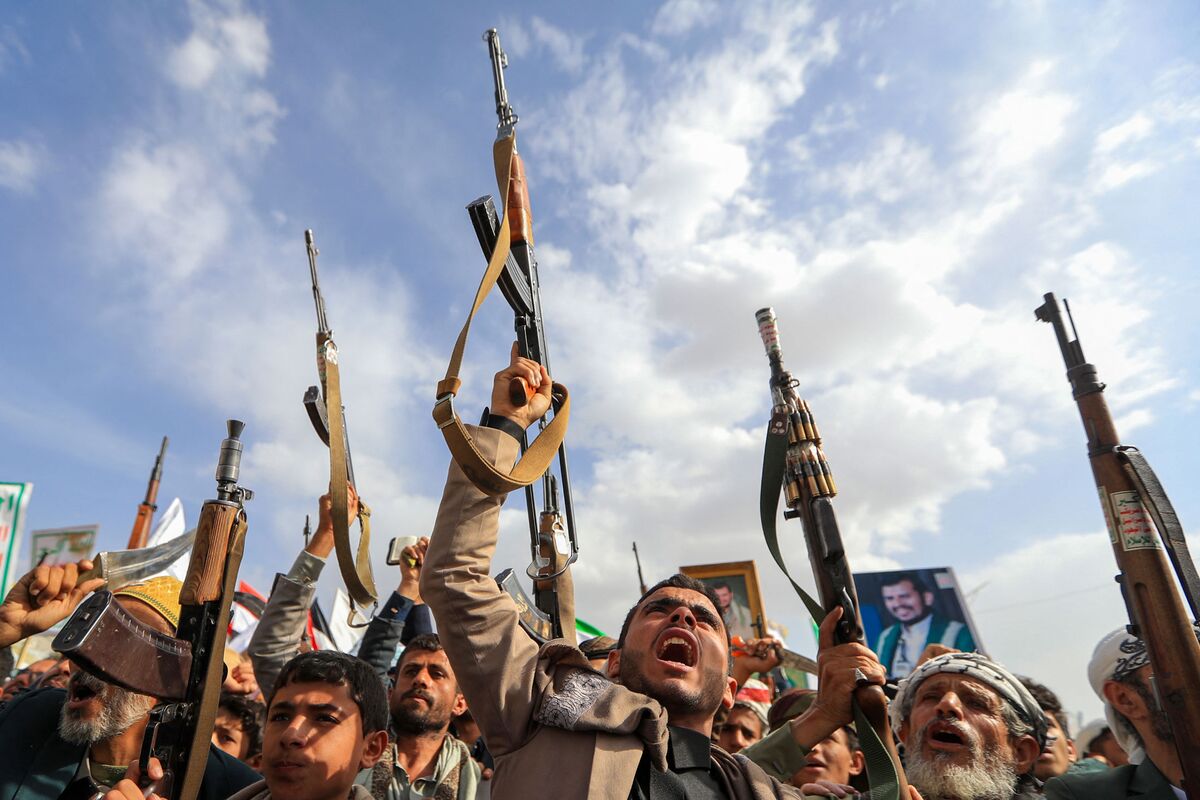
Yemen’s Iran-aligned Houthi movement claimed responsibility for the launch aimed at the southern Saudi city of Jizan, following through on a pledge to retaliate for strikes the kingdom carried out earlier in the week.
A Quiet Night in Iran
Iranian health ministry spokesperson Hossein Kermanpour noted the lull in a post on X, saying the country had passed a peaceful night. It was the first such night since the American bombing campaign began.
Nobody is treating it as a turning point. Tension across the region remains extremely high, and the pause coincided with a White House deliberation over whether to expand the campaign rather than wind it down.
How the Truce Fell Apart
The current fighting traces back to a memorandum of understanding signed by Washington and Tehran in June. That agreement was designed to reopen the Strait of Hormuz, which Iran had closed during the war, and to suspend hostilities for sixty days to create space for negotiation.
It collapsed roughly two weeks ago. Iranian attacks on tankers moving through the strait drew American strikes on Iran, which in turn produced Iranian retaliation against U.S. partners across the region. Since then, the fighting itself has blocked any progress at the table.
Much of the violence has centred on the strait, a waterway that carried about a fifth of the world’s oil and gas before the conflict began.
Trump Weighs a Heavier Hand
President Donald Trump met with senior national security advisers on Friday to consider escalation, and he has been open about what an expanded campaign might include.
He has raised the possibility of broadening the target list to civilian infrastructure such as Iranian power plants and bridges, and floated a ground operation to seize Kharg Island, one of the country’s largest oil export terminals.
Speaking to reporters, he framed the choice starkly: either continue on the current path and increase the dose until everything Iran has is destroyed, or pursue what he called the smarter route of making a deal.
He also insisted that talks are progressing, describing them as by far the most serious he has seen.
Iran’s foreign minister, Abbas Araghchi, offered a very different reading, arguing that the American approach itself is what prevents negotiations from moving. He added that Iran is neither intimidated by threats nor willing to bend under pressure.
Meanwhile, Tehran issued warnings urging citizens of Gulf states hosting American military installations to stay clear of those bases for their own safety — a fairly explicit signal about where future strikes may land.
Pressure at Sea
Confrontations continued on the water. American forces fired on a merchant vessel in the Gulf of Oman that they said was breaching the blockade of Iranian ports. The UK maritime agency separately reported an incident on Friday involving a tanker and military forces, without identifying who was responsible.
The Saudi Front
Saudi air defences intercepted two ballistic missiles fired from Yemen on Saturday, according to Reuters. Those launches targeted oil refineries at Yanbu on the Red Sea coast, while Saudi civil defence issued separate warnings for Jizan, which sits close to the Yemeni border.
Video circulating online showed dark smoke rising over an Aramco refinery in Jizan.
The exchange runs in both directions. A Yemeni security source told Agence France-Presse that Saudi Arabia struck a naval base in Hodeida and a military camp on Kamaran island on Friday. The Houthis characterised those attacks as a dangerous escalation.
The Blockade Squeezing Energy Markets
The Houthi movement, which controls northern and western Yemen, declared a naval blockade of Saudi Arabia in the Red Sea last week after the kingdom bombed the airport in Sana’a. On Thursday, the group struck two Saudi tankers, prompting Trump to threaten major military punishment against both Tehran and the Houthis.
That blockade carries outsized consequences. With the Strait of Hormuz effectively unusable, Saudi Arabia has been routing millions of barrels of oil to the Red Sea instead — meaning the Houthis are now threatening the workaround rather than the original chokepoint.
Markets reacted accordingly. Oil pushed past $100 a barrel on Thursday for the first time since May, and shipping insurance costs through the southern Red Sea doubled for some operators.
For consumers far from the conflict, that arithmetic eventually shows up at fuel pumps and in freight costs embedded across supply chains.
Araghchi Calls for Talks on Yemen
In an interview with an Iranian newspaper, Araghchi argued there is no military solution to the Saudi-Houthi confrontation, describing it as rooted in long-standing disputes.
He said the same applies to Yemen broadly, to Bab al-Mandab and to other regional flashpoints, and called for further dialogue between the parties.
The statement is notable given Iran’s role in arming and supporting the Houthis, and it may reflect an interest in keeping at least one front open to negotiation while another burns.
Mediators Still Working
Behind the strikes, diplomacy has not entirely stopped.
Pakistan and Qatar have spent the past fortnight passing messages between Washington and Tehran. The New York Times reported that Iraq delivered a ceasefire proposal to Iran that was quickly rejected, though Iraqi officials have disputed that account.
Pakistan has also reportedly pressed for renewed talks following a Chinese diplomatic initiative exploring fresh dialogue. Iran’s interior minister, Eskandar Momeni, travelled to Istanbul this week to discuss the matter, according to reports.
Where This Stands
The picture that emerges is of a conflict expanding faster than anyone’s ability to contain it. Iran gets one quiet night while Saudi refineries burn. Negotiations are described as serious by one side and obstructed by the other. Mediators shuttle proposals that get rejected before they are fully considered.
The energy numbers may ultimately force the issue. A war that pushes oil past $100 and doubles insurance premiums generates pressure from governments with no stake in the original dispute — and that pressure tends to build faster than battlefield results.
Author
-
Lucienne Albrecht is Luxe Chronicle’s wealth and lifestyle editor, celebrated for her elegant perspective on finance, legacy, and global luxury culture. With a flair for blending sophistication with insight, she brings a distinctly feminine voice to the world of high society and wealth.