The Lake Ontario renaming idea landed on Truth Social Tuesday morning, and by lunchtime Canadian politicians had already dismissed it, more or less with a shrug.
Trump wrote that the United States is giving serious consideration to rebranding Lake Ontario as Lake America, adding that he does not expect much business with Ontario going forward. He followed up with an image of the lake on a map, the existing name struck through and replaced with “Lake America” in heavy metallic lettering.
The timing was not subtle. Trade relations between the two countries have deteriorated sharply in recent days.
Ottawa and Queen’s Park Decline to Play Along
Ontario Premier Doug Ford’s response verged on amusement. Speaking to CBS News, he said he has to laugh when the president comes up with ideas like this one.
His position was otherwise simple. In Canada, he said, it will always be Lake Ontario. What the president chooses to call it is his own business, whether that turns out to be Lake America, Lake Trump, or anything else.
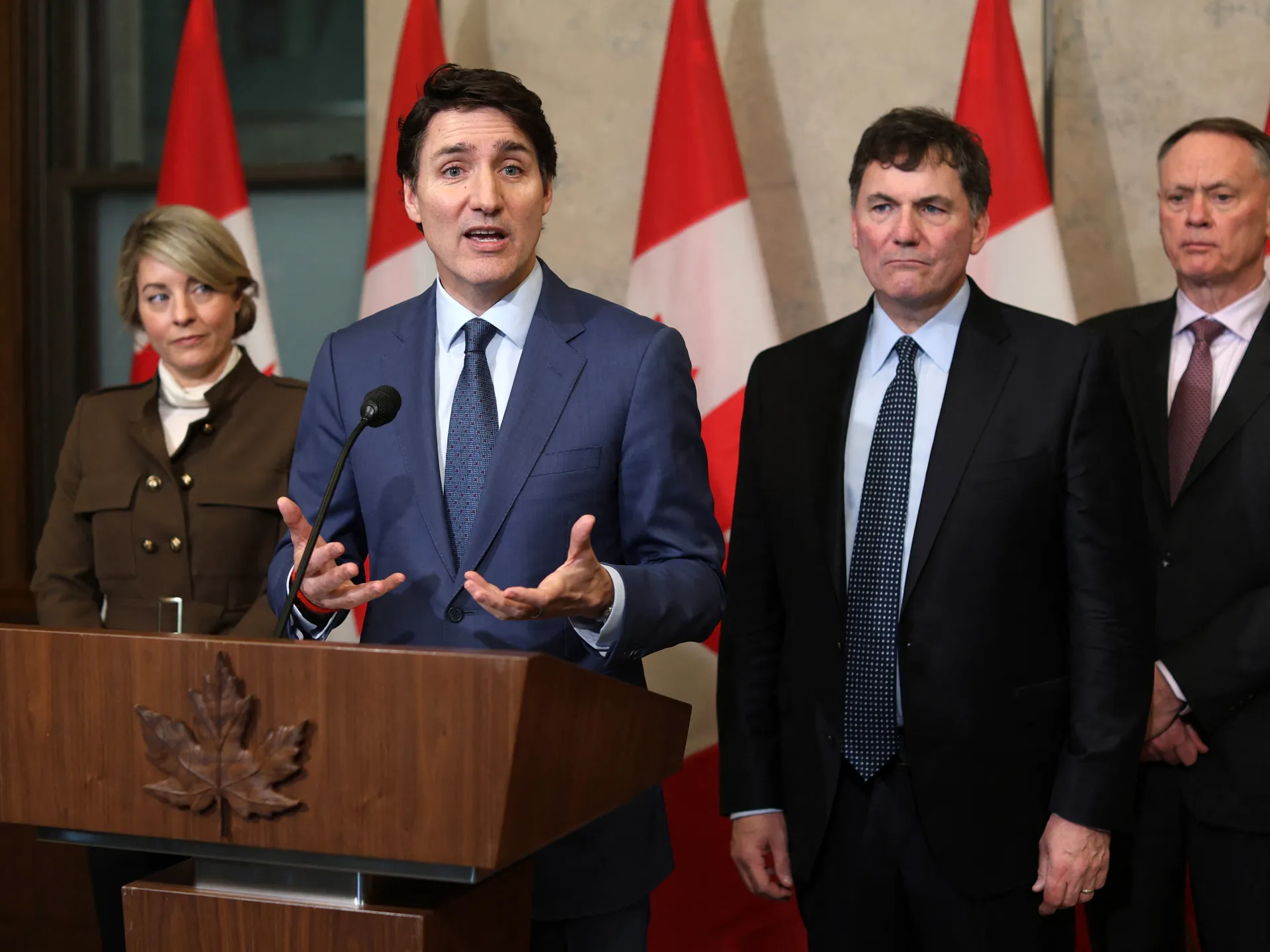
Canada’s Minister of Industry, Mélanie Joly, was blunter at a Tuesday press conference, saying Canadians will always call it Lake Ontario, full stop.
She framed the broader posture as one of composure under provocation. Canada will defend what it has, she said, and while the theatrics continue, the country intends to be smart, strategic and prepared to fight back.
A Deliberate Policy of Not Reacting
Internal Trade Minister Dominic LeBlanc offered perhaps the most telling response when CNBC put the question to him.
He explained that the federal government decided months ago not to respond to the daily stream of social media posts coming from the president or his cabinet officials.
That is a policy, not an improvisation. Ottawa has evidently concluded that engaging with every provocation grants it more weight than it deserves. LeBlanc said the government’s attention sits on the Canadian economy and on preserving a constructive working relationship with Washington.
Not the First Map to Get Edited
Lake Ontario joins a growing list. Last year Trump directed that the Gulf of Mexico be renamed the Gulf of America, and Mount Denali in Alaska reverted to Mount McKinley.
There is a practical wrinkle worth noting. The United States can change what appears on its own federal maps and in its own official documents. It cannot compel other countries, international bodies, or global mapping services to follow suit.
Lake Ontario complicates matters further because it is not entirely American. The lake is shared, with an international boundary running through it, and Canadian jurisdiction over its northern shore is not affected by anything posted online.
What Is Actually Happening Underneath
The naming dispute is a sideshow to a genuine economic confrontation that escalated significantly this week.
On Saturday, Trump imposed a fresh round of 50 percent tariffs on selected Canadian goods, hitting categories including alcohol and construction materials.
On Monday, he signaled another batch of 50 percent tariffs targeting auto parts and steel, scheduled to begin in January.
Canada responded on Tuesday with its own measures, applying tariffs reaching 50 percent on American products spanning steel, dairy and electronics among others. Those take effect on 8 September.
Those numbers represent real disruption to supply chains that have operated as effectively integrated for decades. Auto parts in particular cross the border multiple times during manufacturing, meaning tariffs compound at each crossing.
Why the Restraint Makes Sense
Canada’s measured reaction to the renaming carries a certain logic.
Responding angrily to a map edit would hand the story momentum and pull attention away from the tariff fight, where the actual stakes sit. It would also make Canada look rattled at precisely the moment it wants to project steadiness.
There is a domestic dimension as well. Canadian opinion has hardened considerably against Washington in recent months, and the political incentive for Canadian leaders is to appear unbothered rather than provoked.
Ford’s laughter, Joly’s flat refusal, and LeBlanc’s stated policy of non-engagement all arrive at the same destination by different routes: the name is not up for discussion, and Canada has more pressing things to address.
The lake, for its part, will keep sitting where it has always sat, indifferent to whatever appears on either country’s maps.
Author