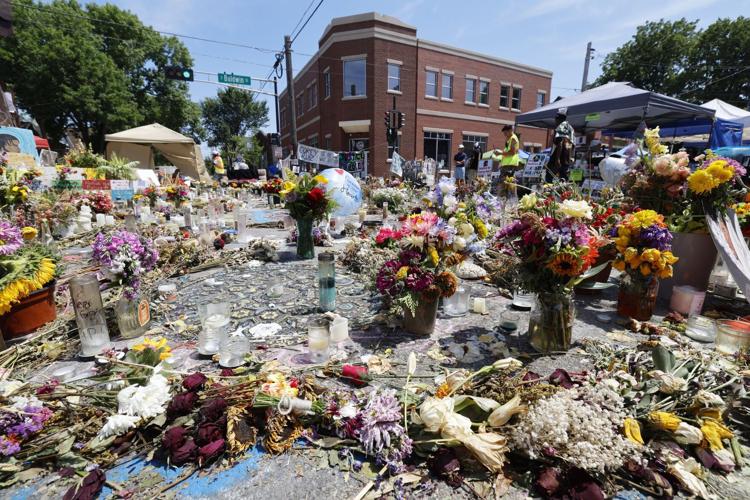
Madison Mayor Urges Protesters to Dismantle Barricades at Corey Ruiz Memorial
The Corey Ruiz memorial in Madison has become the focus of a difficult balancing act for city leadership, as Mayor Satya Rhodes-Conway issued a statement Saturday evening calling for what she described as a respectful transition of the memorial and protest site at Williamson and South Baldwin Streets.
The intersection has been shut down since Wednesday, July 22, the day officers shot and killed Ruiz. What began as a spontaneous gathering has since expanded into an occupation that the mayor says has become unworkable.
Who Is Actually Investigating
Rhodes-Conway used a portion of her statement to clarify jurisdiction, an issue that has generated confusion.
The Wisconsin Department of Justice’s Criminal Division Investigation is conducting an independent review of Ruiz’s death. The Madison Police Department is cooperating fully but does not control the process.
That distinction carries practical weight. MPD cannot make arrests in connection with the case, nor can it recommend charges. Those decisions belong to the state Department of Justice and the Dane County District Attorney.
For people at the site demanding immediate accountability, this means the entity they are physically confronting is not the one holding decision-making power.
The Mayor’s Central Argument
Rhodes-Conway did not dispute the legitimacy of the underlying grievance. Her objection centered on the method and its consequences.
She said the occupation of the intersection is neither safe nor sustainable, and argued it has reached a point where it distracts from the dialogue and organizing required to produce durable change rather than supporting it. She also said it is causing deep harm to the Marquette neighborhood.
Her requests were specific. The barricades need to come down. Residents need access to their homes and to their jobs so they do not lose them. Businesses need to be able to reopen.
Crucially, she framed the removal as something protesters should do themselves. She said a respectful transition is only possible if people at the site take the initiative to deconstruct the barricades, move vehicles blocking the right-of-way and take down tents.
The city, she indicated, is prepared to assist and will work alongside anyone on site willing to participate.
That framing matters. It positions the city as a partner in an orderly wind-down rather than announcing a forced clearance, though the underlying pressure is unmistakable.
Emergency Response Concerns
Among the more serious consequences is the effect on emergency services. The encampment has forced detours affecting a nearby fire station, raising questions about response times in the surrounding area.
Delayed emergency response is the kind of harm that does not become visible until it does, and it is difficult for any city administration to accept indefinitely.
Neighborhood and Business Impact
Residents and business owners near the closure have absorbed nearly two weeks of disruption. For small businesses operating on thin margins, an extended period without customer access represents a genuine threat to survival rather than an inconvenience.
The mayor’s reference to people potentially losing jobs points to a similar concern among residents who cannot reliably reach work.
A Shift in Who Is Present
Rhodes-Conway noted that the population at the site has increasingly come to include people who are unhoused, a development that changes the nature of the encampment considerably.
Her response was to redirect attention toward shelter infrastructure. She called for community support behind the Bartillon men’s shelter, which is preparing to open as a partnership among Dane County, the City of Madison, Porchlight and Friends of Dane County Shelter.
She described it as a first-of-its-kind, purpose-built facility with the potential to anchor services for the unhoused community, and asked residents to back it with both volunteer effort and financial contributions. She also said nonprofits serving the homeless community should be prioritized.
What Happens to the Memorial
The mayor was careful to separate the barricades from the memorial itself.
Memorial items, she said, need to be preserved or repositioned so that traffic can move through the intersection. Removal of the blockade does not mean erasure of the tributes left there.
Beyond that, the city intends to honor requests for a permanent memorial, to be developed in coordination with the Ruiz family. That commitment gives the grief a durable form while separating it from the roadway closure.
Where the Pressure Points Remain
Several tensions have not been resolved by the statement.
The first is timing. No deadline was announced, which leaves open what happens if the barricades stay up.
The second is trust. Asking protesters to dismantle their own encampment requires confidence that promises about a permanent memorial and about the underlying investigation will be honored. That confidence is precisely what is in question following a fatal police shooting.
The third is the shelter question. Nonprofits have raised concerns about the city’s approach to the unhoused community, and clearing a site where unhoused people have gathered will draw scrutiny regardless of the stated rationale.
Paths for Continued Advocacy
Rhodes-Conway argued the energy at the intersection has better outlets. She pointed to upcoming opportunities involving multiple levels of government, including at the state level, for people to press for changes to the criminal justice system.
She also encouraged connection with existing organizations already doing this work: nonprofits, faith communities and advocacy networks focused on criminal justice reform, policing reform and alternative models for emergency response.
Whether that reframing persuades anyone at the site is the open question. The city has made its position clear and offered cooperation, but the next move, at least as the mayor has framed it, belongs to the people standing at Williamson and Baldwin.
Author
-
Lucienne Albrecht is Luxe Chronicle’s wealth and lifestyle editor, celebrated for her elegant perspective on finance, legacy, and global luxury culture. With a flair for blending sophistication with insight, she brings a distinctly feminine voice to the world of high society and wealth.