NASA Next-Gen Space Processor: High Performance Spaceflight Computing Chip Promises 500x Speed Boost
NASA Next-Gen Space Processor headlines are taking flight as the agency’s most ambitious leap in spacecraft computing power begins moving from concept to reality. At the heart of the project is a brand-new, radiation-hardened chip that promises to revolutionise how spacecraft think, analyse, and operate in deep space. With early test results pointing to performance gains of up to 500 times the current standard, this could be one of the most transformative breakthroughs for space exploration in a generation.
A Chip Built to Survive the Harshest Place Imaginable
The processor at the centre of the High Performance Spaceflight Computing project has one extremely demanding job. It must operate flawlessly in an environment that destroys ordinary electronics. Space brings a long list of challenges that would melt, freeze, fry, or scramble the average chip in no time.
These include:
- Intense electromagnetic radiation
- Wild temperature swings, both hot and cold
- High-energy particles from the Sun and interstellar space
- Long mission durations with zero option for hardware repair
- Punishing physical forces during launch and landing
NASA’s Jet Propulsion Laboratory in Southern California has been putting the chip through a comprehensive battery of tests since February to make sure it can handle every single one of these conditions and more.
“We are putting these new chips through the wringer by carrying out radiation, thermal, and shock tests while also evaluating their performance through a rigorous functional test campaign,” said Jim Butler, High Performance Space Computing project manager at JPL.
A “Hello Universe” Moment
In a nice symbolic touch, the JPL team marked the start of testing with an email titled “Hello Universe.” The phrase echoes the classic “Hello World” line used in early programming history, and it perfectly captures the moment. A new kind of brain is being prepared for space, and it is making its first real introduction to the cosmos.
Early signs from testing have been highly encouraging. Results so far indicate the processor is operating at around 500 times the performance of the radiation-hardened chips currently used in space missions. That kind of leap is unheard of in spaceflight hardware, and it signals a major shift in what spacecraft can do on their own.
A Massive Leap in Capability
So why does this kind of performance matter? Because space missions today are limited by the modest computing power of the rugged, reliable chips that have been certified for spaceflight. Those chips are excellent at surviving the environment, but they cannot keep pace with the kind of data analysis, decision-making, and autonomy that future missions will require.
The new chip changes everything. Up to 100 times the computational capacity of current spaceflight computers is the project’s baseline target, with early testing already pointing to even higher real-world results.
Some of the major capabilities the new processor will unlock include:
- Onboard artificial intelligence for real-time decision-making
- Faster data analysis to speed up scientific discoveries
- Reduced reliance on Earth-based mission control for routine decisions
- Greater autonomy for rovers, landers, and orbiters
- Support for advanced sensors and instruments
- Improved performance for human missions to the Moon and Mars
For deep space missions especially, where signals can take many minutes or even hours to travel between Earth and a spacecraft, this kind of autonomy is essential.
A Tiny Powerhouse: The System-on-a-Chip
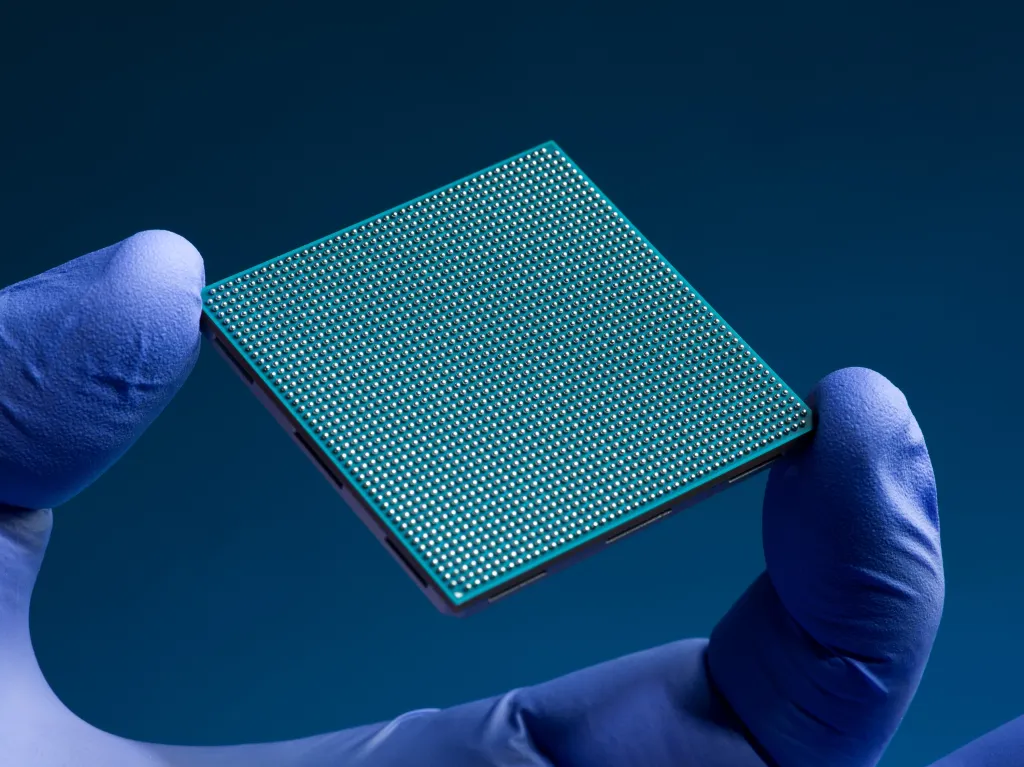
What is especially impressive is the size of the chip. The High Performance Spaceflight Computing processor is a system-on-a-chip, or SoC. That means everything you would normally find inside a computer is packed into a single piece of silicon small enough to fit in your hand.
Inside the SoC, you will find:
- Multiple central processing units
- Computational offloads for specific tasks
- Advanced networking units
- Onboard memory
- Input and output interfaces
If you have used a smartphone or tablet in the last decade, you have already encountered the magic of SoCs. They are compact, energy-efficient, and incredibly versatile.
But while the SoC in your phone might struggle in extreme weather or even after a drop on the pavement, this one is designed to thrive in the harshest environments imaginable, for years on end, millions or even billions of miles from Earth.
Bringing AI Into Space
The leap in performance has enormous implications for AI in space. Autonomous decision-making has long been a goal for space agencies because it removes one of the biggest bottlenecks in deep space exploration. Right now, spacecraft typically rely on careful instructions sent from Earth, which can be a slow and inefficient process.
With this new processor, future spacecraft will be able to:
- Analyse data on the spot rather than waiting to send it home
- Respond instantly to unexpected events
- Adjust scientific operations in real time
- Identify and prioritise targets of opportunity during exploration
- Conduct precise landings using high-resolution sensor data
“To simulate real-world performance, we are using high-fidelity landing scenarios from real NASA missions that would typically require power-intensive hardware to process huge volumes of landing-sensor data,” said Butler. He added that it is an exciting time to be working on hardware that will enable NASA’s next giant leaps.
Real-World Applications Beyond Space
While the chip is being designed primarily for space, its potential reaches far beyond the cosmos. The technology is being developed in partnership with Microchip Technology Inc., headquartered in Chandler, Arizona, which is funding its own research and development on the processor.
Once the chip is fully certified for spaceflight, NASA plans to incorporate it across many of its future missions, including:
- Earth orbiters
- Mars and lunar rovers
- Crewed habitats
- Deep space science missions
But Microchip will also adapt the technology for Earth-based industries, where high-performance, fault-tolerant computing is becoming increasingly valuable. Some likely applications include:
- Aviation
- Automotive manufacturing
- Industrial automation
- Critical infrastructure systems
That cross-industry potential adds an interesting commercial dimension. NASA-developed technologies have a long history of trickling into everyday life, and this chip seems likely to follow the same path.
A Strong Public-Private Collaboration
The High Performance Spaceflight Computing project is a strong example of how NASA increasingly partners with private industry to push the boundaries of technology. NASA JPL selected Microchip as a partner back in 2022, and since then, the project has progressed quickly through the testing pipeline.
The Game Changing Development program at NASA Langley Research Center has played a major role too. It guided the project lifecycle, funded industry studies, defined mission requirements, and supported the transition from research to delivery.
Eugene Schwanbeck, program element manager in NASA’s Game Changing Development program, summed up the significance of the work clearly. “Building on the legacy of previous space processors, this new multicore system is fault-tolerant, flexible, and extremely high-performing.” He called the project a triumph of both technical achievement and collaboration.
A Foundation for Future Exploration
If the testing continues to go well, the implications for space exploration could be enormous. Future deep space missions will demand smarter, faster, and more independent spacecraft. The current generation of processors simply cannot keep up with the rising complexity of modern scientific instruments, sensor systems, and AI-driven decision support.
This chip lays the groundwork for:
- More ambitious robotic missions across the solar system
- Smarter Mars rovers capable of self-navigation
- Advanced lunar habitats that manage their own systems
- Faster transmission and analysis of mission data
- A new era of AI-driven space exploration
Each of these advancements becomes far more achievable with a chip that combines hardiness, efficiency, and serious computing power.
Why This Matters Right Now
The timing of this project is significant. As NASA and international partners continue developing the Artemis program for lunar exploration and longer-term plans for Mars, the demands on spacecraft are growing exponentially. Future missions will not just be about flying farther. They will be about flying smarter.
Astronauts and robotic missions alike will need systems that can:
- Process data quickly without waiting for instructions from Earth
- Manage complex science workflows in real time
- Respond to surprises in dynamic environments
- Operate efficiently with limited power and resources
A chip like this is exactly what those missions will need to thrive.
Looking Ahead
Testing at JPL is expected to continue for several months. Given how promising the early results have been, optimism is running high. If the chip passes all of its remaining tests, it will move into wider deployment across NASA missions and eventually into broader commercial use.
For now, the simple phrase “Hello Universe” serves as a fitting reminder of what is unfolding. A new generation of space computing is being born, one that could quite literally change the way humanity explores the cosmos.
As space agencies push deeper into the solar system and beyond, every gram of mass, every watt of power, and every cycle of computing time matters. With this next-gen chip, NASA is preparing to enter a future where spacecraft are not just controlled from Earth, but are intelligent partners capable of thinking, deciding, and discovering on their own.
Author