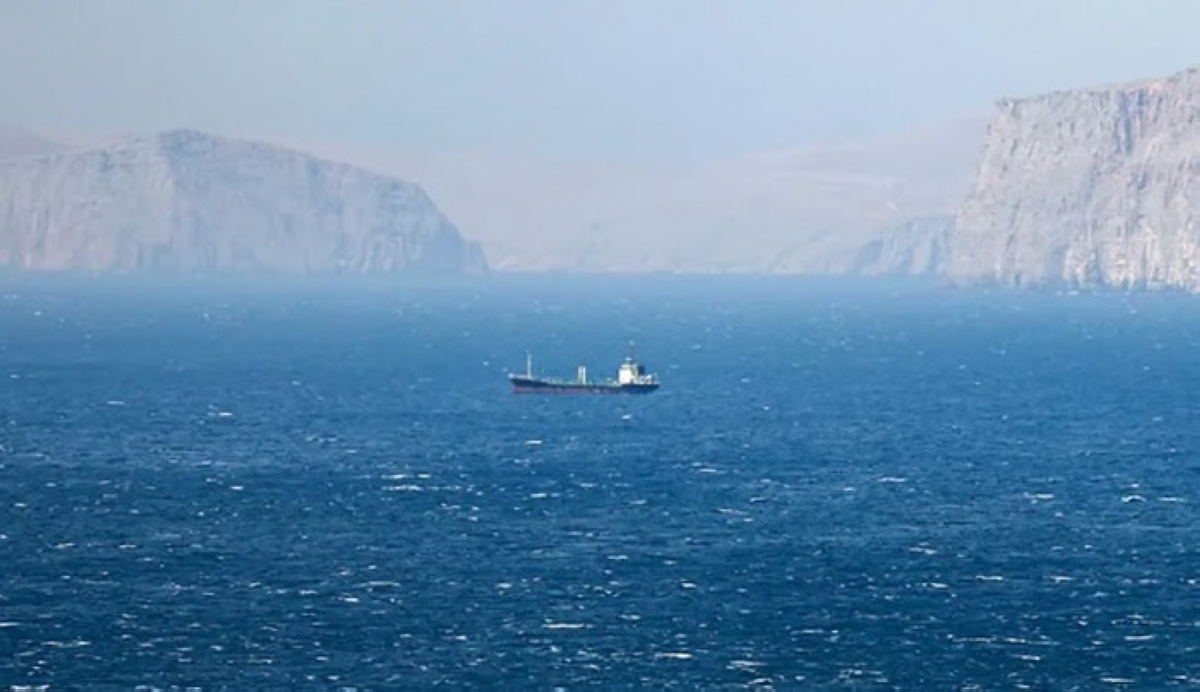
A South Korean ship in Strait of Hormuz caught fire on Monday after a sudden explosion, sending shockwaves through global shipping markets and intensifying fears that the Iran-related conflict in the region could spiral further. U.S. President Donald Trump quickly blamed Iran for the incident, while Seoul scrambled to verify what happened and protect its vessels and crew members caught in one of the most dangerous waterways in the world.
A Sudden Explosion at Sea
According to South Korea’s foreign ministry, the fire and explosion took place aboard a vessel operated by HMM, the country’s biggest shipping company. Officials confirmed that no casualties had been reported, although investigations into the cause of the blaze are ongoing.
The ship, identified as HMM Namu, is a 35,000-ton general cargo vessel registered under a Panama flag. It had 24 crew members on board at the time, including six South Korean nationals. According to an HMM spokesperson, the fire began in the engine room of the ship.
The vessel was not carrying any cargo at the time of the incident, which limited the immediate environmental and economic impact. Surveillance footage later showed that the fire had been extinguished, but towing the ship to Dubai is expected to take several days, the company said.
Trump Points the Finger at Iran
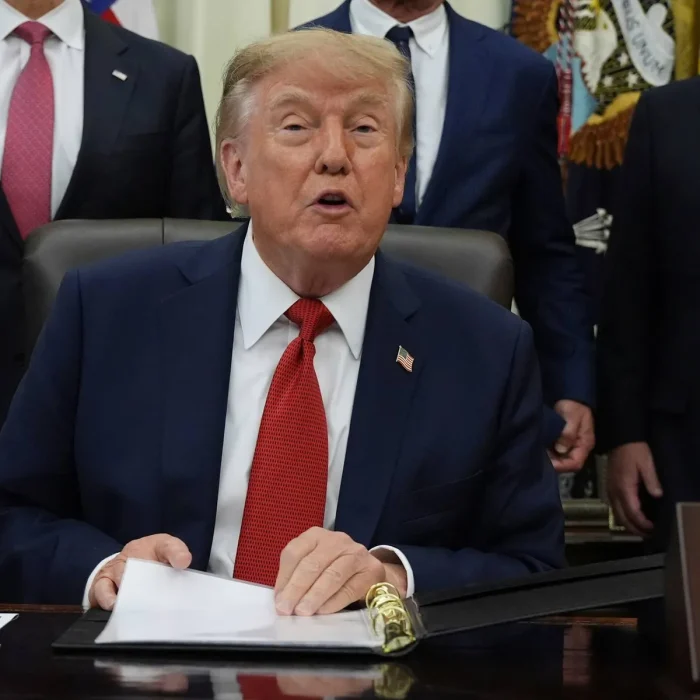
Almost immediately, U.S. President Donald Trump publicly accused Iran of attacking the ship. In a Truth Social post, he said Iran had fired shots at the South Korean cargo vessel as well as some other targets, just as the United States launched a fresh operation aimed at reopening the Strait of Hormuz to global shipping.
Trump took the moment to call on South Korea to join the U.S.-led mission. He framed the situation as a test of solidarity, suggesting that countries with stranded ships in the strait should take part in protecting maritime traffic in the area.
In the same post, Trump emphasized that, aside from the South Korean ship, no other vessels had reportedly been damaged at that moment while transiting the strait. Even so, the pressure on Iran has surged dramatically following his statement.
Seoul Responds With Caution
The South Korean government has taken a measured but concerned approach. According to Yonhap News, government officials were actively checking intelligence on whether HMM Namu had indeed been attacked. Seoul has not officially confirmed the cause of the fire, sticking to careful language until investigations are completed.
In its formal statement, South Korea’s foreign ministry said the government would communicate closely with relevant countries to determine what happened and to ensure the safety of South Korean vessels and crew members operating in the Strait of Hormuz.
This is not just a single-ship issue. South Korea has reported that 26 South Korean-flagged vessels are currently stranded in the strait due to the broader maritime security crisis. That figure underlines how deeply the conflict in the region is affecting one of the world’s largest exporting economies.
A Wider Pattern of Maritime Trouble
The incident did not happen in isolation. A handful of commercial vessels have reportedly been hit recently, and a UAE oil port was set ablaze after an Iranian strike. The escalation comes as Trump’s effort to use the U.S. Navy to clear shipping lanes is creating the most serious flare-up since a ceasefire was declared four weeks ago.
Several developments have made the strait increasingly dangerous in recent weeks:
- Reports of attacks on commercial ships transiting the area
- A fire at a UAE oil port linked to an Iranian strike
- Growing American military activity to safeguard maritime traffic
- Heightened risks tied to Iranian rhetoric and regional posturing
- Disruptions to global oil and energy supply chains
The strait remains one of the most strategically vital waterways in the world. Roughly a fifth of global oil shipments pass through it, meaning any disruption ripples quickly through energy markets.
Possible Causes Beyond an Attack
While Trump’s statement put the blame squarely on Iran, maritime risk experts have urged caution. British maritime risk management group Vanguard noted in a brief that authorities would need to consider several possibilities before drawing conclusions. These include:
- A direct attack from a hostile actor
- Damage from a drifting sea mine, which has occurred in the region before
- Contact with another external object floating in the strait
- A mechanical or electrical failure that triggered the engine room fire
- A combination of factors that contributed to the explosion
Investigations of maritime incidents like this typically take time. Forensic assessments, crew interviews, sonar checks, and surface inspections are all required before a clear picture emerges. Until those are complete, the official cause remains undetermined.
Diplomatic Strain Between Allies and Adversaries
The incident is creating diplomatic strain on multiple fronts. Iran is once again at the center of accusations involving maritime aggression, while the United States is doubling down on its mission to protect global shipping in the region. South Korea, meanwhile, finds itself in a difficult middle position.
Although Seoul values its strong alliance with Washington, joining a foreign military operation, especially one in such a volatile region, comes with serious political and legal hurdles in South Korea. Officials have previously stated that any decision to deploy naval forces under a U.S.-led coalition would require legislative approval and a thorough risk assessment.
This makes Trump’s public call for South Korean participation a sensitive matter. Seoul will likely consider:
- The safety of its citizens working aboard commercial vessels
- The diplomatic impact of openly aligning with U.S. military action
- The strategic costs of provoking Iran further
- The legal and constitutional steps required for naval deployment
- The potential economic fallout from prolonged disruption in the strait
Why the Strait of Hormuz Matters So Much
The Strait of Hormuz is not just a shipping route. It is one of the global economy’s most critical chokepoints. Any escalation in this waterway has the power to:
- Push global oil prices upward almost overnight
- Disrupt fuel supplies for major importers, including South Korea, Japan, and India
- Strain insurance and shipping industries across continents
- Increase military deployments by various nations
- Trigger broader instability across the Middle East
When a vessel like HMM Namu suffers an explosion, it raises immediate questions about the safety of every other ship in the area. Even unconfirmed attacks create chilling effects, slowing maritime traffic and pushing freight costs higher.
A Tense Time for Global Shipping
Shipping companies, governments, and energy traders are now watching the Strait of Hormuz more closely than at almost any time in recent years. The combination of an ongoing U.S. military mission, repeated Iranian threats, and unexplained incidents at sea has produced a level of uncertainty that even seasoned maritime analysts find difficult to navigate.
For South Korea specifically, the stakes are personal. With 26 of its flagged vessels currently stranded in the strait and one of its operated ships already damaged, the country is facing a direct test of how it will balance national interests, global diplomacy, and crew safety in real time.
What Comes Next
In the coming days, expect a flurry of activity:
- HMM Namu is set to be towed to Dubai for full inspection
- Investigators will work to confirm the cause of the explosion
- South Korea will continue to assess intelligence on possible attacks
- The U.S. and Iran will likely trade more statements and accusations
- Global oil markets will react to every new development
Whether the situation calms down or escalates further may depend on what the investigation reveals. If Iran is confirmed to have attacked the ship, Trump’s pressure campaign will intensify. If, however, the cause turns out to be a mine or mechanical failure, the diplomatic temperature could ease, even slightly.
A Defining Moment for Maritime Security
The fire aboard the South Korean ship in Strait of Hormuz is more than a single maritime incident. It is a flashpoint in an already volatile region, with consequences that extend far beyond the immediate fate of one vessel. As the world watches the situation unfold, governments, shipping companies, and energy markets are all bracing for what could be a defining moment for maritime security in 2026.
For now, the message is clear. The Strait of Hormuz remains one of the most contested and dangerous shipping lanes in the world, and any country with vessels operating there must prepare for the possibility that calm waters can turn into chaos in seconds.
Author