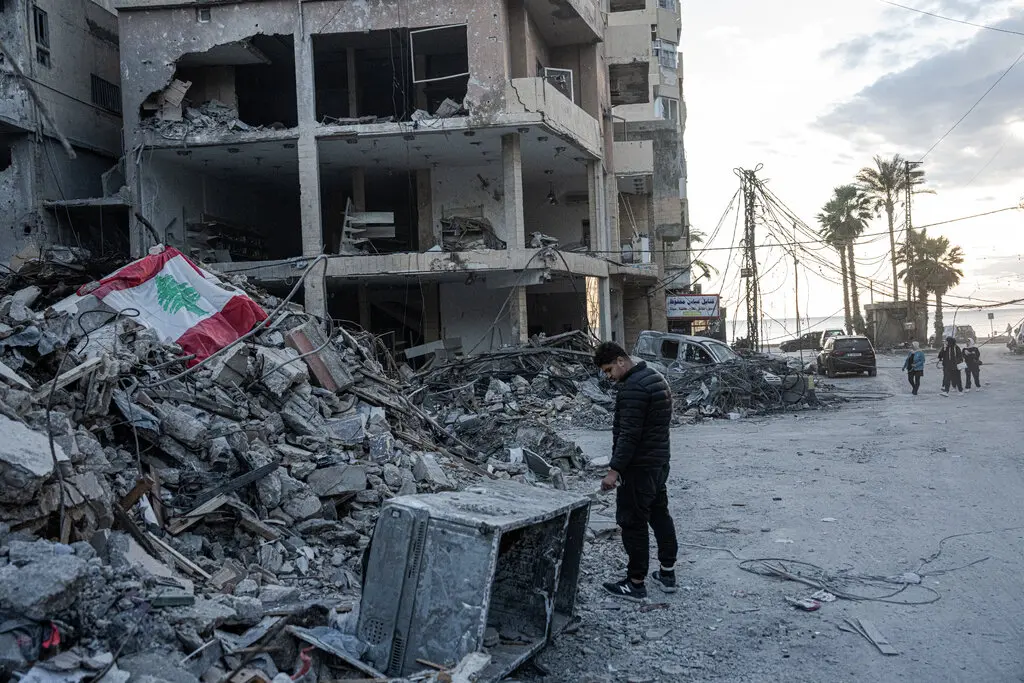
Israeli attacks in Lebanon have killed dozens of people in just a matter of days, putting the fragile ceasefire between Israel and Hezbollah on the verge of collapse. Despite a truce officially in place for just over two weeks, the death toll has continued to rise, and the diplomatic process meant to bring lasting calm appears to be losing momentum.
A Sharp Rise in Casualties
According to Lebanon’s health ministry, Israeli strikes on southern Lebanon killed 17 people on Monday alone. That brings the total number of people killed in Lebanon since Thursday to 110, marking one of the bloodiest stretches since the ceasefire began.
Lebanese authorities do not separate civilian and combatant deaths in their official figures, but the human cost is painfully clear. Among those killed were two children, while another 14 children were left injured. The presence of children in the casualty list has only deepened public anger inside Lebanon and reinforced concerns from international observers about the impact of the strikes.
On the Israeli side, the military says 17 of its soldiers have been killed in the same period. Israeli officials accuse Hezbollah of launching hundreds of rockets and drones during this stretch of intensified fighting.
Both Sides Accuse Each Other of Violations
The ceasefire has been increasingly difficult to enforce, with both sides accusing each other of breaking the terms of the agreement. Diplomatic efforts to stop the violence have so far failed, leaving residents in southern Lebanon and northern Israel caught in the middle of a slowly unraveling truce.
Israel insists that its operations are aimed at the armed Shia Islamist group Hezbollah, which it considers an ongoing security threat. Hezbollah, in turn, says it is responding to Israeli aggression and protecting Lebanese territory.
The Disputed “Yellow Line”
A central point of disagreement is what is known as the “yellow line.” This is a strip of Israeli-occupied territory extending roughly 10 kilometers from the Lebanese-Israeli border. Israel says it continues to operate inside this zone against threats and considers it outside the terms of the ceasefire.
On Monday, Israeli Army spokesman Avichay Adraee urged residents of several Lebanese villages to move at least one kilometer from their homes. The villages in question all sit outside the yellow line, which raised immediate concerns in Beirut.
Lebanese officials strongly reject the Israeli interpretation of the ceasefire. They argue that Israel is using flexible definitions to justify continued military action, even in areas that should be off-limits under the agreement. According to Lebanese authorities, these strikes amount to repeated violations rather than legitimate counter-threat operations.
Israeli Position on the Ceasefire
The Israeli military maintains that the ceasefire allows it to act against “planned, imminent or ongoing attacks.” Officials say this clause justifies strikes when intelligence suggests rocket launchers, drone platforms, or attack squads are being prepared.
Critics argue that the broad nature of this interpretation effectively gives Israel a permanent license to operate inside southern Lebanon, undermining the stability of any truce. The differing readings of the same agreement help explain why the violence has continued despite both sides claiming to honor the ceasefire.
Hezbollah’s Response
Hezbollah has openly acknowledged carrying out a series of attacks during this period. According to the group, these include:
- Drone strikes on Israeli soldiers in Naqoura, near the Israeli border
- Rocket fire targeting Israeli troops in Qantara, in southeastern Lebanon
- Earlier artillery strikes against Israeli military positions
- Use of what Hezbollah calls “kamikaze drones”
The group has framed these actions as retaliation for Israeli bombardment of southern Lebanese villages. By claiming responsibility, Hezbollah signals that it is not interested in being seen as a passive party in the conflict, especially while Lebanese civilians are dying in the strikes.
Netanyahu Warns About Drone Threat
Israeli Prime Minister Benjamin Netanyahu has openly acknowledged the growing threat posed by Hezbollah’s drone capabilities. He warned that addressing this threat will take time, suggesting that Israel is preparing for a longer security challenge than initially anticipated.
That comment also signals to Israelis at home that the fighting near the northern border is unlikely to disappear soon. Drones are difficult to intercept, especially when launched in large numbers from short distances. They have become one of the most disruptive elements of the current confrontation.
Diplomatic Talks Yield Few Results
Talks between Israel and Lebanon, held in the United States, have produced little visible progress. Symbolically, they were significant as the first direct ambassador-level contacts between the two countries in decades. In practice, they have not changed conditions on the ground.
Lebanese President Joseph Aoun has insisted that Israel must fully implement the ceasefire before any further negotiations can take place. From Beirut’s perspective, asking civilians to bear continued attacks while diplomats meet abroad is unsustainable.
Hezbollah leader Naim Qassem has gone further, openly dismissing the diplomatic process. In a Monday address, he said direct negotiations are a free concession that produces no real results. He accused them of serving Netanyahu’s desire for a symbolic political victory and helping U.S. President Donald Trump shape his image ahead of upcoming midterm elections.
These remarks underline a key challenge for mediators. Hezbollah sees talks as a benefit to its opponents, while Israel argues that some level of military action is necessary to enforce the ceasefire. With both sides holding such different positions, it becomes nearly impossible to translate diplomacy into peace.
A Heavy Toll on Lebanon
The broader human cost is staggering. Lebanon’s health ministry says that more than 2,600 people have been killed in the country since the latest round of fighting began on March 2. The numbers cover combatants, civilians, and people whose status remains undetermined.
A Hezbollah member, speaking to the BBC, told the outlet that fewer than 1,000 fighters had been killed during this period. If accurate, that suggests the majority of those who have died are civilians or unaffiliated individuals caught in the violence. The figure has fueled criticism from human rights organizations and added urgency to international calls for restraint.
Civilians Caught in the Middle
For ordinary people in southern Lebanon, daily life has become a struggle marked by uncertainty and fear. Many face difficult choices, including:
- Whether to flee their homes despite Israeli warnings
- How to find safe routes when entire areas are under threat
- Where to seek medical care when hospitals are overwhelmed
- How to support their families when local economies have collapsed
- Whether to trust ceasefire announcements that have not held
The repeated breaches of the truce have eroded confidence that any agreement can offer real protection. Even Lebanese citizens who do not support Hezbollah find themselves vulnerable to strikes simply because of where they live.
Why the Ceasefire Is So Hard to Maintain
Several factors make it especially difficult to sustain a workable peace in this conflict:
- Long-running mistrust between Israel and Hezbollah
- Differing interpretations of the truce’s geographic limits
- Weak enforcement mechanisms and lack of neutral monitors
- Domestic political pressure on both sides to project strength
- Regional dynamics, including tensions involving Iran and the broader Middle East
Without addressing these structural issues, no ceasefire is likely to last for long. Each new flare-up reinforces the cycle of retaliation, making future de-escalation even harder.
A Critical Moment Ahead
The events of recent days have placed the Lebanon-Israel ceasefire at one of its most fragile points yet. With heavy casualties on both sides, ongoing diplomatic deadlock, and rising public frustration, the risk of a full collapse is real.
For Lebanon, the stakes are deeply personal. Communities are mourning, displaced families are searching for safe ground, and the country’s already strained infrastructure is bearing yet another wave of damage. For Israel, ongoing rocket and drone threats are reshaping life in the north, with security challenges expected to last well beyond the current round of fighting.
A Path Forward Remains Uncertain
Whether a meaningful diplomatic breakthrough can emerge from this moment will depend on whether both sides can agree on basic principles. These include clear definitions of where military action is allowed, neutral mechanisms to verify compliance, and a commitment to protecting civilians.
Until then, the cycle of strikes and counter-strikes is likely to continue. The Israeli attacks in Lebanon, combined with Hezbollah’s growing reliance on drones and rockets, have created a volatile mix that even seasoned mediators are struggling to defuse.
For now, the world watches another fragile truce slip closer to the edge, with ordinary people on both sides hoping that the next move will be one toward peace rather than further loss.
Author