The Alberta independence referendum has taken a major step closer to becoming reality after separatists in the province submitted nearly 302,000 signatures aimed at forcing a provincewide vote on whether Alberta should leave Canada. The development marks one of the most significant political moments in the province in years and is reigniting a national conversation about Western alienation, federal-provincial tensions, and the future of Canadian unity.
A Historic Day for Alberta Separatists
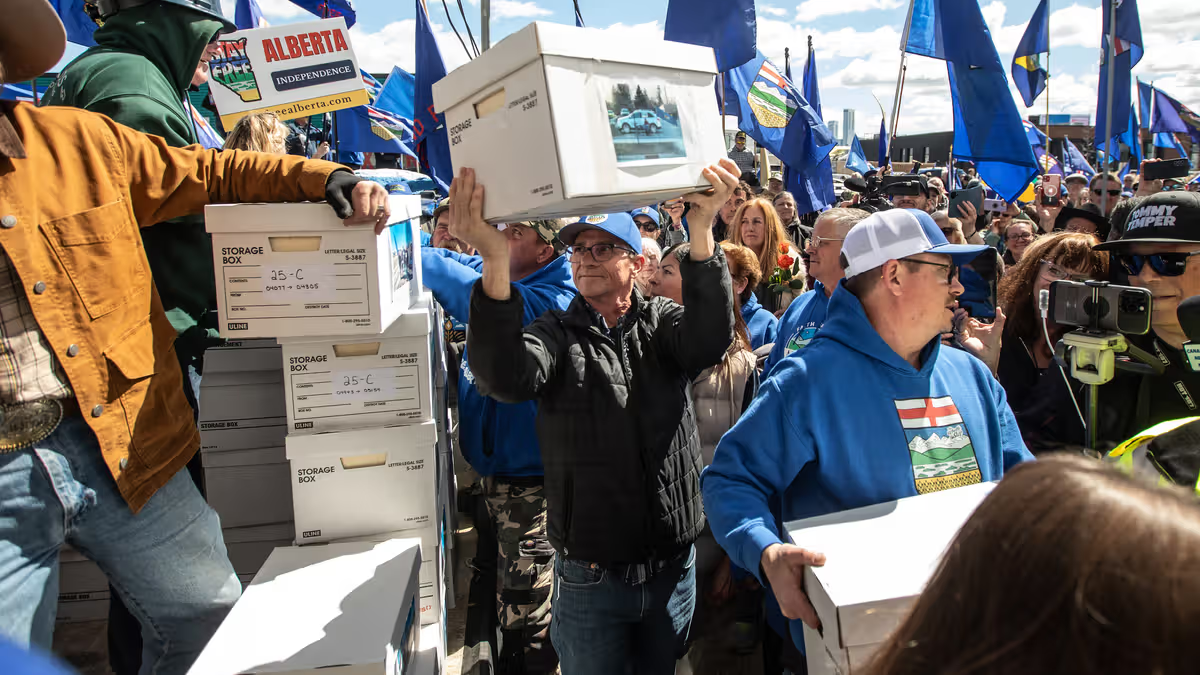
Mitch Sylvestre, the leader of Stay Free Alberta, arrived at the Elections Alberta office in Edmonton on Monday at the head of a convoy of seven trucks. The trucks carried the petitions that supporters say represent a serious push toward putting independence on the ballot.
To trigger consideration of a referendum, the group needed 178,000 verified signatures. They submitted around 302,000, well above the required threshold. According to Sylvestre, each paper was handled and rechecked up to five times to confirm the authenticity of every signature.
Standing among more than 300 cheering supporters waving the Alberta flag and chanting “Alberta strong,” Sylvestre called the moment a historic milestone. He compared the campaign’s progress to a hockey team reaching the Stanley Cup final, noting that this was only one step in what is expected to be a long road ahead.
What Happens Next
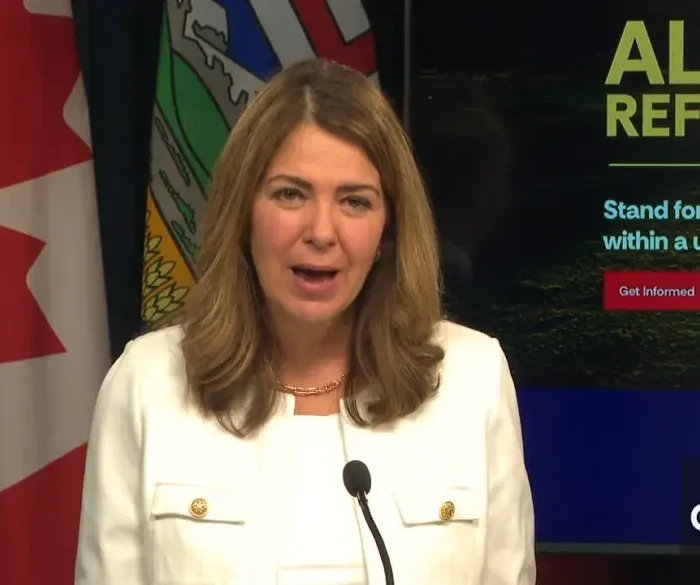
If the signatures are verified, Alberta could see a referendum on independence as early as October. Premier Danielle Smith has said she will allow the referendum to move forward if the petition meets all legal requirements, even though she personally does not support Alberta leaving Canada.
That distinction is important. Smith has long been a vocal critic of federal policies that, in her view, restrict Alberta’s ability to develop and export its oil. She has frequently accused past Liberal governments of pushing legislation that has cost the province billions of dollars in lost revenue. While she opposes separation as a final outcome, she has consistently defended the right of Albertans to express their opinion through democratic means.
A Yes Vote Would Not Mean Automatic Independence
Even if voters approve the referendum, Alberta would not become independent right away. Daniel Béland, a political science professor at McGill University, has explained that a yes vote would only mark the beginning of a complex process.
According to Béland, several major obstacles would have to be addressed before independence could ever take effect. These include:
- Negotiations with the federal government over economic and political terms
- Constitutional questions about how a province can legally separate
- Legal challenges from Indigenous groups defending treaty rights
- Disputes over assets, debts, borders, and resource control
- Reactions from international partners and trading nations
In short, a referendum win would only be the start of a years-long political and legal battle, not the final word.
Indigenous Opposition Stands Firm
A major hurdle is already taking shape. A group of Alberta First Nations has launched a court challenge against the idea of an Alberta separation, arguing that any move toward independence would violate treaty rights signed long before Alberta became a province. An Edmonton judge is expected to rule on the case this week.
Indigenous leaders have made it clear they will use every legal venue available to prevent independence. Treaties signed with the Crown, they argue, cannot simply be transferred or dissolved through a provincial referendum. This means even strong public support for independence would face deep legal scrutiny in the courts.
Why the Push for Independence Exists
Support for separation in Alberta has been growing for years, fueled by long-running economic and political tensions with Ottawa. Many Albertans feel that federal policies have unfairly targeted the province’s oil and gas industry while taking large amounts of provincial wealth through equalization payments.
Common grievances driving the movement include:
- Federal restrictions perceived as harmful to Alberta’s oil sector
- Complaints about pipeline approvals and regulatory delays
- Frustration with environmental policies seen as anti-energy
- Concerns about federal interference in provincial issues
- Belief that Alberta contributes more financially than it receives
These frustrations grew significantly during the Justin Trudeau era and shaped much of the political identity of the province in recent years. While public anger has cooled somewhat after Trudeau’s exit, the foundation for separatist sentiment remains.
A Tougher Road Than Supporters Suggest
Despite the strong show of signatures, political experts warn that getting a referendum to pass is a different challenge altogether. According to Béland, current support for independence in Alberta is well below 30 percent, and the level of hardcore support is even smaller.
He believes that even if a referendum takes place, the pro-independence side is likely to lose. The energy among separatists is loud and visible, but it does not necessarily reflect majority opinion across the province.
Béland also noted that Prime Minister Mark Carney remains popular in much of Canada, including parts of Alberta. With a Liberal government that some Albertans see as more pragmatic than its predecessor, the political climate may not be as favorable to separation as activists hope.
The Federal Government Stays Quiet
So far, Prime Minister Mark Carney’s federal government has not issued a public response to the petition submission. The silence may be intentional. Officially engaging with separatist talk could give the movement more legitimacy and attention than Ottawa wants to provide.
Federal leaders are likely watching the verification process closely, weighing how to respond if the referendum becomes inevitable. A formal vote would force Ottawa to navigate a politically delicate situation that touches on national identity, economic stability, and constitutional law.
Verification Becomes Critical
The petition’s outcome now depends largely on the verification process by Elections Alberta. With roughly 302,000 signatures submitted, officials must confirm that the names are real, valid, and not duplicated.
Béland warned that this step is especially important after recent news of a major data breach involving an Alberta separatist group. Ensuring that every signature is authentic is essential to maintaining public trust in the result. If a significant share of signatures is found to be invalid or fraudulent, the petition could fail to clear the legal threshold even with such a large submission.
A Province at a Political Crossroads
The drive to put independence on the ballot has placed Alberta at a major political crossroads. While the chances of separation actually happening remain slim, the petition has clearly succeeded in pushing the conversation back into the spotlight.
For Premier Danielle Smith, the situation is delicate. She must respect the democratic process while also managing concerns from businesses, investors, Indigenous communities, and ordinary Albertans worried about the impact of even discussing separation. For Ottawa, the challenge is to address the underlying grievances that have made separation a topic worth signing a petition over in the first place.
What to Watch in the Coming Weeks
Several developments will shape the next chapter of the story:
- The Edmonton judge’s ruling on the First Nations court challenge
- Final signature verification by Elections Alberta
- Any official response from Premier Danielle Smith and Prime Minister Mark Carney
- Polling data on public support for independence
- Reactions from business leaders and the energy sector
If the signatures are verified and legal challenges fail, the Alberta independence referendum could take place by October. Even if the vote ultimately fails, the campaign itself will likely shape Canadian politics for years.
A Defining Moment for Alberta and Canada
Whatever happens next, the events of this week mark a defining moment for Alberta. The province has long voiced its grievances, but rarely have those frustrations translated into action this concrete. Whether or not Alberta ever leaves Canada, the very fact that nearly 302,000 people signed a petition asking the question speaks volumes about the political climate in the West.
For now, all eyes are on Edmonton, where the future of the Alberta independence referendum hangs in the balance, waiting on signatures, judges, and political leaders to decide what comes next.
Author