Indiana redistricting primary results have sent shockwaves through the state’s Republican Party after Trump-backed challengers defeated several incumbent senators who had previously blocked an effort to redraw Indiana’s congressional map. The Tuesday night results revealed something significant about the current state of the GOP, that President Donald Trump’s influence in Republican primaries remains as powerful as ever, especially in conservative strongholds like Indiana.
A Political Earthquake in Indiana
The Indiana primary was no ordinary election night. After months of intense pressure, fundraising battles, and political warfare, the Republican Party faced a defining moment. The result was clear. Most of the GOP senators who had refused to support Trump’s redistricting plan lost their seats, and only one incumbent so far appears to have survived.
Among the most notable outcomes:
- Several incumbent Republican senators were defeated by Trump-backed challengers
- Approximately $9 million was spent backing primary challengers
- National Republican groups poured resources into Indiana races
- Trump publicly endorsed multiple challengers leading up to the primary
- Many of the challengers ran on a strong “America First” platform
Political experts now say the results may reshape Indiana politics for years to come, especially within the Republican caucus.
Why Redistricting Triggered the Battle
The fight inside Indiana’s GOP began earlier this year when Trump pressed Republican-led states to redraw their congressional maps. The goal was to help the GOP maintain control of the U.S. House by gaining additional seats. In Indiana, Republicans already hold seven of nine House seats, but the new proposal aimed to flip the remaining two Democratic strongholds.
The redistricting bill was expected to pass easily, but Indiana’s Senate Republicans surprised the political world. Working with Senate Democrats, they killed the bill in a 31-19 vote, defying Trump and dealing a major blow to his nationwide redistricting strategy.
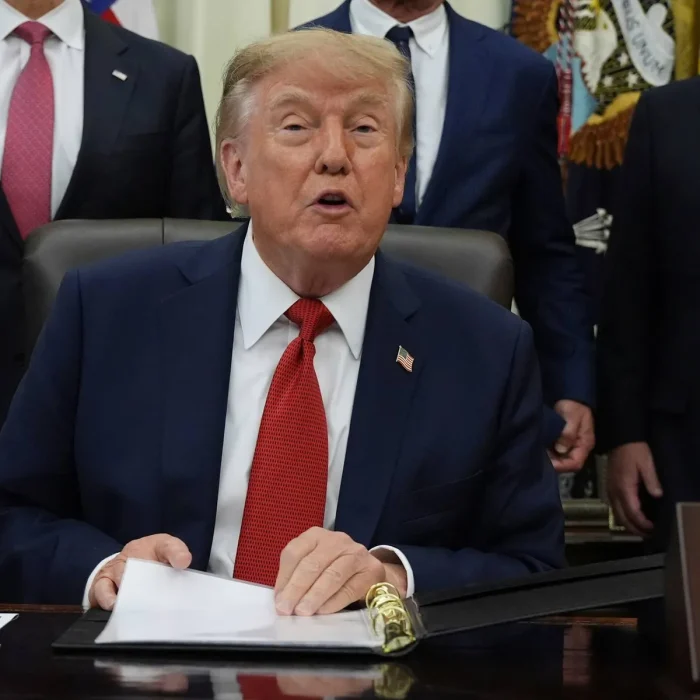
The President responded forcefully, vowing in November that any Republican who voted against the redistricting effort should be “PRIMARIED.” That threat became reality on Tuesday night.
Trump’s Influence on the Indiana Vote
The election outcome reaffirms that Trump remains the single most powerful Republican voice in Indiana politics. U.S. Senator Jim Banks praised the results in a statement, saying that “everyone in Indiana politics should have learned an important lesson today” about Trump’s continued popularity. He emphasized that Indiana is a conservative state and deserves senators who reflect Republican voters’ priorities.
Trump made his presence known on Election Day, posting on social media in support of primary candidates. He highlighted what he called “eight Great Patriots” running against incumbents he labeled “RINOs.” His messaging energized GOP voters, and the impact was immediately visible in the primary results.
The Winners and the Defeated
Several Trump-backed candidates emerged victorious, replacing long-serving incumbents who had supported blocking the redistricting effort.
One of the most prominent wins came from Rep. Michelle Davis, who defeated incumbent Greg Walker in District 41. Davis directly thanked Trump in her victory statement, saying she was proud to stand with him on policies that protect Americans and Hoosiers.
The political shake-up affected nearly every incumbent who had voted against redistricting. Some races were close, but most challengers won decisively.
A Rare Defeat for Incumbents
Tuesday night’s results stand out because incumbents typically dominate primary elections.
In American politics, around 90 percent of incumbents win their primaries, making this kind of widespread defeat extremely rare. The fact that several incumbents were ousted, despite their established networks, name recognition, and existing fundraising operations, signals just how strong Trump’s grip on the GOP base remains.
The One Survivor: Sen. Greg Goode
Despite the heavy losses for incumbents, Sen. Greg Goode of Terre Haute may be the lone Republican senator to survive. Goode had been one of the earliest targets of Trump’s threats and even reported being the victim of a swatting attempt earlier in the year.
Goode said his campaign focused on the work and ignored the political noise. While he voted against the redistricting plan, he still publicly supports Trump. According to him, the President received poor advice from Washington insiders who didn’t understand the dynamics of Indiana politics.
Goode’s survival shows that grassroots respect and steady campaigning can still win, even in the most heated political environment.
A Razor-Thin Race in West Lafayette
Sen. Spencer Deery declared victory by just three votes over challenger Paula Copenhaver, making it one of the closest races of the night. Deery acknowledged the difficulty of the campaign and thanked supporters who helped him survive despite being heavily outspent.
Copenhaver, however, also claimed victory in her own social media post, saying she expects to prevail once provisional ballots are counted. The race may end up contested, and a recount or legal challenge is possible. Until the final results are confirmed, the West Lafayette race remains uncertain.
Implications for Indiana’s Republican Leadership
The election may also threaten the leadership of Senate President Pro Tem Rodric Bray, who has long been credited with stopping the redistricting effort. Bray previously dismissed claims that he was the central figure behind the move, but the fallout from the redistricting fight has clearly weakened his standing.
Indiana’s Republican Party is now visibly divided into two camps:
- Establishment Republicans aligned with Bray and traditional state-level priorities
- Trump-aligned Republicans backed by figures like Gov. Mike Braun and Lt. Gov. Micah Beckwith
Tuesday’s results suggest the Trump-aligned faction has gained significant momentum.
A National Storyline
The Indiana redistricting fight is part of a much bigger national narrative. Trump has pressed Republican-led states to redraw congressional maps mid-decade, hoping to give the GOP an edge in the 2026 midterms. Several states have already taken action:
- Texas redrew its map in 2024
- Other GOP-led states have begun considering changes
- Some Democratic-led states have attempted to push back
- Southern Republican-led states are now exploring redistricting plans
Indiana was supposed to be a key piece in this broader strategy. When Senate Republicans rejected the proposal, it became one of the few major losses Trump faced in his redistricting campaign. Now, with several of those senators defeated, Trump may seek to revisit the effort in 2026.
Could Redistricting Return?
Political analysts believe Tuesday’s outcome could pave the way for a renewed redistricting push next year. With more Trump-aligned senators heading into the legislature, there may now be enough support to revive the proposal, especially if Republican leadership shifts.
If redistricting returns, possible outcomes include:
- A new map favoring the GOP in Indiana’s two Democratic strongholds
- A stronger Republican grip on Indiana’s congressional delegation
- Renewed legal challenges from Democratic groups
- Increased national attention to Indiana’s political battles
- Greater momentum for similar redistricting efforts in other states
The political landscape is evolving rapidly, and Indiana may be one of the most important battlegrounds heading into the next election cycle.
Why This Matters Beyond Indiana
Although Indiana is a single state, the consequences of these primary results stretch across the country. The Republican Party’s internal struggles, the shifting balance of power inside the GOP, and Trump’s continued ability to influence elections will shape the 2026 midterms in significant ways.
Some of the broader implications include:
- A signal to other Republican lawmakers nationwide
- Increased pressure on incumbents who challenge Trump
- A more unified pro-Trump Republican bloc in state legislatures
- More aggressive redistricting strategies across the country
- Greater national resources flowing into state-level primaries
For Democrats, the results are a reminder that Republican primaries remain dominated by Trump’s brand of politics, and that any redistricting battles will likely be fierce, expensive, and consequential.
A Defining Moment for Indiana Politics
The Indiana redistricting primary results represent more than the success or failure of individual candidates. They mark a defining moment for the state’s political identity. Voters made it clear that they expect their lawmakers to align with the priorities Trump has outlined, and that defying him carries real political consequences.
For some Indiana Republicans, that means a chance to rise within the party. For others, it signals a sudden end to long-running political careers. For the state as a whole, it foreshadows a new era of Republican politics shaped heavily by national leadership and aggressive primary challenges.
Final Thoughts
The results from Indiana’s primary highlight the changing political landscape across America. Trump’s influence is alive and well, especially in conservative states where his base remains highly motivated. The defeats of multiple incumbent Republican senators show that even years of state-level service cannot guarantee survival when voters are presented with a clear ideological choice.
As Indiana moves forward, the political tone in the state is likely to shift. The newly elected senators bring fresh energy, fresh priorities, and a renewed commitment to Trump’s national agenda. Their election may also pave the way for the return of the redistricting plan that started this entire chain of events.
The story isn’t over. Indiana, once thought to be a politically predictable state, has just shown that even small ballot battles can have major national consequences. With redistricting potentially back on the table and the GOP realigning itself around Trump’s vision, Indiana’s political future is suddenly one of the most closely watched in the country.
Author