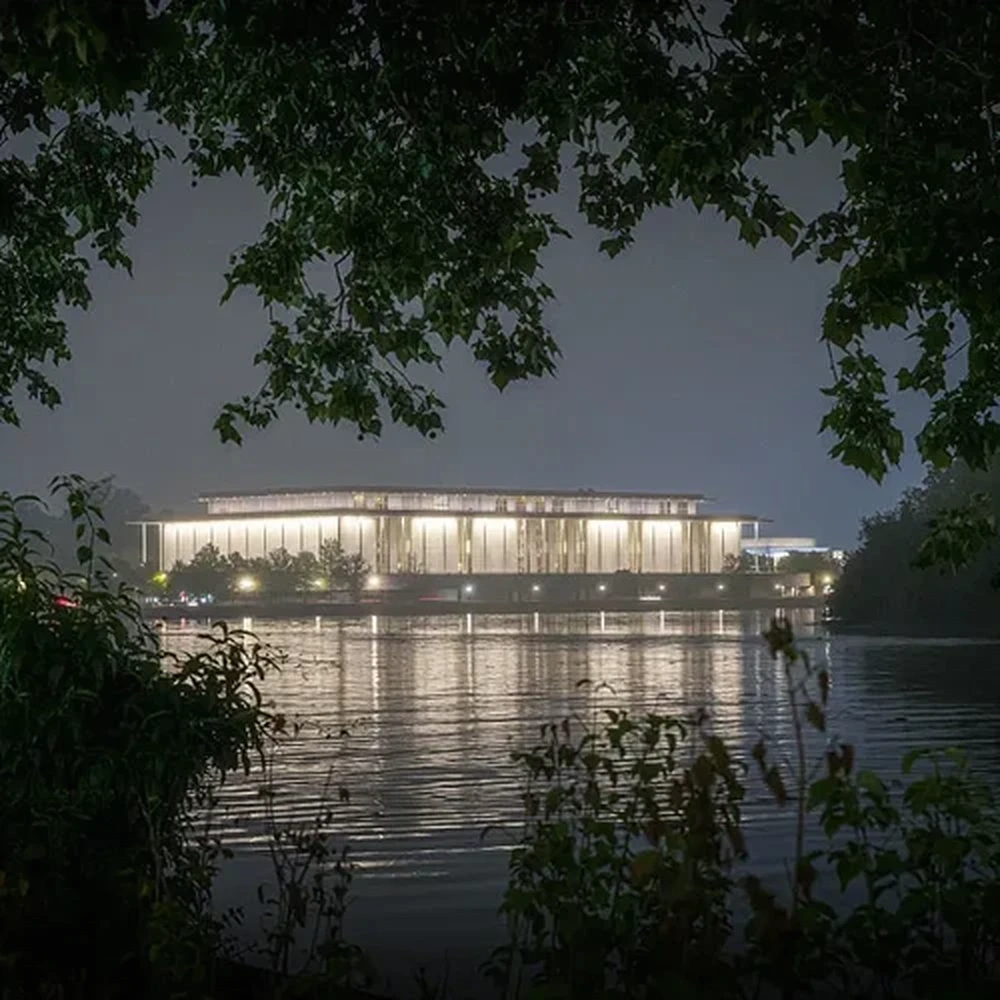
The Trump Kennedy Center ruling sparked an outpouring of celebration across social media on Friday, after a federal court ordered that Donald Trump’s name be stripped from the John F. Kennedy Center for the Performing Arts and all of its branding. Yet beneath the jubilation lies a sobering reality: the fight over the center’s survival may be just beginning.
The decision represents a significant legal rebuke, but it does not, on its own, guarantee the institution’s recovery.
A Sharp and Unsparing Decision
The ruling came from U.S. District Judge Christopher R. Cooper, whose opinion was notably direct. At times leaning on plain-spoken language, the judge seemed to convey real frustration with what he viewed as the administration’s flimsy and frequently absurd legal reasoning.
In one memorable moment, Cooper dismissed the claim that placing Trump’s name on the building wasn’t truly a renaming as “too cute by half.” The administration had argued the addition was merely a nickname or “secondary” name, comparable to calling the Federal National Mortgage Association “Fannie Mae.” The judge wasn’t persuaded.
A Victory Celebrated by Its Champion
The case was brought by Representative Joyce Beatty, an Ohio Democrat and an ex officio member of the center’s board. For her, the outcome was deeply gratifying.
She described the ruling as a victory for the rule of law, expressing hope that it would offer encouragement to the American people. Beyond the renaming itself, the decision carried several important consequences:
- It clarified that ex officio board members like Beatty should be treated as full voting members of the governing body.
- It temporarily halted Trump’s plan to close the center for a two-year renovation.
Why the Renaming Cut So Deep
The objection to renaming the center was rooted in more than politics. Critics argued it was both illegal and profoundly offensive for Trump-appointed board members to rename a national memorial dedicated to the slain 35th president.
The reasoning is straightforward: the Kennedy Center is not a stadium or a corporate tower to be rebranded at will. Naming rights to the nation’s memorials and monuments, the argument goes, simply cannot be handed over to a sitting president on a whim.
The Damage Already Done
The board’s decision to go along with the renaming proved costly almost immediately. Once Trump’s name appeared on the building, the center entered what observers described as a steep decline.
Audiences and artists who might otherwise have tolerated participating in the center’s programming felt compelled, as a matter of principle, to stay away. The consequences piled up quickly:
- The Washington National Opera was forced to sever ties with the center.
- The National Symphony Orchestra endured a sustained and severe drop in ticket revenue.
These were not abstract setbacks but real blows to the institution’s artistic life and financial stability.
Cautious Hope for the Board
The center has announced plans to appeal the ruling, signaling that the legal fight is not over. Still, Beatty remains optimistic that the path forward could improve.
She expressed hope that Trump might allow Congress to begin repairing the damage, and she suggested that the current board, despite being appointed by Trump, could yet rise to the occasion and behave like a responsible governing body. In her view, board members now have an alternative: they don’t want to face lawsuits or be remembered as part of a travesty, and she believes they may regroup and ultimately act in the best interest of the arts.
Trump’s Furious Response
The ruling, however, did not remove Trump from the equation. He reacted to the legal setback with a string of lengthy, angry social media posts that struck observers as unusually petulant and obsessive, even by his standards.
In one message, he declared that the Kennedy Center would soon close, probably never to reopen, despite the fact that the court’s judgment had paused that very closure. In another, he warned that the center would collapse both structurally and financially.
For now, Trump remains chair of the board, and he is plainly furious, a combination that suggests celebrations may be premature.
The Real Threat: Inaction
Perhaps the gravest danger is not what Trump might do, but what he might choose not to do. Should he simply remain chair and allow the center to wither, the institution could be left in limbo.
He could refuse to authorize budgets or renovations, leave the programming calendar empty, or quietly shelve any recovery plans. The result would be a kind of perpetual suspended animation, the center frozen in place indefinitely.
Even if Trump were to step down, the challenges would not vanish. Boards require strong leadership, and finding a successor of comparable stature to David Rubenstein, the chairman Trump forced out, would be no easy task.
Only Congress Can Truly Save It
The conclusion is sobering. Cooper’s ruling, however welcome, cannot by itself rescue the Kennedy Center. That responsibility ultimately falls to Congress, and Congress can only act if Trump steps aside and clears the way.
In other words, a legal victory has opened a door, but walking through it will require political will and cooperation that remain far from assured.
A Defining Chapter
When the history of Trump’s second administration is eventually written, the Kennedy Center episode is likely to stand out as a revealing case study. To many critics, it captures the chaos, cruelty, and outsized ego that have characterized the era, alongside the courage of those who resisted under difficult circumstances.
The takeover came to symbolize a broader pattern: a disregard for precedent, decorum, and nonpartisan institutions. To those critics, Trump’s angry reaction to the ruling only confirmed what they had long suspected, that his interest in the center was never about the arts or culture, but about his own name and brand.
Resilience Amid the Turmoil
Amid the upheaval, certain figures earned admiration. Beatty stood firm against both Trump and the wealthy, influential board members willing to risk the center’s destruction to gain favor with the president.
The National Symphony Orchestra, meanwhile, had few avenues to extract itself from the situation, yet continued to perform at an exceptionally high level. Its professionalism, in the eyes of supporters, was nothing short of remarkable.
A Possible Turning Point
Cooper’s decision relied on a carefully assembled timeline that cast serious doubt on the credibility of the center’s current leadership. Observers suggest this pattern may repeat in other legal battles across a range of issues. When facts are laid out, testimony is given under oath, and offhand statements enter the official record, the resulting picture can be damning, and the stain of serving questionable directives tends to spread to everyone involved.
In this sense, the Kennedy Center saga may represent more than a story of needless destruction. It could also mark a turning point, and Beatty appears determined to ensure that it does.
As she put it simply, her job is not done.
Author