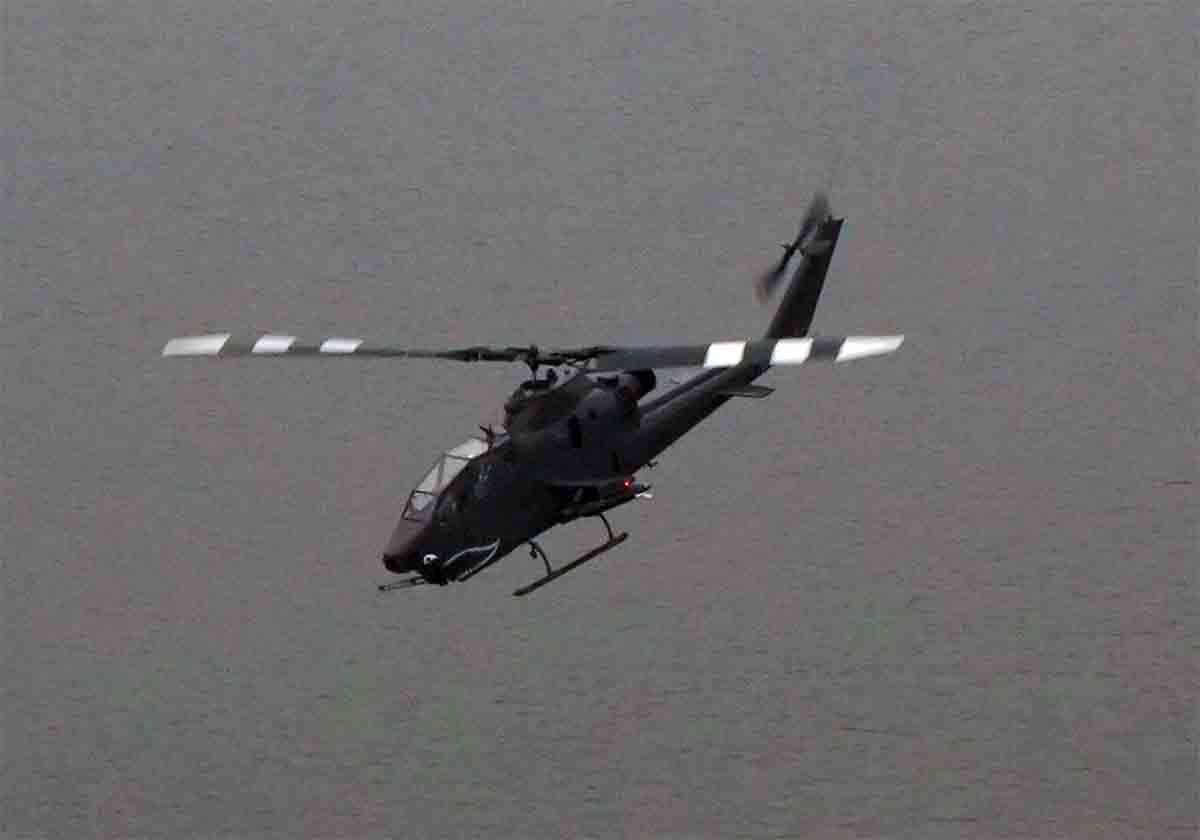
The Strait of Hormuz helicopter incident ended without casualties, President Donald Trump said Tuesday, confirming that two U.S. pilots whose Apache gunship went down near the Iran-controlled waterway were unharmed. The New York Times had reported that the crew was rescued after the aircraft crashed close to the strategically vital strait.
What Happened to the Helicopter
The cause of the crash remained unclear in the immediate aftermath. According to the report, it wasn’t known whether the Apache had been brought down by Iranian fire, suffered mechanical failure, or run into some other trouble.
Several U.S. agencies, including the White House, the State Department, and Central Command, did not immediately respond to requests for comment.
Speaking on the runway at John F. Kennedy International Airport before heading back to Washington, Trump kept his remarks brief. He said the pilots were fine and that nobody had been injured, adding that a fuller report would be released later in the day when asked what had caused the aircraft to go down.
A Fragile Ceasefire in the Background
The crash came just a day after Iran and Israel announced they had stopped attacking each other, following an appeal from Trump. Tehran, however, warned that it would resume hostilities if Israel kept striking Hezbollah in Lebanon.
The shaky truce has taken hold as Washington tries to negotiate an end to a war with Tehran that has now stretched beyond three months. Trump told reporters he might have “an idea” for an Iran deal within a few days but offered no specifics. He has repeatedly hinted at an imminent agreement with Tehran, yet none has materialized so far, even as he contends with record-low approval ratings ahead of November’s midterm elections.
The weekend marked the sharpest confrontation between the two countries since a ceasefire in April:
- Iran fired missiles toward Israeli territory late Sunday, framing the strikes as payback for attacks on the Iran-backed Hezbollah militia near Beirut.
- Israel responded by hitting Iranian air defense systems and a petrochemical plant it claimed was used to make ballistic missiles.
- Iran’s Islamic Revolutionary Guard Corps said it retaliated with a strike on a similar Israeli plant in Haifa.
Notably, neither side reported any deaths from the exchange.
Trump’s Warning to Netanyahu
U.S. and Israeli officials confirmed that Trump and Israeli Prime Minister Benjamin Netanyahu spoke on Monday. In an interview with Axios, Trump described cautioning the Israeli leader that returning to war with Iran could leave him fighting without American backing, recounting that he told Netanyahu to be careful or risk being on his own very soon.
Both sides, however, struck defiant notes. An Israeli military official said the country was ready to keep up operations for as long as necessary. On the Iranian side, a military source cited by the semi-official Tasnim news agency said Tehran was prepared for a drawn-out conflict and could renew strikes against U.S. interests in the region. Iranian Foreign Ministry spokesperson Esmaeil Baghaei described the message exchange with Washington as taking place in an atmosphere of deep suspicion.
The Lebanon Sticking Point
A key obstacle to any broader peace runs through Lebanon. Tehran has long maintained that any deal with the U.S. hinges partly on an end to the fighting there, where Israel launched an invasion in March pursuing Hezbollah fighters who had fired across the border.
Israel has never paused that campaign, which has killed thousands, arguing that the Lebanon conflict should be handled separately from any U.S.–Iranian ceasefire. Hezbollah, in turn, has continued its own attacks.
Oil, Sanctions, and What Each Side Wants
The standoff carries heavy economic weight. Iran has kept most shipping blocked through the Strait of Hormuz, a passage that before the war carried roughly a fifth of the world’s crude oil and liquefied natural gas. Washington has answered with its own blockade of Iranian ports.
The competing demands remain far apart. Trump insists any agreement must guarantee that Iran cannot develop a nuclear weapon. Tehran, meanwhile, wants international sanctions lifted, billions of dollars in frozen assets released, and recognition of its control over the strait.
For now, the rescued Apache crew is a rare piece of good news in a conflict where the path to any lasting deal still looks uncertain.
Author