A hemp fight inside the Republican conference has become an unlikely roadblock to passing a government funding bill, proving once again that in the Senate, the smallest provision can stall the largest package.
At issue is a single line buried in the spending measure the chamber is taking up this week. That line would postpone the coming prohibition on most hemp-derived THC products by roughly a month, shifting the effective date to December 11. It sounds minor. It is not being treated that way.
The Provision Nobody Saw Coming
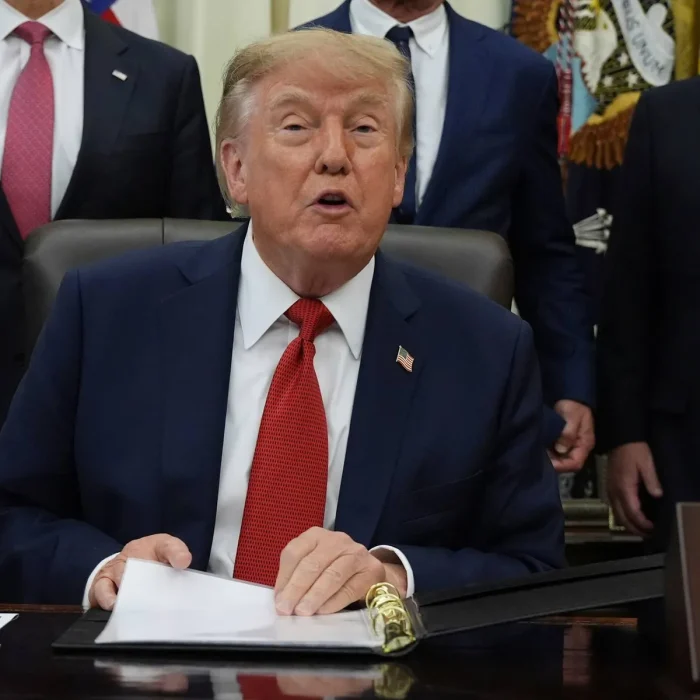
The delay was inserted at the request of the White House, and its appearance caught a number of senators off guard. That surprise element is a large part of why the objection escalated so quickly.
Senator Ted Budd of North Carolina, joined by several other Republicans, has refused to let the bill move forward smoothly. The group is demanding a vote on an amendment that would remove the delay entirely, and until they get one, they are willing to slow the process.
Their stated concern is straightforward: how easily children can obtain hemp-derived THC products under the current rules. Every month the ban is postponed, in their view, is another month of unrestricted access.
The Administration Has Been Signaling This for Months
The White House position is not a last-minute reversal. It has been telegraphed repeatedly since spring.
In April, President Trump posted on Truth Social urging Congress to revise the law so Americans could continue accessing the full-spectrum CBD products many of them rely on, while still honoring lawmakers’ intent to restrict products that carry genuine health risks.
The Office of Management and Budget echoed that framing in June, when the House was working through the Agriculture, Rural Development and FDA package. The office said it welcomed the chance to work with Congress on updating the statutory definition of finished hemp-derived cannabinoid products, aiming to preserve consumer access to appropriate CBD while maintaining restrictions on genuinely dangerous items.
During that same House debate, lawmakers considered and rejected three separate hemp amendments. One would have delayed the ban by two years, another would have scrapped it outright, and a third would have replaced prohibition with a taxed and regulated framework. All three failed, which is part of why supporters of the ban view the current one-month delay as an end run around a decision Congress already made.
How the Hemp Loophole Was Created
To understand the intensity of the dispute, it helps to trace how the market got here.
The 2018 Farm Bill removed hemp from the controlled substances list. The intent was agricultural, opening the door to industrial hemp and non-intoxicating CBD. The problem was the definition itself, which was written broadly and never followed by meaningful federal regulation.
That combination created what critics eventually labeled the hemp loophole. Manufacturers realized they could extract and chemically synthesize high concentrations of THC, the compound in cannabis responsible for intoxication, while technically remaining on the legal side of the definition.
The resulting products exploded in popularity. Gummies, seltzers and infused drinks moved well outside the dispensary system and landed in gas stations, convenience stores and mainstream retailers including Target.
The regulatory gap is the crux of the complaint. Many of these products deliver an effect comparable to marijuana without being legally classified as marijuana. They are frequently sold without consistent age verification, without standardized labeling, and in packaging that can closely resemble ordinary candy.
What the New Law Actually Does
Legislation passed late last year rewrote the definition to close that gap. Under the new standard, legal hemp products are capped at 0.4 milligrams of total THC per container, a threshold that also applies to other cannabinoids producing similar effects.
That limit is restrictive enough to remove the vast majority of intoxicating hemp products from shelves. It was scheduled to take effect November 12.
The provision now causing the standoff would move that date to December 11. In practical terms, the entire dispute concerns about one additional month of legal sales.
One category is unaffected. Cannabinoids that are synthesized and cannot be produced naturally by a cannabis plant remain banned on the original timeline. That carve-out is widely understood to target illicit imports, particularly products originating from China.
Why a Month Matters So Much
On its face, thirty days seems like a strange thing to hold up federal appropriations over. But both sides read the delay as a signal rather than a technicality.
For the industry and its allies, the extension buys time and suggests the administration is open to revisiting the broader framework before enforcement begins. For Budd and his colleagues, agreeing to slide the date once establishes that the deadline is negotiable, which invites future extensions and weakens the law Congress deliberately wrote.
There is also a business reality underneath the policy debate. A hemp-derived cannabinoid sector worth billions has built inventory, distribution deals and retail relationships around the current rules. Every week of additional runway has real commercial value, which is precisely why opponents view even a short delay with suspicion.
Where This Goes Next
The immediate question is procedural rather than substantive. If Senate leadership allows a vote on the amendment stripping the delay, the objection likely dissolves and the funding bill moves. If leaders decline, the holdouts retain their leverage and the schedule keeps slipping.
Neither outcome resolves the underlying policy argument. Whether the ban takes effect in November or December, the deeper questions remain unanswered: whether prohibition is the right approach at all, whether a regulated and age-restricted market would better protect minors, and whether Congress will revisit the definition before enforcement reshapes an entire retail category.
For now, a dispute over gummies sold at gas stations is dictating the pace of federal spending legislation.
Author