Trump Announces Ban On CNN, Politico And MS NOW From White House, Sparking Legal Backlash
Trump bans CNN Politico from the White House in a move announced Friday that immediately escalated his years-long conflict with major news organizations, drawing swift condemnation from press freedom advocates and setting up what’s likely to become a significant legal battle.
What Trump Actually Announced
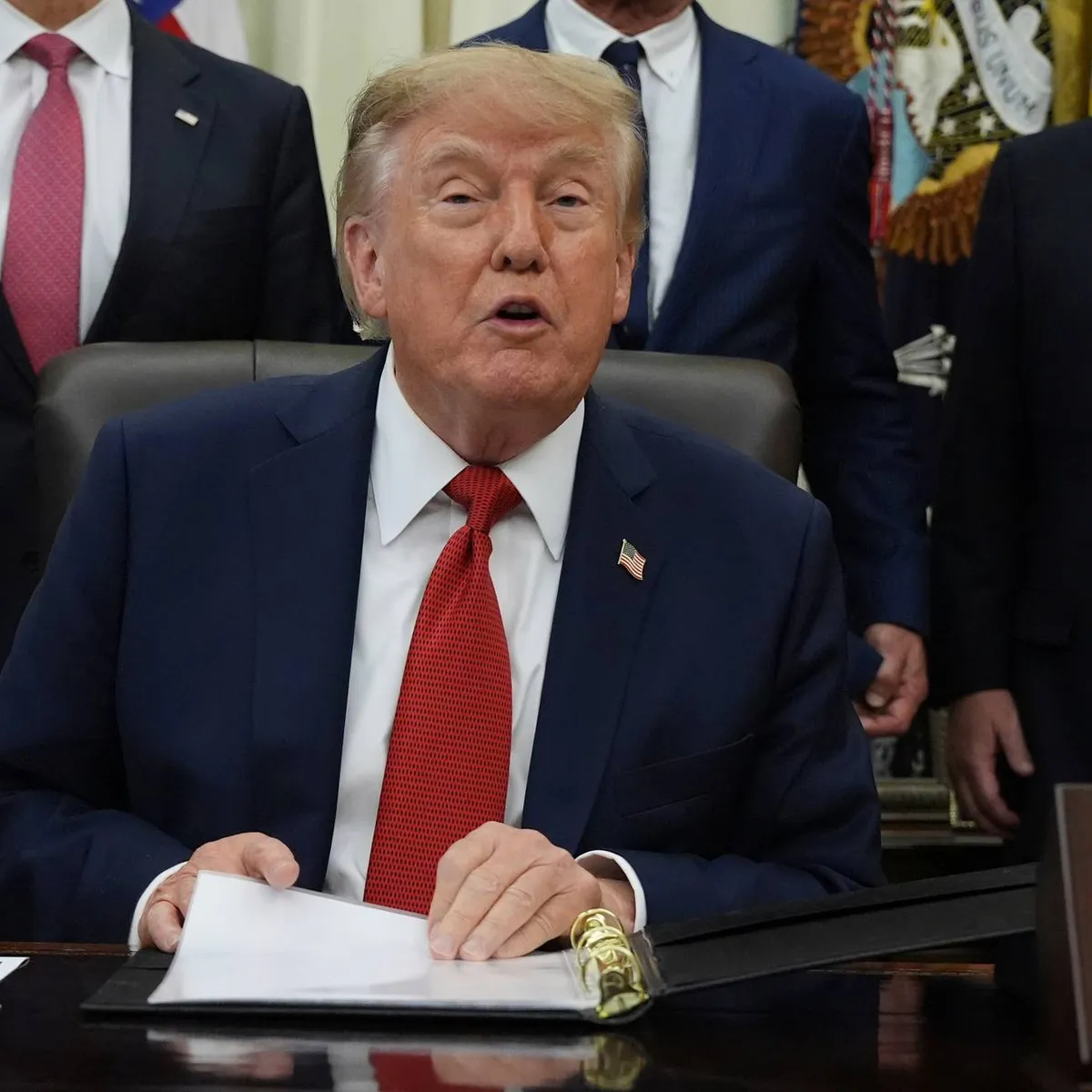
President Donald Trump revealed the ban through a post on Truth Social, stating that CNN, MS NOW, and Politico would be barred from the White House effective immediately. He accused the outlets of consistently reporting fiction and lies about his administration, though he didn’t cite any specific examples to support that claim.
When pressed for details later, Trump described it as a very simple ban but offered no real explanation of how it would actually be enforced. It remains unclear whether journalists from these organizations would be physically prevented from entering White House grounds altogether, or whether the ban applies more narrowly to specific access privileges.
Notably, reporters from both CNN and Politico continued working on White House grounds shortly after Trump’s announcement went public, suggesting the practical implementation of the ban remained murky even as the president declared it already in effect. Meanwhile, a CNN crew was actively traveling alongside Vice President JD Vance during a trip to Iowa when the news broke.
How The News Organizations Responded
CNN wasted no time pushing back, calling the potential ban an illegal assault on fundamental American press freedoms. The network issued a statement expressing full support for its White House reporting team, emphasizing their commitment to fair and accurate coverage. CNN specifically invoked constitutional protections, arguing that the press has a right under the Constitution to report without government interference, and warned that any actual ban would represent an illegal violation of that protected right.
Politico responded similarly, vowing to continue reporting fairly on the current administration and any future ones, while pledging to vigorously defend its First Amendment rights against any restriction attempts. MS NOW, the network formerly known as MSNBC, chose not to comment on the situation.
Trump’s Reasoning, Such As It Was
In his original post, Trump argued that media outlets shouldn’t be permitted to report what he characterized as fiction and lies when covering him, his administration, or the country broadly. He hinted that additional outlets could face similar bans in the future, though he didn’t specify which organizations might be targeted next.
When a reporter asked him directly what he meant by that warning, Trump named The New York Times and The Washington Post as examples of what he considers fake news, though he stopped short of confirming they would face the same ban.
Jacqui Heinrich, president of the White House Correspondents’ Association and a Fox News journalist, defended the targeted outlets, arguing that the situation extends beyond the rights of individual journalists. She framed it as fundamentally about the American public’s right to receive complete, independent information about the actions and decisions of whoever holds the nation’s highest office.
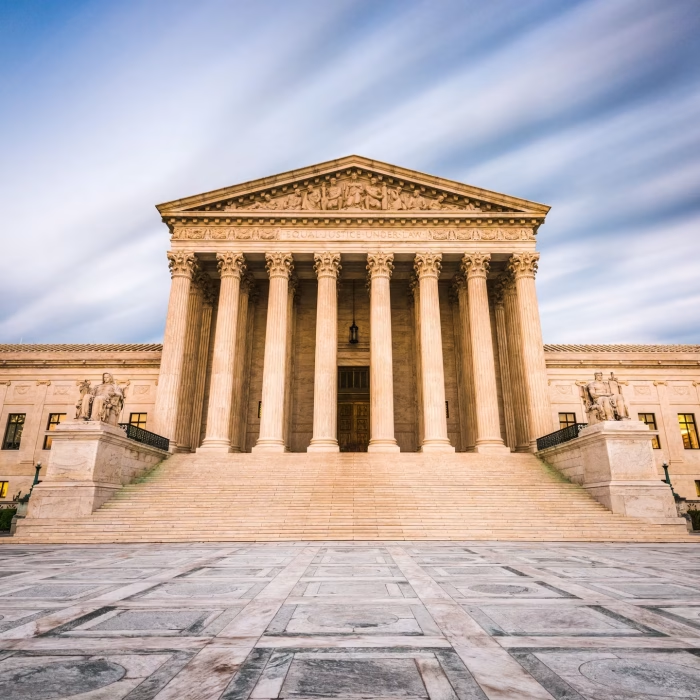
Later, speaking in the Oval Office, Trump offered a vaguer explanation for the timing of his announcement, suggesting there was no particular reason for making it Friday afternoon specifically. He described his frustration as building up over years of what he considered unfair coverage, saying simply that he’d grown tired of it. He acknowledged that additional outlets might eventually join the list without naming any, and he also recognized that legal challenges were likely, stating he still felt it was worth making the announcement regardless of whether the ban ultimately survives judicial scrutiny.
A Pattern Of Media Conflict
This latest clash fits into a broader pattern that’s defined Trump’s relationship with the press throughout his second term, which began in January 2025. His administration has repeatedly sparred with White House correspondents while simultaneously working to bring conservative bloggers and independent media figures into the press briefing room, arguing this approach provides more diverse perspectives to the public.
Back in February, the White House took direct control over the press pool, the group of journalists granted access to cover the president closely, a responsibility that had been managed by the White House Correspondents’ Association for more than a century before this change.
That same month, the administration barred Associated Press reporters and photographers from restricted spaces like the Oval Office and Air Force One, a decision tied specifically to the AP’s continued use of the term Gulf of Mexico rather than the administration’s preferred Gulf of America. The AP responded by filing a lawsuit, which remains unresolved in the courts.
Trump has a well-documented history of friction with journalists across various settings, frequently labeling reporters as fake news or rude during exchanges in the Oval Office, aboard Air Force One, and at White House events. This isn’t even his first attempt at banning a specific outlet, during his first term, he barred CNN correspondent Jim Acosta from White House access, though those credentials were later restored after CNN successfully sued.
It’s also worth noting that CNN holds a particularly significant role in White House coverage, as one of only five American news outlets responsible for filming video content shared across the broader press pool system, a system the BBC also participates in through its contributions to White House radio coverage.
Legal Experts Predict The Ban Won’t Survive
Press freedom organizations wasted no time criticizing Trump’s announcement. The Knight First Amendment Institute at Columbia University expressed exasperation that Trump continued pursuing this kind of action despite numerous prior court rulings against similar moves. The institute’s executive director, Jameel Jaffer, argued that if Trump intends to remove these organizations from the White House press pool, the action would be doubly unconstitutional, since the press pool itself qualifies as a public forum under the First Amendment, meaning the president cannot exclude journalists based on the viewpoints their reporting reflects.
The Reporters Committee for Freedom of the Press, an organization providing legal support to media outlets, predicted the courts would quickly strike down Trump’s ban, calling it flatly unconstitutional. The group’s president, Bruce Brown, described the situation as a textbook example of viewpoint discrimination, explaining that once the White House opens access to some journalists, the First Amendment prohibits excluding others simply because officials dislike their coverage.
The Freedom of the Press Foundation was similarly blunt in its criticism, calling the move illegal and suggesting it was difficult to imagine a more poorly conceived decision. The organization pointed out that Trump has spent years retaliating against press coverage without any evidence that such tactics have actually benefited him politically, suggesting instead that these aggressive moves against the press reveal deep anxiety about maintaining an informed public.
A Broader Legal Campaign Against Media
This latest ban adds to a growing list of legal actions Trump has pursued against news organizations both domestically and internationally, including lawsuits against The Wall Street Journal, The New York Times, and the BBC. Some of these legal battles have already resulted in media companies agreeing to substantial multimillion-dollar settlements, while Trump’s ongoing lawsuit against the BBC remains unresolved as of now.
Author