Bangladesh garment worker protests have entered their third consecutive day, paralysing hundreds of factories across the country’s key industrial zones as workers demand a sharp rise in the minimum wage to keep pace with surging living costs. The unrest threatens the backbone of the national economy and has forced the government into emergency talks.
Factories Fall Silent
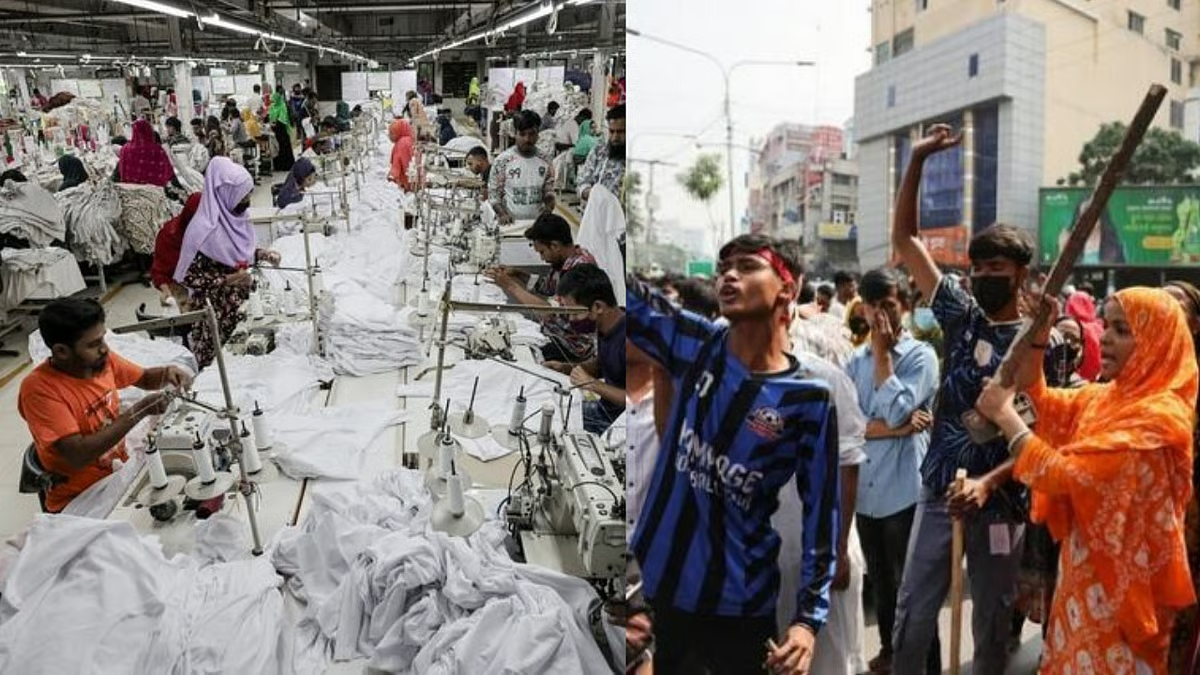
Around 500 factories have been temporarily closed since the demonstrations erupted on Saturday. Thousands of workers have poured onto the streets of Savar, Ashulia and Gazipur, the sprawling manufacturing belts surrounding Dhaka, where police have deployed tear gas and sound grenades in an effort to disperse the crowds.
On Monday, a heavy police presence was visible in the capital’s Mirpur industrial district, while protests continued elsewhere, according to Al Jazeera’s Tanvir Chowdhury reporting from Dhaka.
What Workers Want
At the heart of the dispute is money. Workers are calling for a minimum monthly wage of 30,000 taka, equivalent to about 242 dollars. That figure is more than double the current legal minimum of 12,500 taka, or roughly 101 dollars.
Chowdhury noted that the present wage simply does not stretch far enough given how quickly prices have risen. Workers cannot sustain their households on that income, he said, and they want a fair share of the vast wealth generated by the industry they sustain.
An Industry Worth Billions
Bangladesh’s garment sector is valued at approximately 38 billion dollars and ranks as the country’s largest export earner and a major source of employment, particularly for women. Clothing made in Bangladeshi factories fills the shelves of retailers around the world, and the industry’s fortunes are closely tied to the nation’s economic trajectory.
That dependence cuts both ways. When factories stop, export revenue dries up and the livelihoods of millions are put at risk. The scale of the current disruption has therefore alarmed both business leaders and policymakers.
Government Scrambles to Respond
In a bid to defuse the situation, the government established a new wage board on Sunday tasked with reviewing the minimum wage for garment workers. Prime Minister Tarique Rahman convened an emergency session with ministers and advisers to address the crisis.
The formation of the board is a standard mechanism in Bangladesh for adjusting sector-wide pay, but the process can take time, and workers on the streets are demanding immediate relief rather than a lengthy review.
Owners Point to Pressures of Their Own
Factory owners argue they are caught between rising expenses and weakening markets. They cite higher input costs, volatility in energy prices driven by the US-Israel war on Iran, and softening demand in some export destinations. Bangladesh competes fiercely with Vietnam, Cambodia and India for orders from international brands, and owners warn that steep wage increases could price the country out of contracts.
Mahmud Hasan Khan, president of the Bangladesh Garment Manufacturers and Exporters Association, said the government had already acted by setting up the wage board and urged workers to let the review run its course. He warned that if protests persisted through Monday, manufacturers would have no choice but to apply the “no work, no pay” rule, docking wages for days lost to the demonstrations.
Labour Leaders Push Back
Worker representatives reject the owners’ framing. Babul Akhter, general secretary of the Bangladesh Garment and Industrial Workers Federation and a workers’ delegate on the wage board, pointed out that Bangladesh pays some of the lowest garment wages anywhere in the world.
If owners cannot afford to pay staff properly, Akhter argued, they should negotiate higher prices with the international buyers who profit from cheap Bangladeshi labour. A business model built on underpaying workers, he said, is not one that deserves protection.
A Familiar Fault Line
The standoff echoes earlier episodes of unrest in Bangladesh’s garment sector, where periodic wage disputes have led to strikes, factory closures and clashes with police. Each time, the underlying tension is the same: an industry whose global competitiveness rests on low labour costs, and a workforce that increasingly refuses to accept wages that do not cover basic needs.
What has changed is the broader economic environment. Inflation has eroded purchasing power, making the gap between what workers earn and what they need more acute than in previous confrontations.
The Role of Global Buyers
Akhter’s call for better prices from international brands highlights a question that rarely receives a clear answer. Major retailers have long faced criticism for squeezing suppliers on cost while publicly committing to ethical sourcing. Whether they will absorb higher prices to support a wage increase, or simply shift orders to cheaper locations, will shape the outcome of this dispute as much as any decision made in Dhaka.
What Happens Next
The immediate flashpoint is Monday’s deadline from the manufacturers’ association. If workers remain on strike, the threat of lost pay could either force a return to the factories or harden resolve. Meanwhile, the wage board’s deliberations will determine whether the government can offer enough to bring the protests to an end.
For now, the streets of Savar, Ashulia and Gazipur remain the stage for a confrontation that pits the demands of a struggling workforce against the economics of a globally competitive industry. The resolution will matter far beyond Bangladesh, touching every consumer who buys clothing stitched in its factories.
Author