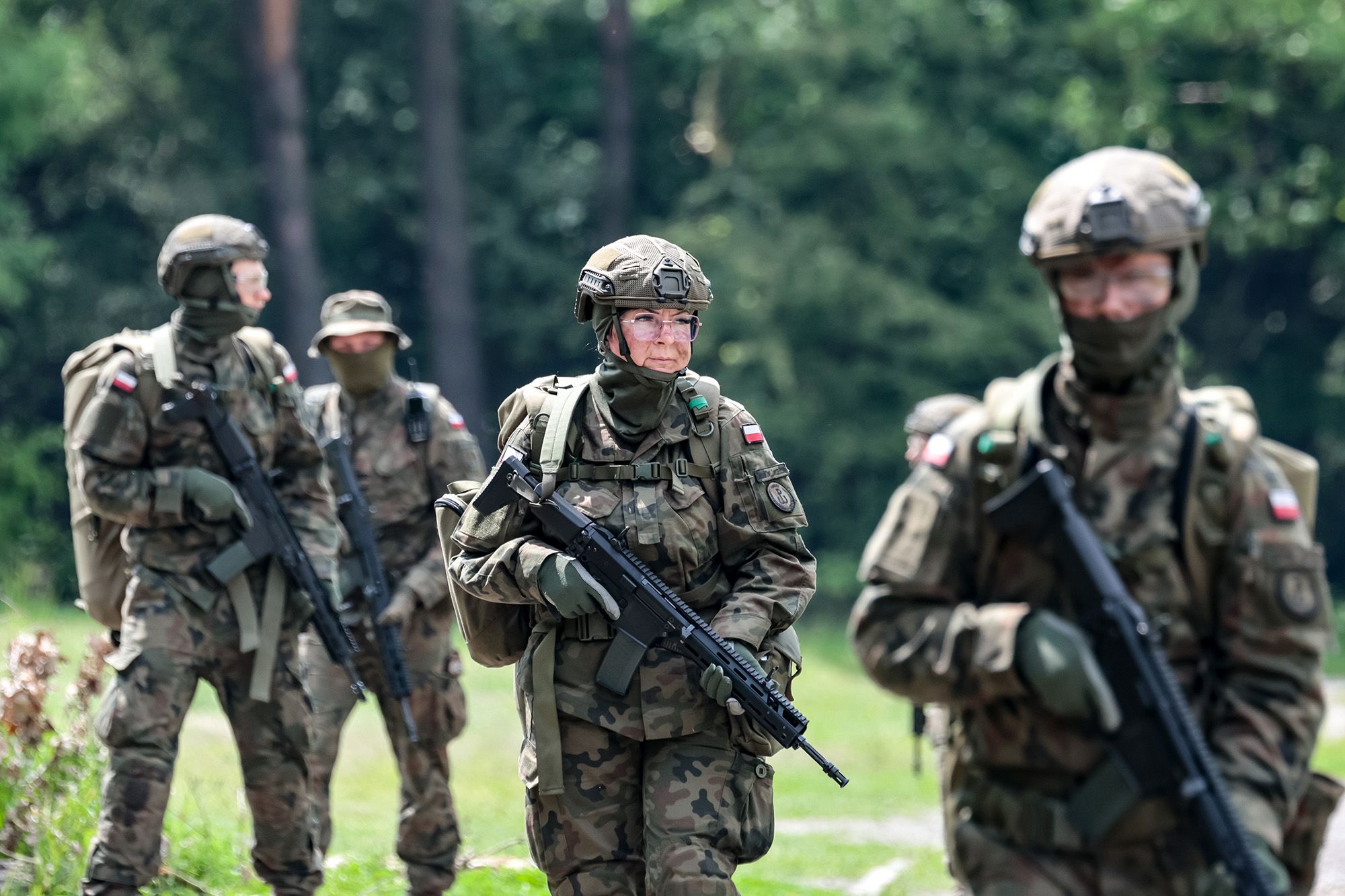
Can NATO Defend Europe? Poland and Romania Face Growing Russian Threat
NATO defense has rarely faced a more pointed test than it does right now. As Russia’s war in Ukraine drags on, fears are growing across Europe that the conflict could spill beyond Ukraine’s borders and pull other nations directly into the fighting.
Those concerns sharpened this month when Polish Prime Minister Donald Tusk raised the alarm about intelligence assessments indicating that Russia may be planning drone and missile attacks on countries that back Ukraine. Among the nations he named were Poland and Romania, two of the alliance’s most exposed members.
The warning has left Europe on edge and raised uncomfortable questions about how prepared the alliance really is.
The Questions Europe Is Asking
Tusk’s comments have prompted a series of urgent questions that are now being debated in capitals across the continent:
- How serious is the threat of Russian strikes on NATO territory?
- If such attacks happened, would NATO be ready to respond effectively?
- Would the United States stand by its collective defense commitments and come to the aid of its allies?
These were the central issues put to two of the region’s top diplomats in a high-profile discussion in New York.
A Conversation on the World Stage
Mary Louise Kelly hosted the conversation with Romania’s Foreign Minister Oana-Silvia Țoiu and Poland’s Deputy Prime Minister and Foreign Minister Radoslaw Sikorski.
The event took place in front of a live audience at the Council on Foreign Relations in New York City, on the sidelines of the United Nations General Assembly. The timing was significant. With world leaders gathered for the annual UN meetings, security in Europe and the future of the war in Ukraine were already high on the global agenda.
Having both Poland and Romania represented on the same stage underlined a shared reality. These two countries sit on NATO’s eastern edge and would likely be among the first to feel the consequences if the conflict widened.
Why Poland and Romania Matter So Much
To understand why Tusk’s warning carries such weight, it helps to look at the map.
Poland shares a border with Ukraine and has become a vital hub for military and humanitarian support flowing into the country. It has also taken in large numbers of Ukrainian refugees since the full-scale invasion began.
Romania also borders Ukraine and sits close to the Black Sea, a region of major strategic importance throughout the war.
Because of their location and their strong support for Kyiv, both nations are on the front line of NATO’s eastern flank. That makes them natural targets for pressure from Moscow, whether through military threats, airspace violations or political intimidation.
Both countries have also experienced moments during the war when drones or debris have crossed into their territory, serving as reminders of how close the fighting is.
What NATO’s Collective Defense Really Means
At the heart of the debate is Article 5 of the NATO treaty, the alliance’s famous collective defense clause. It states that an armed attack against one member is to be treated as an attack against all.
In practice, this means that if Russia were to strike Poland or Romania, every other NATO country would be expected to respond. Each member decides for itself what form that response takes, but the principle is designed to make any aggressor think twice.
Article 5 has only been formally invoked once in NATO’s history, following the September 11, 2001 attacks on the United States. Its real strength has always been its power to deter conflict before it starts.
That deterrence, however, only works if potential adversaries believe the promise will be kept.
The Big Question Over American Support
This is where the debate becomes especially sensitive. The United States is by far NATO’s most powerful military member, and its commitment has long been the backbone of European security.
In recent years, though, questions about Washington’s willingness to fully back its allies have become a recurring theme in European politics. Any uncertainty about American support can weaken the alliance’s deterrent effect and embolden adversaries who might want to test NATO’s unity.
For countries like Poland and Romania, the answer to this question is not theoretical. It could determine how secure they are in the event of an attack.
Is Europe Ready?
Several factors will shape whether NATO can meet the challenge:
Air defense. Drone and missile threats require strong systems capable of detecting and intercepting incoming attacks quickly.
Unity. The alliance’s strength depends on all members responding together rather than hesitating or dividing.
Defense spending. Many European countries have been increasing their military budgets in response to the war, though building up capabilities takes time.
Deterrence. Ultimately, the goal is to convince Moscow that attacking NATO territory would carry costs far too high to accept.
Poland in particular has invested heavily in its armed forces in recent years, positioning itself as one of the strongest military powers in the region. Romania has also been working with allies to strengthen defenses along the eastern flank.
Rising Tensions, Real Stakes
The warnings from Tusk reflect a broader sense of unease across Europe. Russia’s war in Ukraine has already reshaped the continent’s security landscape, and the possibility of direct strikes on NATO members would mark a dangerous new phase.
For now, the focus is on preparation and deterrence. Leaders across the alliance are trying to send a clear message that any attack on a member state would be met with a united response.
What Comes Next
The discussion in New York highlighted just how high the stakes have become. Poland and Romania stand on the front line of Europe’s security, and their leaders are acutely aware of the risks their countries face.
Whether NATO is truly ready will depend on the strength of its defenses, the unity of its members, and the reliability of its commitments, especially from the United States. As Russia continues to escalate its rhetoric and pressure, those questions are no longer abstract. They are among the most important security challenges facing Europe today.
Author